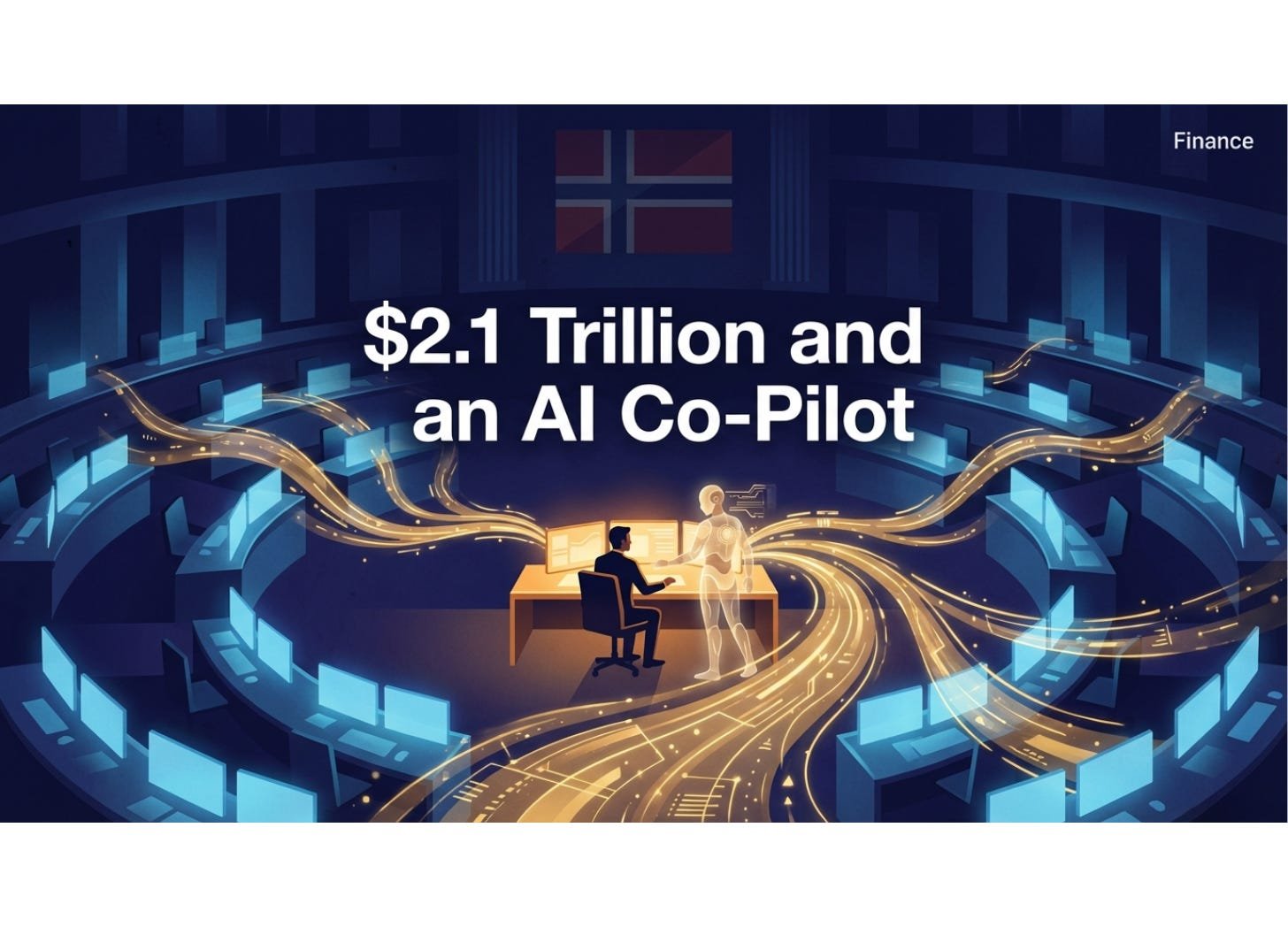
Good morning, the world’s largest investment fund is letting AI help make decisions with $2.1 trillion, Apple just announced WWDC with a heavy AI tease, and Sam Altman stepped off a fusion energy board so OpenAI can buy its power. Here’s what happened 👇
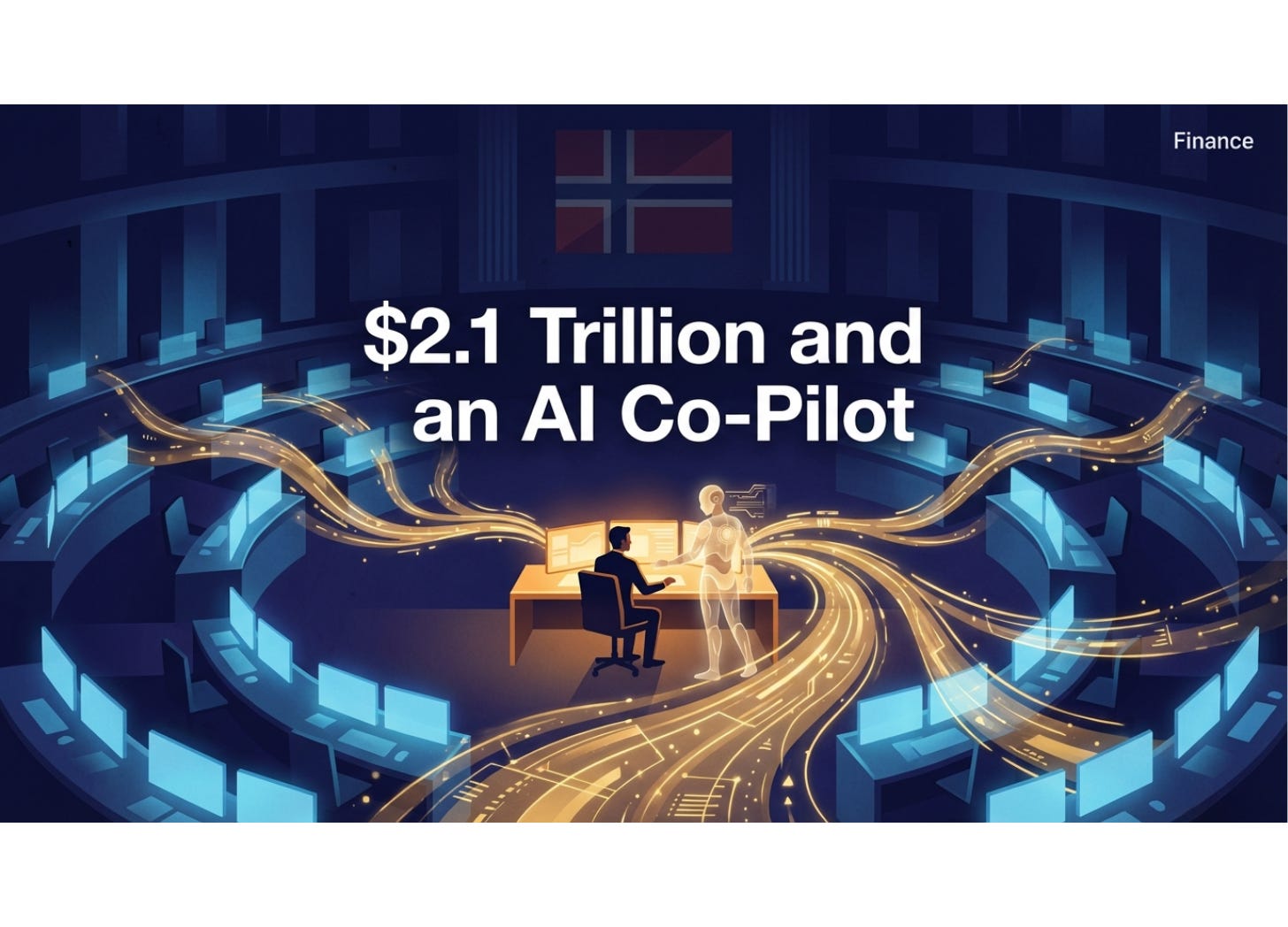
1. The World’s Largest Investment Fund Is Moving Toward AI-Driven Decisions
Norway’s $2.1 trillion sovereign wealth fund, the biggest on Earth, announced it’s moving toward letting AI systems make some investment decisions under human supervision. Right now, about half of the fund’s 700 employees are already building their own AI tools using Anthropic’s Claude to monitor the 7,000 companies in their portfolio, simulate contract negotiations, and prepare for meetings.
The fund’s head of machine learning said they’re not there yet because AI still makes errors. But the direction is clear: “At some stage, we’re going to trust that the agent can make some of the decisions and we just monitor what it does.” CEO Nicolai Tangen, who once called firms that ignore AI “complete morons,” says the fund has invested “millions of crowns” in AI and returned benefits “in the billions.”
Why it matters: When the institution that manages an entire country’s oil wealth starts trusting AI with investment decisions, it signals something bigger than a tech trend. This is the financial establishment saying AI is reliable enough to help manage money that belongs to every Norwegian citizen. If you’ve ever wondered when AI would graduate from chatbot to real economic power, this is the clearest signal yet. We covered what AI models actually are in our AI Explained series if you want to understand what powers these systems.
Sources: Reuters
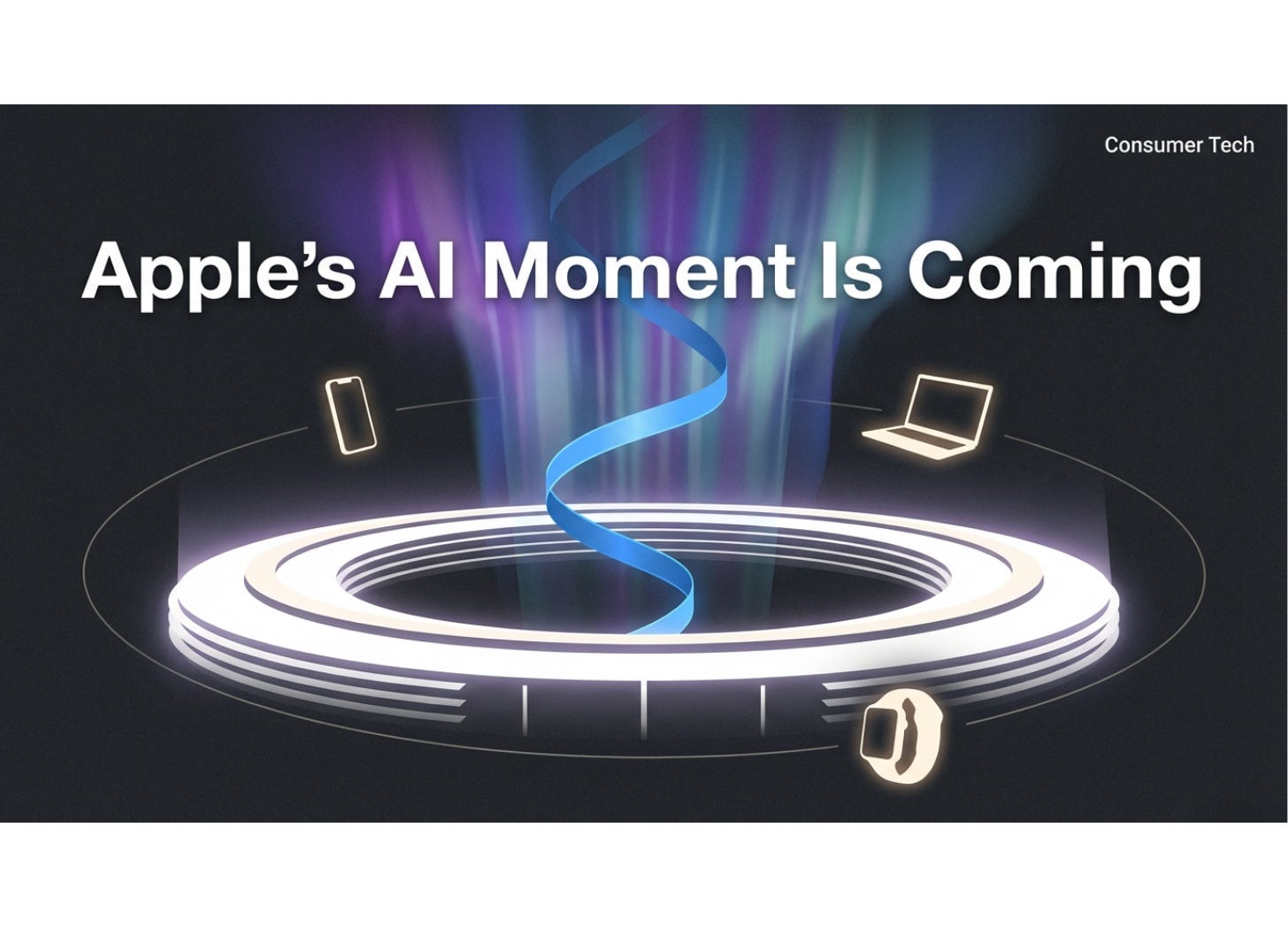
2. Apple Sets WWDC 2026 for June 8, With a Heavy AI Tease
Apple announced its annual Worldwide Developers Conference will run June 8 to 12. The company is explicitly teasing “AI advancements,” which is unusual for Apple. Reports suggest this will be the event where Apple reveals a completely redesigned Siri with advanced AI capabilities, deeper integration of Apple Intelligence across all its devices, and new developer tools that let third-party apps tap into Apple’s on-device AI. The event will be free and streamed online, with a special in-person opening day at Apple Park.
Apple has been playing catch-up in the AI race after a rocky start with Apple Intelligence last year. The company reportedly restructured its AI teams and has been working on a more capable version of Siri that can handle complex, multi-step tasks instead of just setting timers and checking the weather.
Why it matters: Apple doesn’t tease specific technology in event announcements unless it’s confident. The fact that “AI advancements” made the headline means Apple is ready to compete directly with Google’s Gemini and OpenAI’s ChatGPT for the AI assistant crown. With over 2 billion active Apple devices worldwide, whatever Apple announces at WWDC will instantly become the most widely distributed AI product on Earth.
Sources: TechCrunch, Reuters
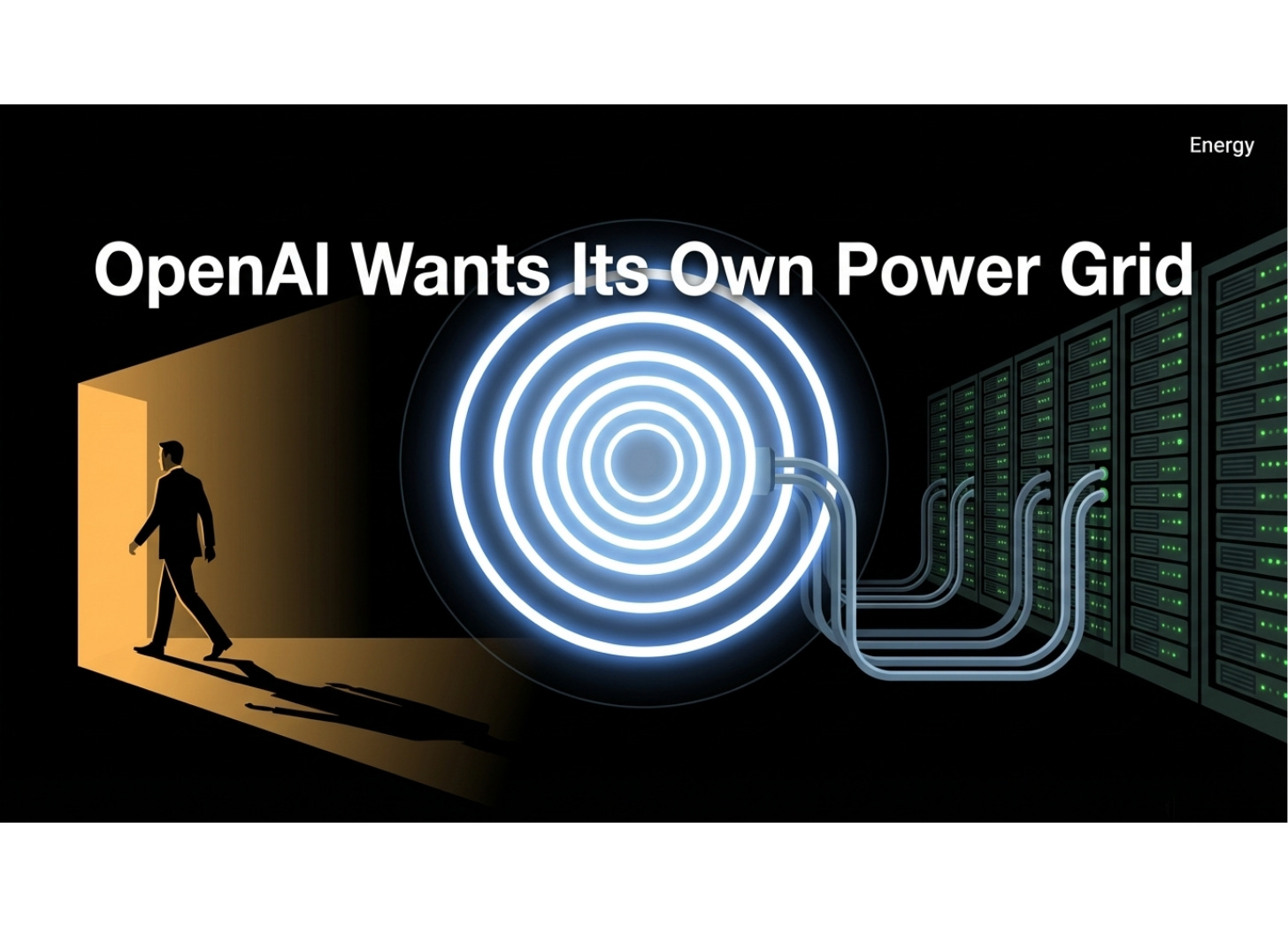
3. Sam Altman Exits Helion’s Board as OpenAI Eyes Fusion Power Deal
OpenAI CEO Sam Altman stepped down from the board of Helion Energy, a fusion power startup he personally backed with $500 million. The reason: OpenAI is in talks to become one of Helion’s first power customers. Altman left to avoid a conflict of interest as the two companies negotiate a deal that could see Helion supply fusion-generated electricity to power OpenAI’s data centers.
Helion, based in Washington state, claims it can produce electricity from fusion reactions and has been building its seventh-generation prototype. The company previously signed a deal to sell power to Microsoft. The timing makes sense: AI companies are desperate for clean, reliable energy as their data centers consume more electricity than some small countries.
Why it matters: AI’s energy problem is becoming one of the industry’s biggest bottlenecks. Training and running large AI models requires enormous amounts of power, and companies are exploring everything from nuclear to solar to now fusion. If Helion can actually deliver commercial fusion power (and that’s still a big “if”), it would give OpenAI access to virtually unlimited clean energy. This is the AI industry literally trying to build its own power grid.
Sources: Reuters, TechCrunch
Quick Hits
-
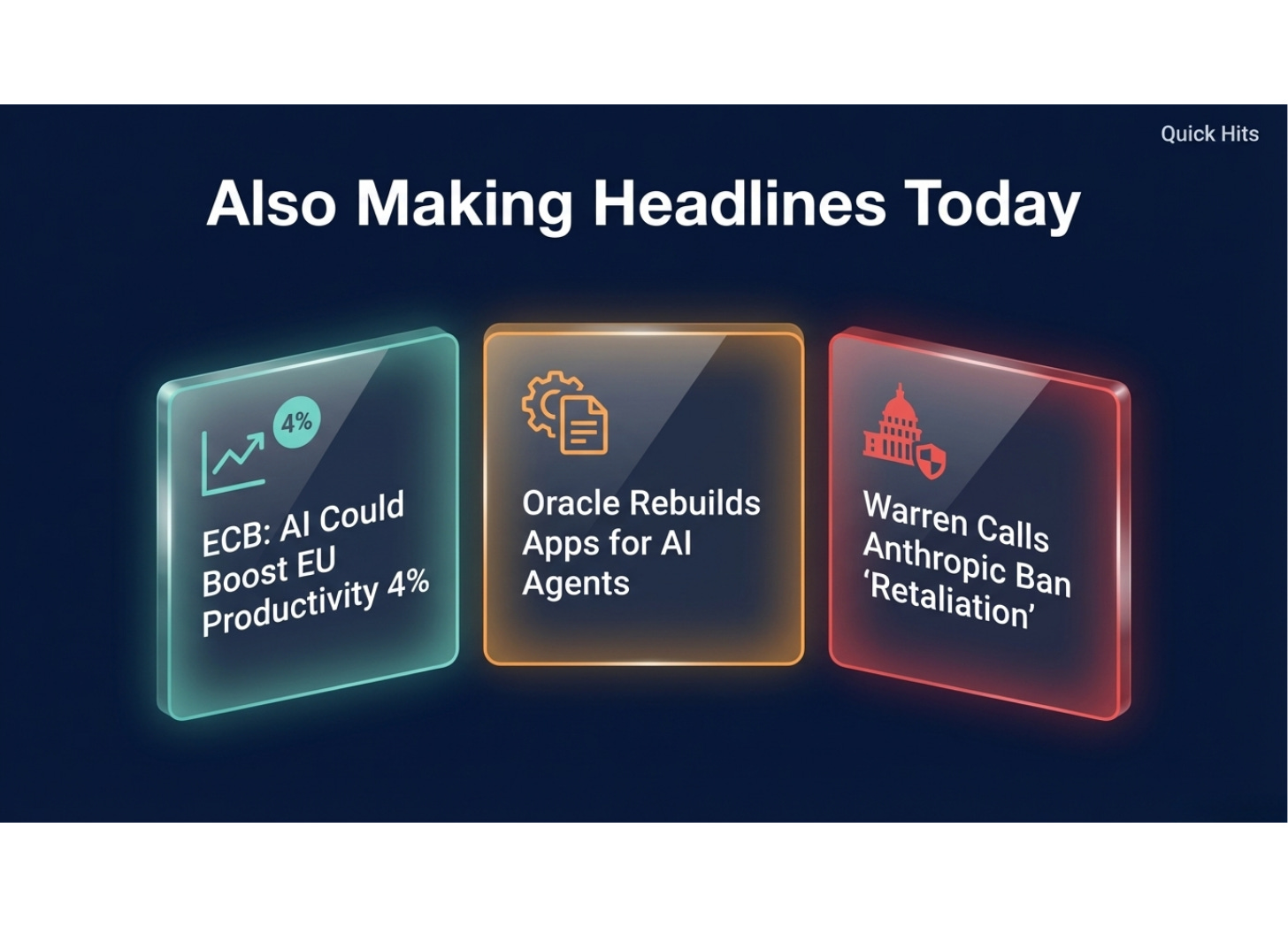
ECB says AI could boost European productivity by 4% over the next decade. The European Central Bank’s chief economist said AI adoption could add more than 4 percentage points of productivity growth across the euro zone, though an energy shock from the Iran conflict could slow progress. (Reuters)
-
Oracle reworks its finance and procurement apps for AI agents. Oracle redesigned its core business applications so AI agents can handle tasks like invoice processing, purchase orders, and financial reporting with less human intervention. (Reuters)
-
Elizabeth Warren calls Pentagon’s decision to bar Anthropic “retaliation.” Senator Warren sent a letter to the Pentagon’s Inspector General calling the move to designate Anthropic a supply chain risk “retaliatory” and asking for an investigation into whether political motives drove the decision. (TechCrunch)
That’s it for today. The theme is clear: AI is no longer just a product you download. It’s becoming infrastructure, woven into sovereign wealth funds, energy grids, and the apps that run entire businesses. The question isn’t whether AI will reshape these systems. It’s whether the rest of us will have a say in how.
Forward this to someone who needs to stay in the loop.
Leave a Reply