
Good morning, OpenAI just killed its video generator and blindsided Disney in the process, Arm is making its own chips for the first time ever, and a federal judge just said the Pentagon looks like it’s punishing Anthropic for caring about AI safety. Here’s what happened 👇

1. OpenAI Kills Sora, Blindsides Disney With Sudden Shutdown
OpenAI announced it’s shutting down Sora, its AI video generation tool, just 15 months after launch. The move stunned everyone, including Disney, whose team was actively working with OpenAI on a Sora project Monday evening. Thirty minutes after that meeting, Disney was told the tool was being killed entirely. “It was a big rug-pull,” a source told Reuters.
The shutdown kills a blockbuster $1 billion deal announced just three months ago, where Disney planned to invest in OpenAI and lend over 200 iconic characters for AI-generated videos. No money ever changed hands because the deal never closed. OpenAI says running Sora required massive computational resources that left other teams starved for power. Some Sora team members were blindsided Tuesday morning. The company is now refocusing on coding tools, enterprise products, and building toward artificial general intelligence.
Why it matters: This is the clearest sign yet that the “AI can do everything” era is ending. Even the most well-funded AI company on Earth is admitting it can’t pursue every frontier at once. OpenAI is betting that coding tools and enterprise customers will generate more revenue than flashy video generators. If you’re watching the AI industry, pay attention to what companies stop doing. That tells you more about the real economics of AI than any product launch.
Sources: Reuters, TechCrunch, Ars Technica
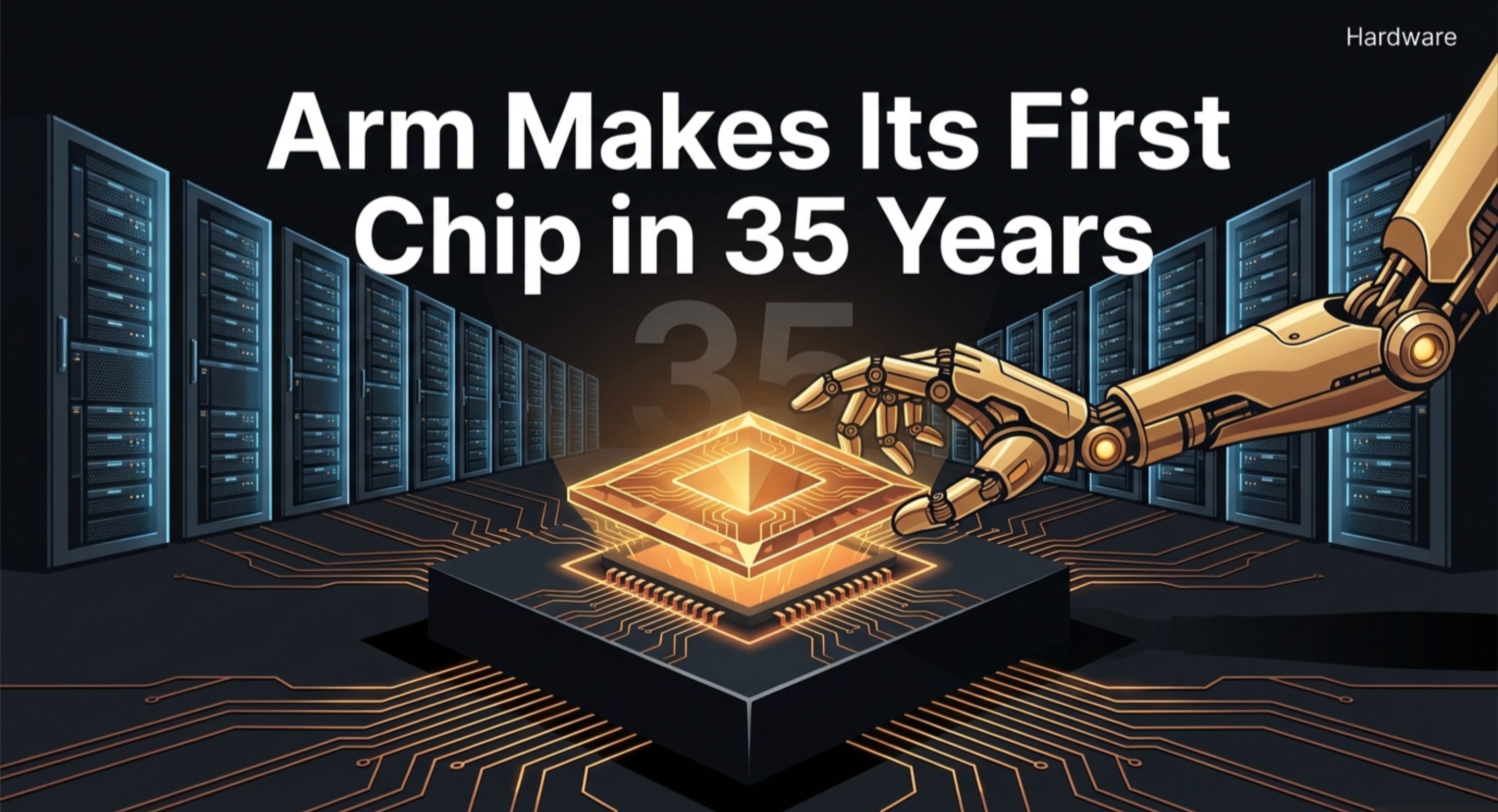
2. Arm Makes Its First Chip in 35 Years, and It Could Reshape AI Infrastructure
Arm Holdings, the company whose chip designs power virtually every smartphone on Earth, just did something it has never done in its 35-year history: make its own chip. The Arm AGI CPU is a production-ready processor built specifically for running AI inference in data centers. Meta helped develop it and is the first customer. OpenAI, Cerebras, and Cloudflare are also launch partners.
This is a historic shift. Arm has always been a design company, licensing blueprints to companies like Apple, Qualcomm, and Nvidia. Now it’s competing directly with many of those same partners. The timing makes sense: CPUs are facing a global shortage, with Intel and AMD already warning Chinese customers about longer wait times. Arm’s stock jumped nearly 12% on the news. The company expects the chip to generate billions in annual revenue.
Why it matters: Everyone talks about GPUs for AI, but CPUs are the unsung backbone of data centers. They manage memory, schedule workloads, and move data between systems. With a global CPU shortage pushing computer prices up and wait times longer, Arm’s move to make its own silicon could help ease one of AI infrastructure’s biggest bottlenecks. This is also a signal that the AI hardware wars are expanding far beyond Nvidia.
Sources: TechCrunch, Reuters, Wired
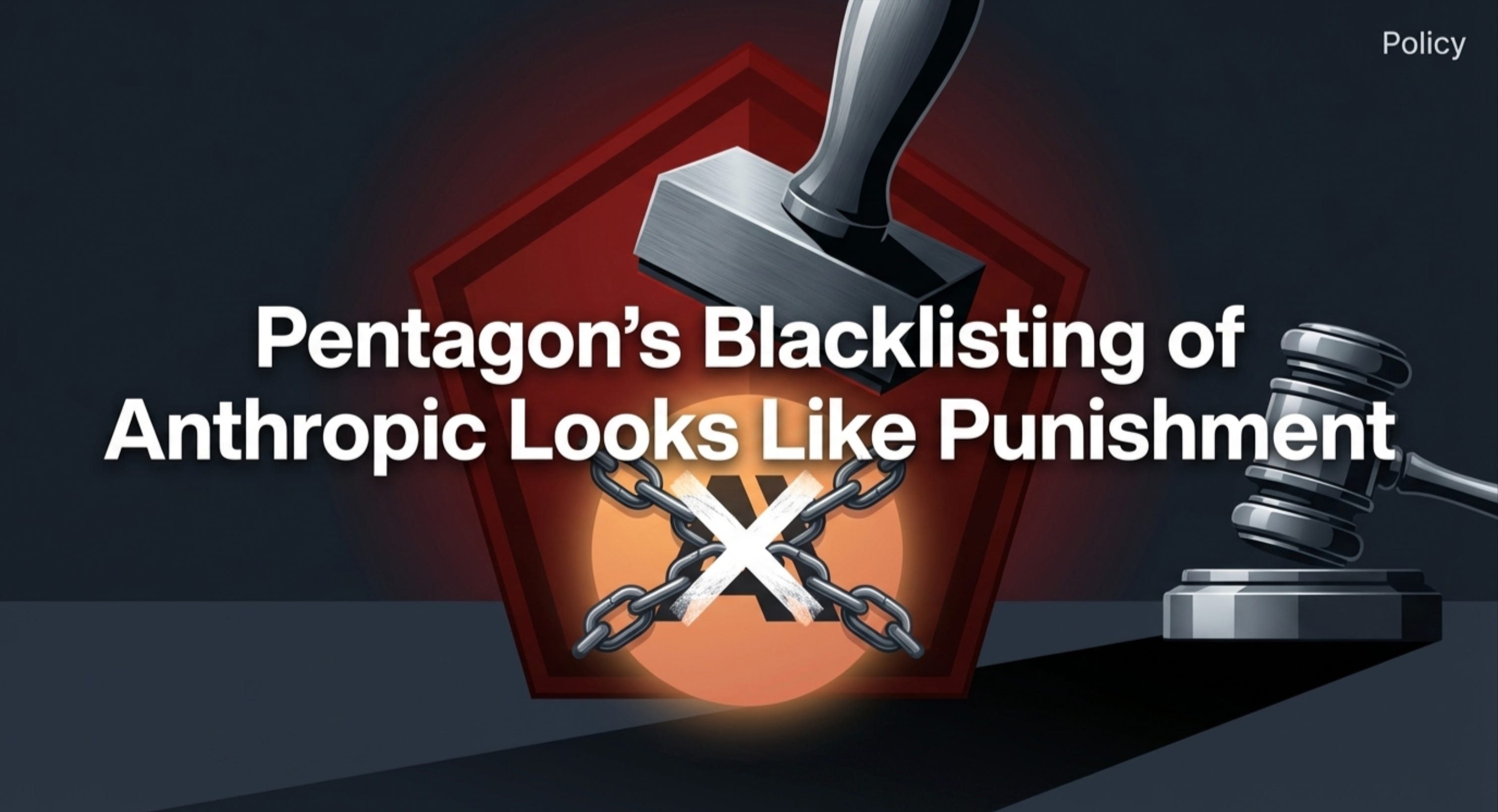
3. Federal Judge Says Pentagon’s Blacklisting of Anthropic Looks Like Punishment
A U.S. federal judge said Tuesday that the Pentagon’s decision to blacklist Anthropic “looks like an attempt to cripple” the AI company. Judge Rita Lin said the designation “looks like [the Department of War] is punishing Anthropic for trying to bring public scrutiny to this contract dispute.”
The backstory: Anthropic refused to let the military use its Claude AI software for surveillance or autonomous weapons, arguing that AI models aren’t reliable enough for those uses. In response, Defense Secretary Pete Hegseth designated Anthropic a “national security supply-chain risk,” a label usually reserved for foreign threats to military systems. The government’s lawyer argued that Anthropic could theoretically install a “kill switch” in its software when “our warfighters need it most.” Anthropic says the designation has already cost it billions in lost business. The judge will issue a written ruling in the coming days.
Why it matters: This case is setting a precedent that will define the relationship between AI companies and the government for years. If the Pentagon can punish companies for having safety policies it disagrees with, every AI company will face a choice: give the military whatever it wants, or risk being labeled a national security threat. That is a chilling message for anyone in tech who believes some uses of AI should have limits.
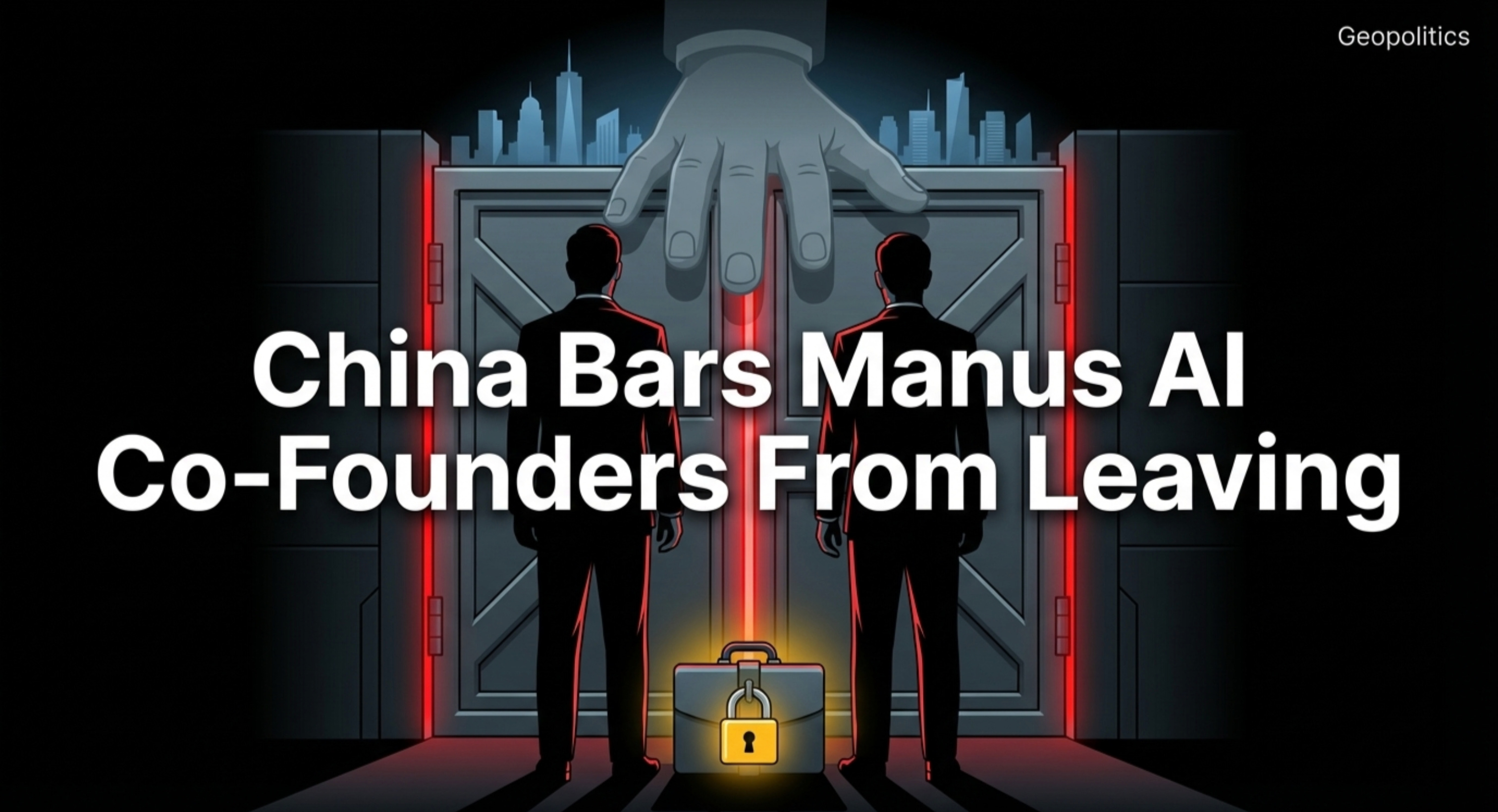
4. China Bars Manus AI Co-Founders From Leaving the Country
China has barred two co-founders of AI startup Manus from leaving the country as regulators investigate whether Meta’s $2 billion acquisition of the company violated Chinese investment rules. Manus CEO Xiao Hong and chief scientist Ji Yichao were summoned to a meeting in Beijing with the National Development and Reform Commission and told afterward that they cannot leave China, though they can travel domestically.
Meta announced the Manus acquisition in December. The startup develops general-purpose AI agents, digital employees that can handle research, automation, and complex tasks with minimal human prompting. China’s commerce ministry had already flagged the deal for investigation back in January. Meta says the transaction “complied fully with applicable law.”
Why it matters: The US-China AI competition just got personal. When a country physically prevents startup founders from leaving over a tech acquisition, it tells you how seriously governments are treating AI as a strategic asset. This isn’t just about one deal. It’s a warning to every AI startup and investor operating across US-China lines: your technology is now geopolitical leverage, and the rules can change overnight.
Sources: Reuters
5. Bernie Sanders Introduces Bill to Halt All AI Data Center Construction
Senator Bernie Sanders introduced a bill Wednesday that would impose a national moratorium on AI data center construction until Congress passes laws protecting the public from AI’s dangers. Representative Alexandria Ocasio-Cortez will introduce a similar bill in the House in the coming weeks.
The bill pauses any new construction or upgrades of data centers used for AI (defined as those with energy loads above 20 megawatts) with no set end date. The moratorium only lifts when laws are passed preventing data centers from contributing to climate change, raising electricity bills, or producing AI that harms workers, privacy, or civil rights. A separate section forbids exporting computing hardware to countries without similar protections. The bill has essentially zero chance of passing given the Trump administration’s full support for AI development, but it reflects growing bipartisan frustration: Republican politicians including Ron DeSantis and Josh Hawley have also raised concerns about data centers raising electricity bills and harming communities.
Why it matters: A year ago, data center opposition was a local zoning issue. Now it’s on the floor of the U.S. Senate. Nearly 40% of Americans believe data centers are bad for the environment, and dozens of cities have introduced their own construction pauses. The bill won’t pass, but it’s moving the Overton window. The question is no longer “should we build AI infrastructure?” but “who pays the price when we do?”
Sources: Wired
Quick Hits
-
Kleiner Perkins raises $3.5 billion, all-in on AI. The legendary VC firm raised $1B for early-stage and $2.5B for late-stage, a major increase from its $2B raise two years ago. Thrive Capital and General Catalyst are both targeting $10B. (TechCrunch)
-
Spotify tests a tool to stop AI slop from being attributed to real artists. The new system aims to catch AI-generated music that gets uploaded under real musicians’ names, a growing problem on streaming platforms. (TechCrunch)
-
Meta boosts executive pay with stock options as AI race heats up. The company granted its top leaders new stock awards to keep talent from jumping to AI competitors. (Reuters)
-
German army eyes AI tools for wartime decision-making. Drawing lessons from Ukraine’s military, Germany is building AI capable of analyzing battlefield data faster than humans. (Reuters)
-
Cloudflare launches Dynamic Workers for AI agent execution. The new infrastructure lets enterprises run AI-generated code 100x faster than traditional containers, priced at $0.002 per Worker per day. (VentureBeat)
That’s it for today. From OpenAI cutting Sora to Arm entering the chip game, the theme is unmistakable: the AI industry is growing up. Companies are making hard choices about what to build (and what to kill), governments are drawing new lines, and the infrastructure race is getting more complex by the week.
Forward this to someone who needs to stay in the loop.
Leave a Reply