Good morning, Elon Musk just merged Tesla and xAI into something called “Macrohard” that he says can replace entire software companies, Atlassian cut 1,600 jobs because AI changed what skills they need, and a Swedish startup is making $400 million a year with fewer people than your local Costco. Here’s what happened 👇
1. Musk Unveils “Macrohard,” a Joint Tesla-xAI System He Says Can Emulate Entire Software Companies
Elon Musk announced a joint project between Tesla and his AI company xAI called “Macrohard” (yes, a jab at Microsoft). The system pairs xAI’s Grok language model as a high-level “navigator” with a Tesla-built AI agent that watches your screen and controls your keyboard and mouse in real time. Musk claims the system is “capable of emulating the function of entire companies.”
The system runs on Tesla’s in-house AI4 chip combined with xAI’s Nvidia-based server hardware. This comes after Tesla invested $2 billion in xAI in January and SpaceX acquired xAI last month in a deal valuing the rocket company at $1 trillion and xAI at $250 billion. Musk has been hinting at this since August 2025, when xAI filed a trademark for “Macrohard.”
Why it matters: Musk is betting that AI agents can do what entire teams of software engineers do today. Whether Macrohard lives up to the hype or not, the direction is clear: the biggest names in tech are racing to build AI systems that don’t just assist workers but replace entire workflows. Software stocks were already rattled after Anthropic’s Claude Cowork launch. This pours more fuel on that fire.
Sources: Reuters
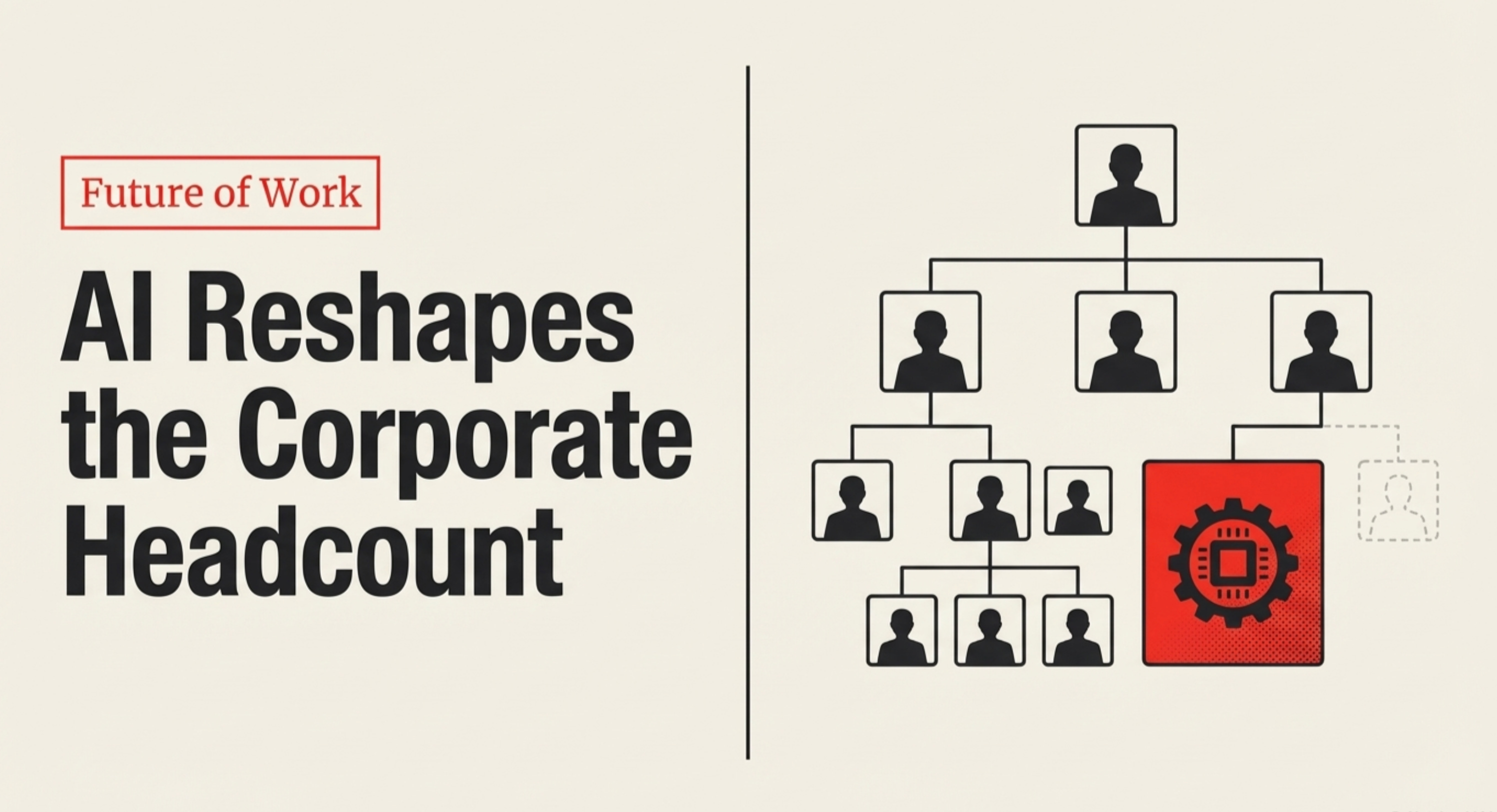
2. Atlassian Cuts 1,600 Jobs to “Rebalance” for the AI Era
Atlassian, the company behind Jira and Confluence (tools millions of people use for project management), is laying off 10% of its workforce. That’s 1,600 people, mostly in North America (40%), Australia (30%), and India (16%). The company expects to spend up to $236 million on severance and office closures.
CEO Mike Cannon-Brookes was surprisingly direct in his memo to staff: “It would be disingenuous to pretend AI doesn’t change the mix of skills we need or the number of roles required in certain areas. It does.” The company’s stock, already down 33% last year, ticked up 2% on the news. Atlassian’s CTO, Rajeev Rajan, will also step down by March 31.
Why it matters: This is one of the clearest examples yet of a major tech company saying out loud what many are thinking quietly: AI changes not just how work gets done, but how many people you need to do it. Atlassian isn’t a struggling startup. It’s a $30+ billion company used by teams at nearly every Fortune 500 company. When they say AI is reshaping their headcount, that signal travels through every industry.
Sources: Reuters
3. Lovable Hits $400M in Annual Revenue With Just 146 Employees
Swedish “vibe-coding” startup Lovable just crossed $400 million in annual recurring revenue, adding $100 million in a single month. The jaw-dropping part? They did it with 146 full-time employees. That works out to $2.77 million in revenue per employee, a number that research firm Gartner predicted wouldn’t become common until 2030.
Lovable lets anyone build websites and apps using plain English instead of code. It launched less than two years ago and has attracted 8 million users, including more than half of Fortune 500 companies. Its revenue trajectory has been staggering: $100M ARR in July, $200M in November, $300M in January, $400M in February. The company is valued at $6.6 billion and plans to hire, but even with 70 open positions, its revenue-per-employee ratio will remain far above industry norms.
Why it matters: Lovable is a living example of what the “AI-native company” looks like. A tiny team, massive revenue, and a product that lets non-technical people build software by describing what they want. If you’ve been wondering whether AI will actually change how companies are built, this is your answer. The old model of hiring hundreds of engineers to build software is being rewritten in real time.
Sources: TechCrunch
Quick Hits
-
Perplexity launched “Personal Computer,” a new AI agent that turns your spare Mac into a 24/7 digital assistant. It runs locally, has full access to your files and apps, and is controllable from any device. The CEO says it could help a single person build a billion-dollar company. (The Verge)
-
Anthropic is asking an appeals court to block the Pentagon’s “supply-chain risk” label, saying it could cost billions in lost revenue. Over 100 enterprise customers have already reached out with concerns. The company is also reportedly in talks with Blackstone and other private equity firms to form an AI joint venture. (Reuters)
-
Grammarly got sued by one of the experts whose identity its AI was cloning without permission, then announced it would stop the practice. The company had been using real journalists’ names and likenesses in an “expert review” feature without telling them. (The Verge)
-
Nvidia is reportedly building its own open-source OpenClaw competitor called NemoClaw, courting corporate partners ahead of its annual conference. (Ars Technica)
That’s it for today. The theme is impossible to ignore: AI isn’t just changing products anymore, it’s changing how many people companies need, how much revenue a small team can generate, and who gets to call themselves a software company.
Forward this to someone who needs to stay in the loop.
Leave a Reply