AI will handle the routine. Here’s what you should be developing instead.
The Reality
As AI gets better at cognitive tasks and robots get better at physical ones, a natural question emerges: what’s left for humans?
It’s easy to spiral into anxiety. But Daniela Rus, MIT professor and head of the world’s largest AI lab, sees it differently. The future isn’t humans versus machines. It’s humans freed from routine work, with more time for what machines can’t do.
And she’s specific about what that includes.
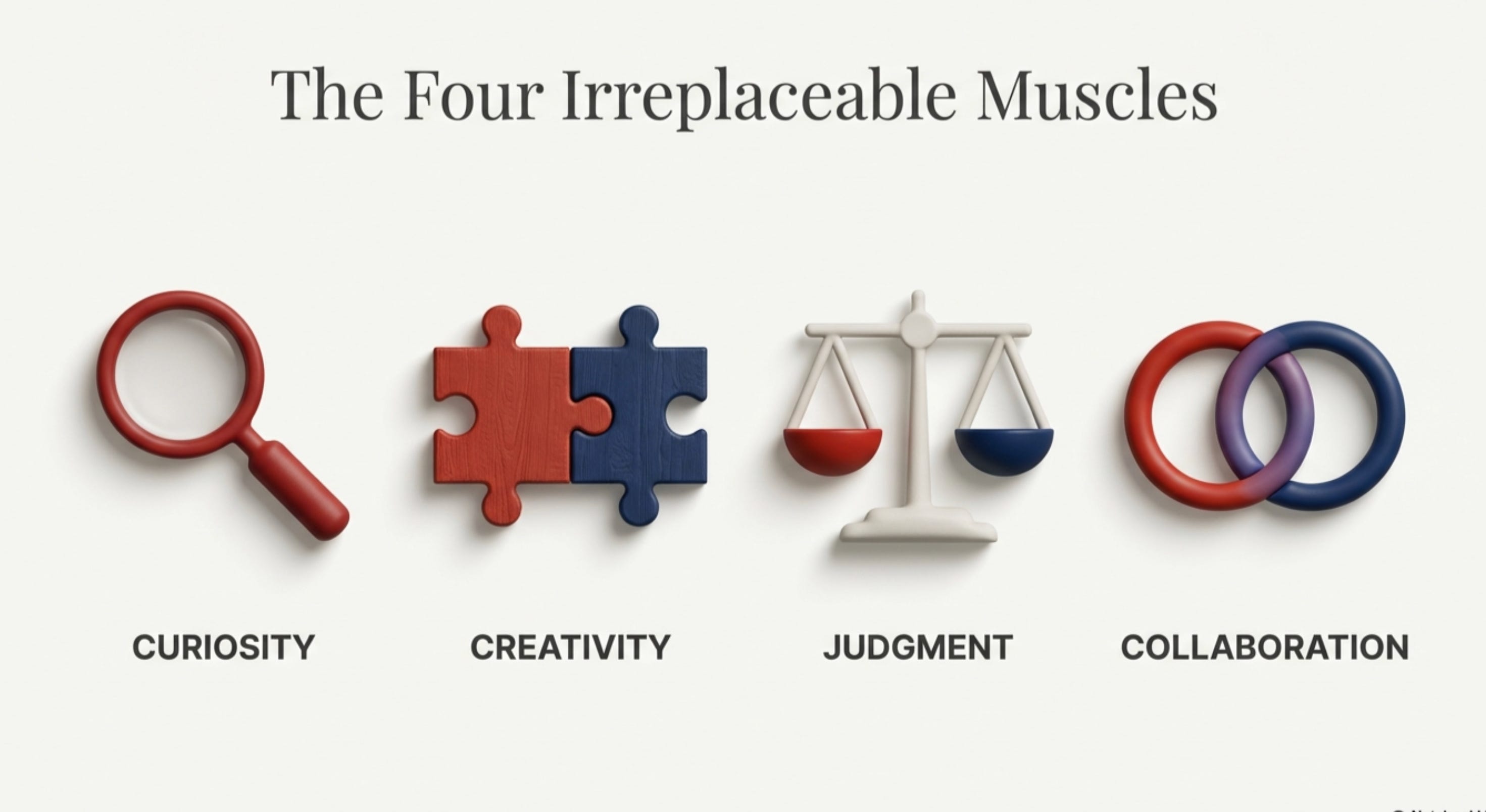
“Curiosity. Creativity. Thinking outside the box. Good judgment. Being collaborative. Critical thinking.”
These aren’t soft skills to put at the bottom of a resume. They’re the skills that will define who thrives as machines take over the routine.
The Shift
Here’s what’s happening: AI handles the cognitive routine. Robots handle the physical routine. That frees people to focus on strategic work, human interaction, and the kinds of problems that require judgment, not just computation.
But there’s a catch.
Those “human” skills—creativity, curiosity, critical thinking—aren’t automatic. They need to be developed, practiced, protected. And our current systems often train them out of us rather than into us.
Think about your own work. How much of your day is spent on routine tasks that could be automated? And how much is spent on genuine creative problem-solving, real human connection, or decisions that require judgment over data?
The ratio matters. Because the routine work is going away. What remains is everything that requires being genuinely, irreplaceably human.
Rus makes another point that’s easy to miss: knowing things still matters. “Knowing things enables us to be creative. Creativity is about connecting concepts that are seemingly disparate.”
AI can retrieve any fact instantly. But creativity comes from having knowledge internalized deeply enough to make unexpected connections. That’s not something you can outsource to a search engine.
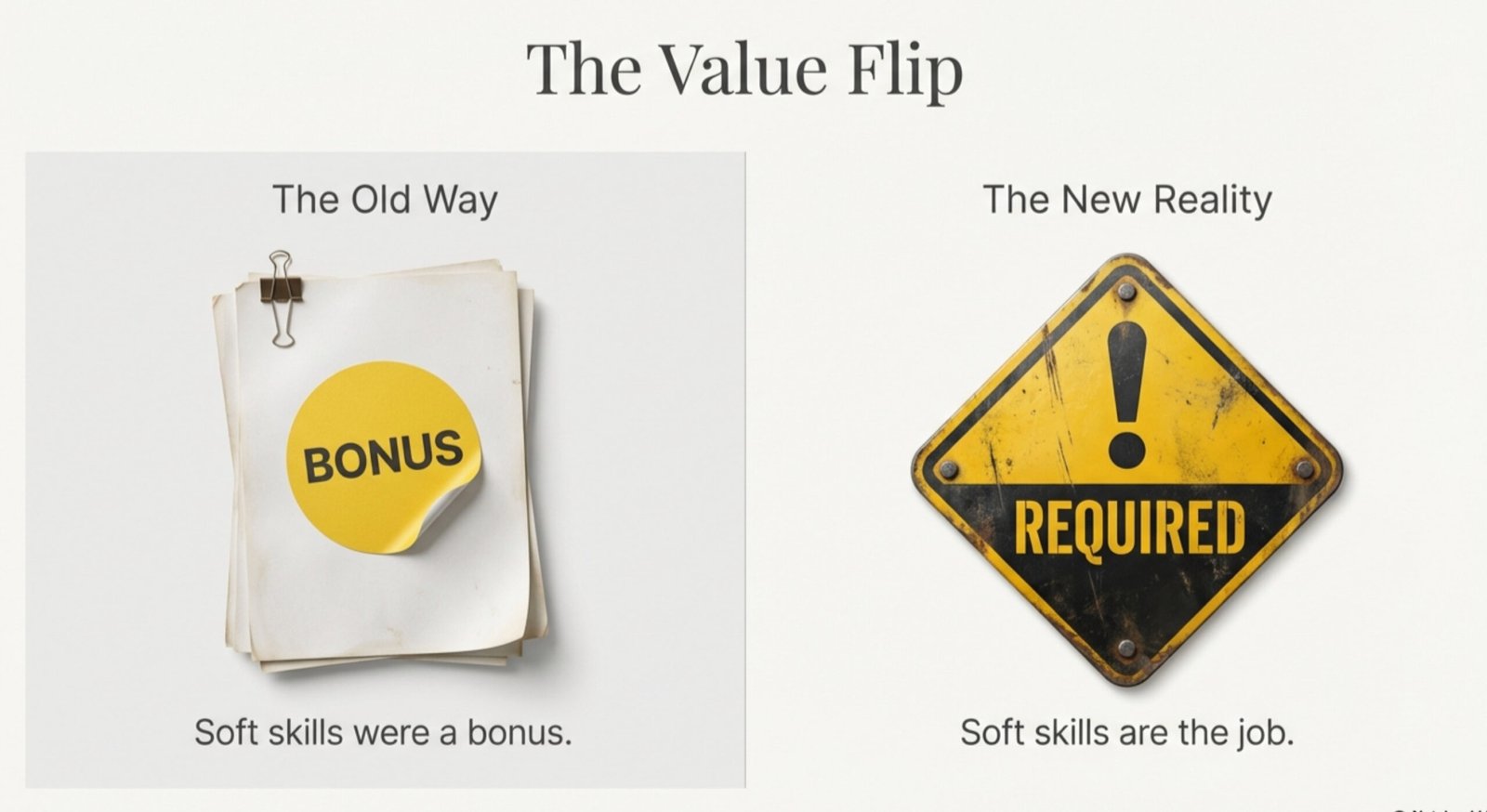
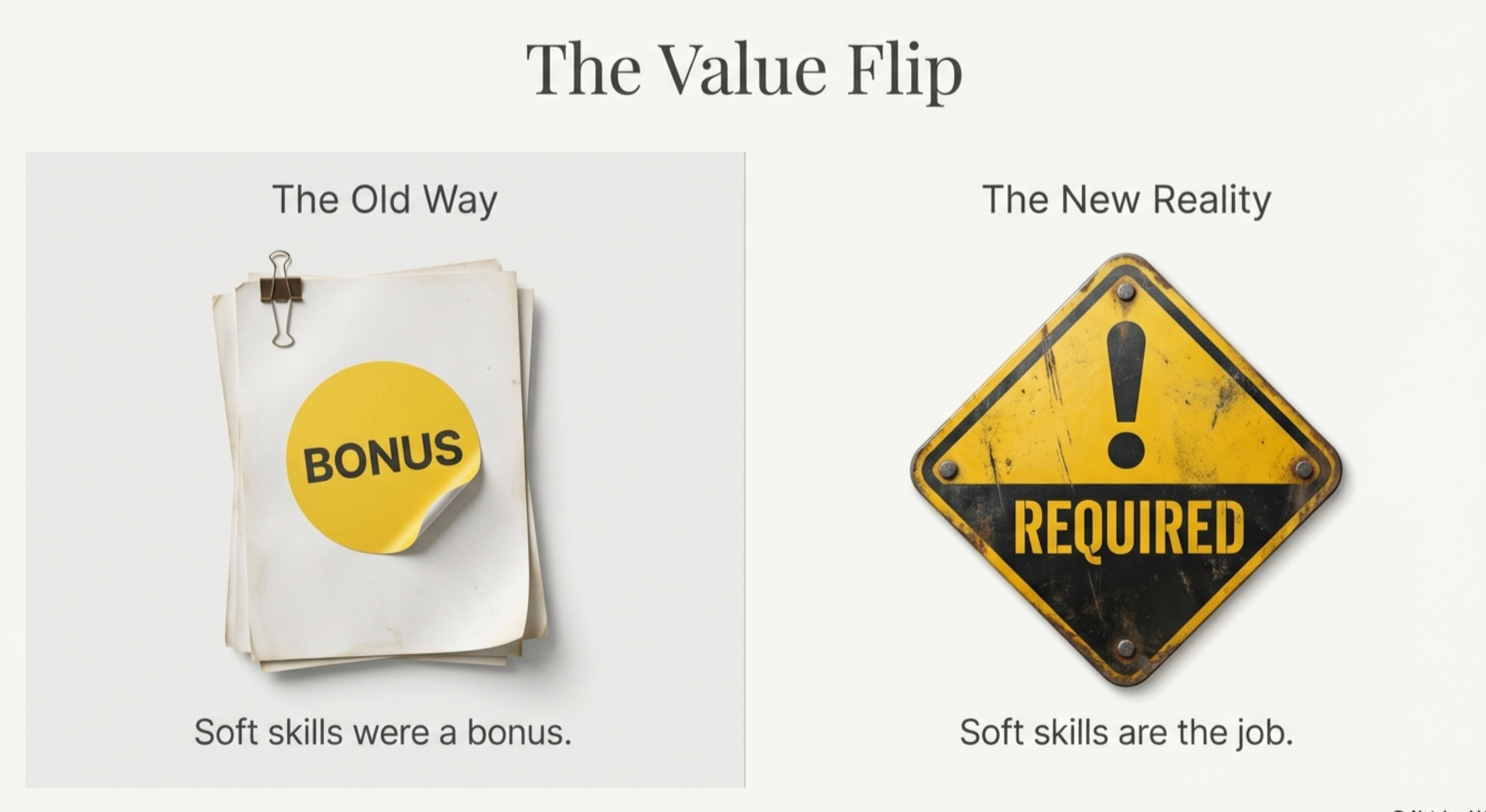
The Old Way: Focus on technical skills. Soft skills are nice-to-haves.
The New Reality: Technical routine is being automated. The “soft” skills are becoming the hard requirements.
What To Do Next
Audit your skill development honestly.
When was the last time you did something purely out of curiosity? When did you solve a problem by thinking outside the normal approach? When did you make a judgment call that couldn’t be reduced to data?
These aren’t abstract questions. They point to muscles you need to be exercising.
Invest in creativity. Not as a hobby—as a professional survival skill. Read outside your field. Make unexpected connections. Ask questions that don’t have obvious answers.
Develop judgment. AI can give you information. Judgment is knowing what to do with it. That comes from experience, reflection, and practice.
Stay collaborative. The future is hybrid teams of humans and machines. The humans who thrive will be the ones who work well with both.
The One Thing to Remember
AI frees you from the routine. But it won’t develop your curiosity, creativity, or judgment for you. Those remain yours to build—and they’re more valuable than ever.
This insight comes from an interview with Daniela Rus, MIT professor and director of CSAIL. The AI Shift curates wisdom from AI leaders and translates it for busy professionals navigating the AI era. Which of these skills—curiosity, creativity, judgment, collaboration—do you most need to develop?
Leave a Reply