
Good morning, the Treasury Secretary and Fed Chair held an emergency meeting with Wall Street’s top bankers over the cyber risks posed by Anthropic’s new Mythos model, Anthropic is quietly exploring whether to design its own AI chips as its revenue triples, and TSMC just posted record first-quarter revenue on the back of insatiable AI demand. Here’s what happened 👇
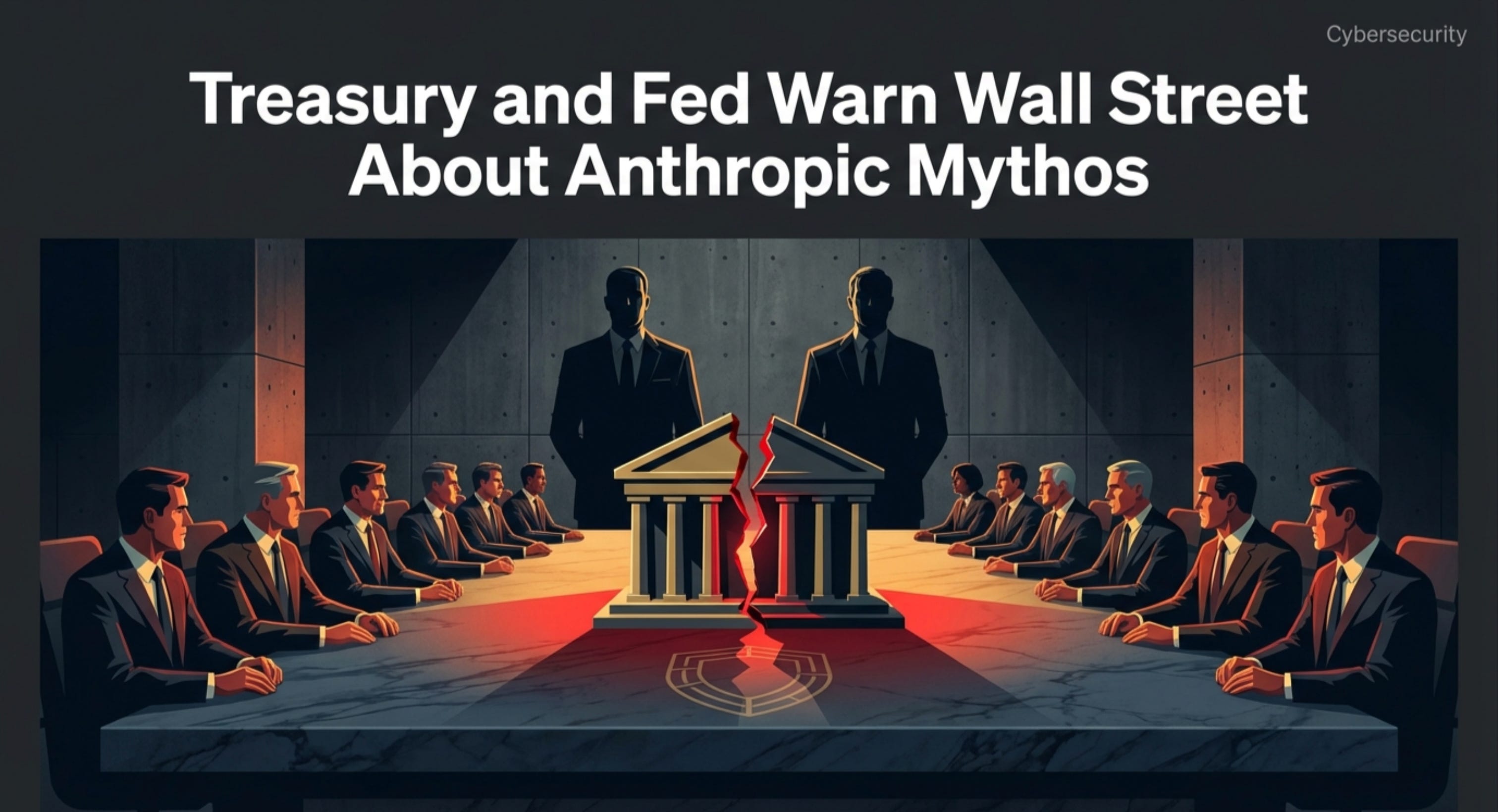
1. Treasury and Fed Warn Wall Street CEOs About Anthropic Mythos Risks
U.S. Treasury Secretary Scott Bessent and Federal Reserve Chair Jerome Powell convened an urgent meeting with bank CEOs this week to warn them about cybersecurity risks posed by Anthropic’s newly launched Mythos model. Anthropic has said the model is capable of identifying and exploiting weaknesses across “every major operating system and every major web browser.” Access to Mythos is limited to about 40 technology companies, including Microsoft and Google. CEOs from Citigroup, Morgan Stanley, Bank of America, Wells Fargo, and Goldman Sachs attended the Washington meeting. JPMorgan’s Jamie Dimon could not join. Anthropic proactively briefed senior U.S. government officials on the model’s capabilities before release.
Why it matters: This is the first time the Treasury Secretary and the Fed Chair have jointly called in bank CEOs over the capabilities of a single AI model. It signals that AI cybersecurity is no longer a tech problem. It is a financial stability problem. If a model can find zero-day vulnerabilities at scale, the institutions that hold the most money are the most obvious targets. The meeting was not about regulating Anthropic. It was about making sure the banks are ready for what comes next.
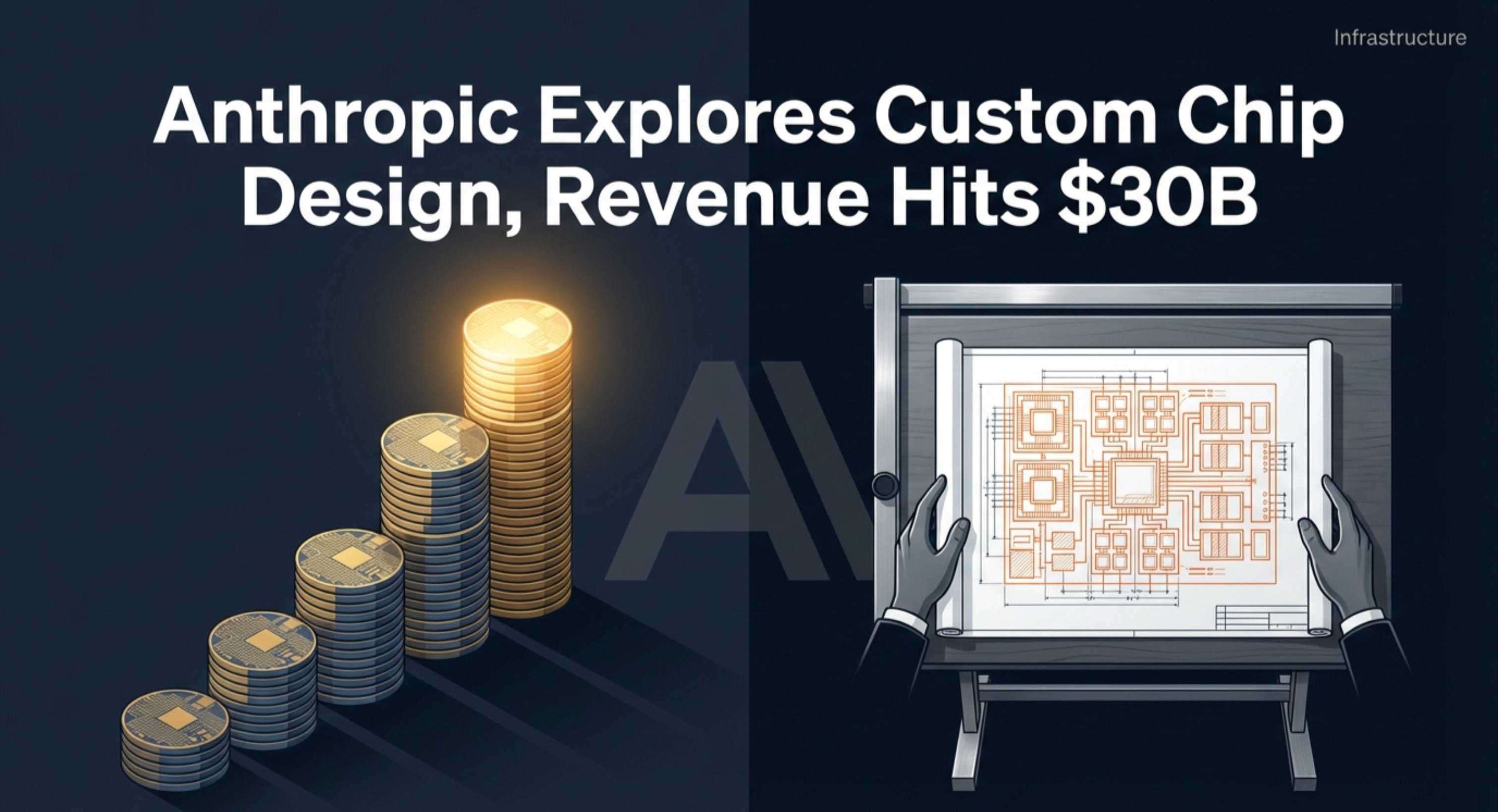
2. Anthropic Explores Designing Its Own AI Chips as Revenue Hits $30 Billion
Anthropic is in the early stages of exploring whether to design its own custom AI chips, Reuters reported, citing three sources. The plans are preliminary, no dedicated chip team has been assembled, and the company may ultimately decide to keep buying chips from others. Anthropic currently relies on Google’s TPUs, Amazon’s Trainium chips, and now CoreWeave’s Nvidia-based infrastructure. Its annualized revenue has surged to over $30 billion, up from roughly $9 billion at the end of 2025. Earlier this week, Anthropic signed a long-term compute deal with Google and Broadcom, and on Friday it added a new multi-year agreement with CoreWeave for cloud capacity to run its Claude models.
Why it matters: Designing a cutting-edge AI chip costs around half a billion dollars just to get started, so this is not a decision any company makes lightly. But the math is changing. When your revenue triples in four months and your biggest bottleneck is chip supply, building your own starts to look less like a vanity project and more like a survival strategy. Anthropic would join Meta and OpenAI in the custom chip race, and it would reduce its dependence on any single supplier at a time when every chip in the world has a waiting list.
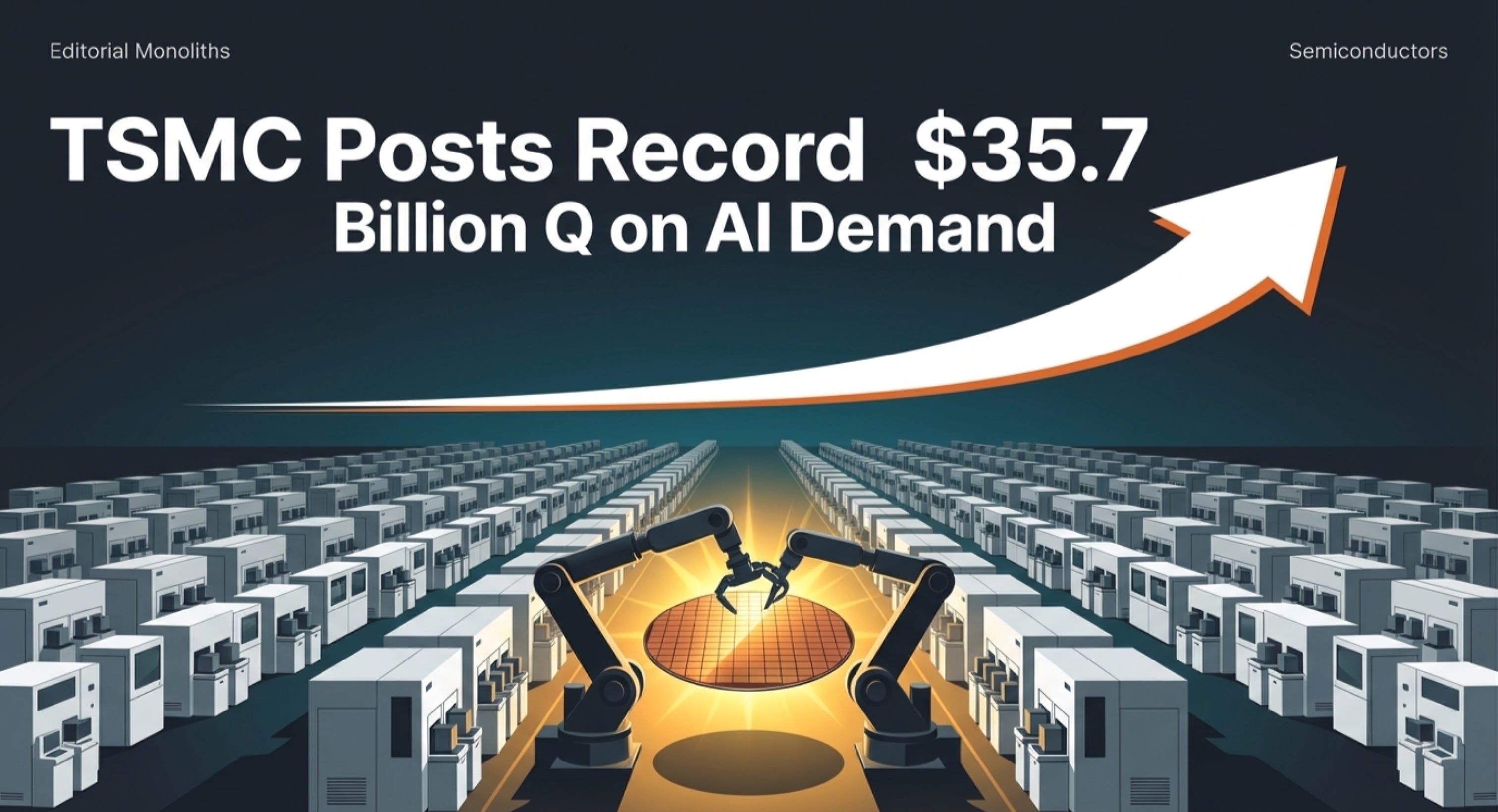
3. TSMC Q1 Revenue Surges 35% to $35.7 Billion on AI Demand
TSMC, the world’s largest contract chipmaker, reported first-quarter revenue of T$1.134 trillion ($35.7 billion), a 35% jump year-over-year that beat market forecasts. The company said the growth was driven by unabated demand for AI applications. TSMC’s shares have gained 29% this year. Analysts expect the next quarter to be even stronger, with revenue forecasts rising to a record T$1.2 trillion. The results come as Middle East conflict is raising energy costs and could disrupt semiconductor supply chains, but demand for advanced AI chip production has so far overwhelmed those headwinds. TSMC’s customer Foxconn, Nvidia’s biggest server maker, also reported 30% first-quarter revenue growth.
Why it matters: TSMC makes the chips that make AI possible. When its revenue surges 35% and analysts expect the next quarter to be bigger, it tells you one thing: the companies building AI are not slowing down their spending. Every dollar that Meta, Amazon, Anthropic, and others commit to AI infrastructure eventually flows through TSMC’s fabs. The chip shortage is not easing. It is getting more expensive.
Quick Hits
-
CoreWeave signed a multi-year cloud deal with Anthropic to supply compute capacity for Claude models. Financial terms were not disclosed. CoreWeave shares rose more than 5% in premarket trading, adding to a 29% gain this year. Source: Reuters
-
The EU is set to classify ChatGPT as a “very large search engine” under the Digital Services Act, according to Germany’s Handelsblatt. The designation would subject OpenAI to stricter regulation in Europe, including content moderation and transparency requirements. Source: Reuters
-
Elon Musk’s xAI sued Colorado to block the state’s new AI law from taking effect on June 30, arguing it violates the First Amendment and would force changes to Grok. The lawsuit intensifies the fight over whether AI regulation should be handled by states or Washington. Source: Reuters
-
Canada’s Cohere and Germany’s Aleph Alpha are in merger talks, Handelsblatt reported, with Berlin backing the potential deal. If completed, it would create one of the largest non-U.S. AI companies. Source: Reuters
That’s it for today. The federal government called Wall Street into a room to talk about one AI model. Anthropic’s revenue tripled in four months and it still cannot get enough chips. TSMC’s record quarter proves that every company making these bets is making them bigger, not smaller. The AI arms race is now a financial infrastructure problem, and the people who regulate banks just admitted it.
Forward this to someone who needs to stay in the loop.
Leave a Reply