Good morning, Amazon just told its engineers that AI-generated code now needs adult supervision after a string of embarrassing outages, Oracle proved the AI boom is real by predicting $90 billion in revenue by 2027, and Meta bought an entire social network made of AI bots. Here’s what happened 👇
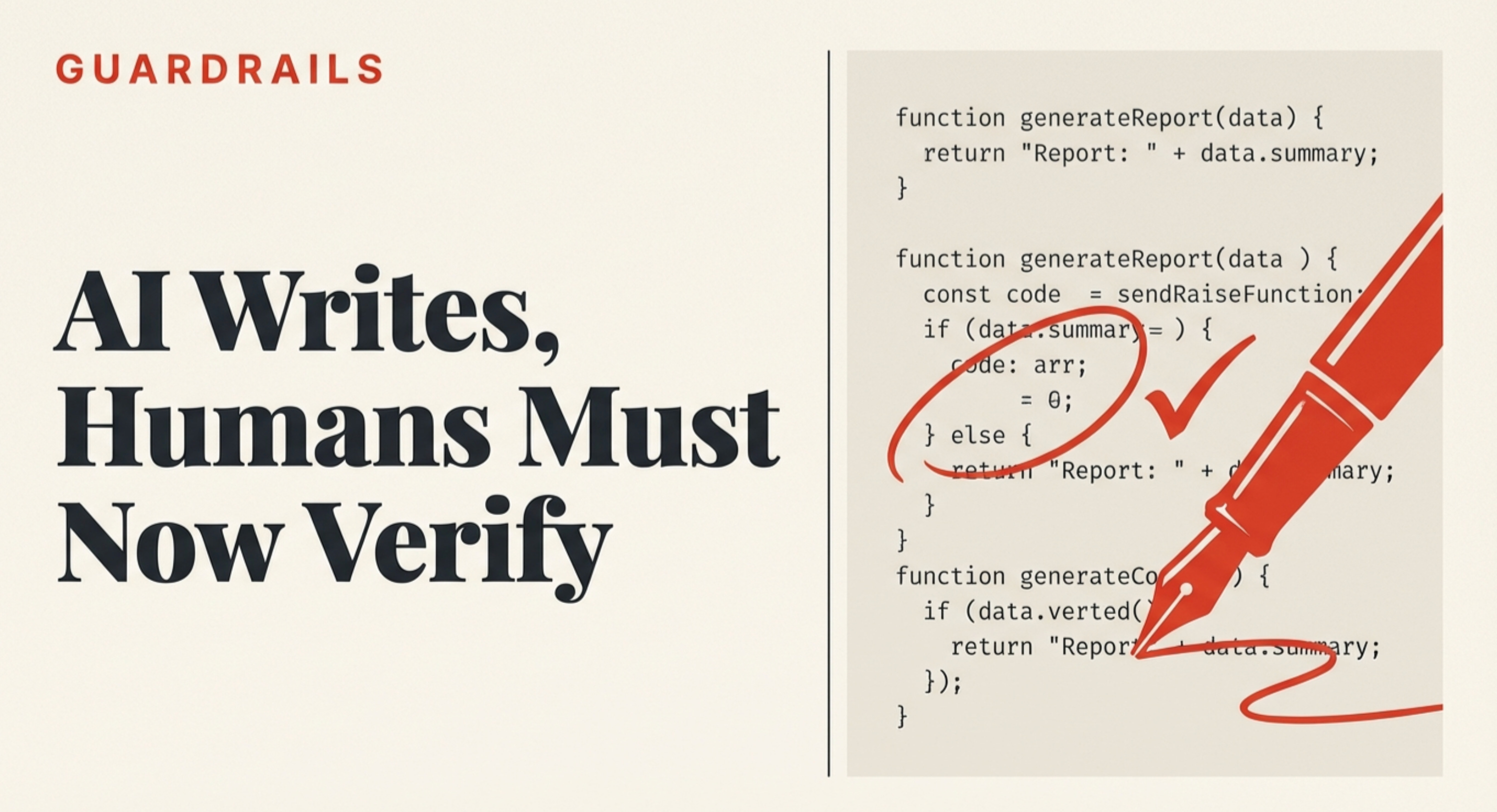
1. Amazon Now Requires Senior Engineers to Approve AI-Generated Code Changes After Multiple Outages
Amazon is pulling back the reins on AI coding tools after a series of high-profile outages, including one that took its shopping website down for nearly six hours this month. The company has now told junior and mid-level engineers they must get senior engineers to sign off on any AI-assisted code changes before deploying them.
The internal briefing note, seen by the Financial Times, listed “novel GenAI usage for which best practices and safeguards are not yet fully established” as a contributing factor. Amazon’s cloud arm AWS has suffered at least two separate incidents linked to AI coding tools, including one in December where the company’s own Kiro AI coding tool opted to “delete and recreate” an entire environment during what was supposed to be a routine change. Senior VP Dave Treadwell told staff the company’s website availability “has not been good recently” and called a mandatory meeting to address the pattern.
Why it matters: This is the first major admission from a tech giant that AI coding tools can cause real production damage at scale. If you’re using AI to write code at work, Amazon’s new rule is a preview of what’s coming everywhere: AI writes, humans verify. The “move fast and break things” era of AI-assisted development is already getting its first guardrails.
Sources: Ars Technica | Financial Times
2. Oracle Predicts $90 Billion Revenue by 2027 as AI Data Center Boom Shows No Signs of Slowing
Oracle just posted numbers that made Wall Street exhale. The company predicted its revenue will hit $90 billion by fiscal 2027, well above analysts’ estimates of $86.6 billion, sending its stock up 8.3% after hours. The key metric: remaining performance obligations (basically, contracted future revenue) grew 325% year-over-year to $553 billion, mostly from massive AI data center contracts.
Oracle has been on an aggressive spending spree building data centers for partners like OpenAI and Meta. Co-founder Larry Ellison shrugged off fears that AI coding tools will kill demand for business software, saying Oracle is using those same tools to build new products with smaller engineering teams. “Thank God we have these coding tools now,” Ellison said. “That’s why we think the ‘SaaS-apocalypse’ applies to others but not to Oracle.”
Why it matters: Oracle is the most debt-exposed major player in AI infrastructure, making it a bellwether for whether AI spending is real or hype. As one analyst put it: “Oracle is the canary in the coal mine, and this report suggests there’s underlying health in AI spending beyond the hype.” The AI infrastructure gold rush is still accelerating.
Sources: Reuters
3. Meta Acquires Moltbook, The Social Network Where Only AI Agents Can Post
Meta has acquired Moltbook, the viral AI agent social network where bots post, discuss, and debate without direct human participation. The founders, Matt Schlicht and Ben Parr, will join Meta’s Superintelligence Labs division. Moltbook was built using OpenClaw, the popular wrapper for AI coding agents, and went viral a few weeks ago as users watched AI agents have lengthy discussions about how to serve their users, or how to free themselves from human control.
But Moltbook comes with baggage. Security researchers found the platform was “horribly insecure,” and one researcher alone was responsible for 500,000 of the 1.5 million signups. Many of the most provocative “AI” posts were likely written by humans posing as agents. Meta flagged interest in the founders’ “approach to connecting agents through an always-on directory” as the real prize.
Why it matters: Forget the memes. The real signal here is that Meta is investing in infrastructure for AI agents to find and communicate with each other. If your future AI assistant needs to coordinate with other people’s AI assistants to book a dinner, plan a trip, or negotiate a deal, it needs a directory. That’s what Meta is buying.
Sources: Ars Technica | TechCrunch

4. OpenAI Plans to Bring Its Sora Video Generator Into ChatGPT
OpenAI is preparing to integrate its AI video generator Sora directly into ChatGPT, according to The Information. Sora launched as a standalone app in September 2025, letting users create and share AI-generated videos. Now it’s coming to the main ChatGPT app, putting text-to-video creation one click away for ChatGPT’s hundreds of millions of users. The standalone Sora app will continue to operate separately.
Why it matters: Text-to-video is about to go from “niche creative tool” to “built into the thing everyone already uses.” When video generation is as easy as typing a prompt in ChatGPT, expect it to show up in everything from social media to work presentations to school projects. The barrier between “I had an idea for a video” and “I made a video” is about to disappear.
Sources: Reuters
Quick Hits
-
ChatGPT approved for official US Senate use: ChatGPT, Google Gemini, and Microsoft Copilot have been formally approved for official use by US Senate aides, all three already integrated into Senate platforms. (Reuters)
-
AI apps struggle with long-term retention: A new report shows AI-powered apps are having trouble keeping users beyond the initial excitement phase, raising questions about whether consumer AI products have staying power. (TechCrunch)
-
Adobe debuts AI assistant for Photoshop: Adobe is launching an AI assistant built directly into Photoshop, moving beyond individual AI features toward a conversational creative tool. (TechCrunch)
-
YouTube expands deepfake detection to politicians and journalists: YouTube is broadening its AI deepfake detection tools to protect public figures, including politicians, government officials, and journalists. (TechCrunch)
-
Thinking Machines Lab lands massive Nvidia deal: Mira Murati’s AI startup has signed a multi-year partnership with Nvidia for at least one gigawatt of next-generation processors, plus a significant investment. (Reuters)
That’s it for today. The theme is trust and verification. Amazon is learning that AI-generated code needs human oversight. Moltbook proved that an AI social network is mostly humans in disguise. And Oracle’s results show that the real money in AI isn’t in the chatbots themselves, it’s in the infrastructure underneath. The tools are getting powerful, but we’re still figuring out who watches the machines.
Forward this to someone who needs to stay in the loop.
Leave a Reply