Good morning, Adobe’s CEO of 18 years just stepped down because AI competitors are eating the company’s lunch, ByteDance found a $2.5 billion workaround to get Nvidia’s best AI chips despite U.S. restrictions, and Google Maps just got a Gemini-powered brain that might make you forget you ever needed a travel agent. Here’s what happened 👇
1. Adobe’s CEO Steps Down After 18 Years as AI Rivals Close In
Shantanu Narayen, the CEO who transformed Adobe from a boxed-software company into a $200+ billion subscription powerhouse, is stepping down. He’ll stay on as board chair, but Adobe hasn’t named a successor yet, and Wall Street doesn’t like the uncertainty. Shares dropped 7% on Friday, adding to a 23% slide this year alone.
The timing is hard to ignore. AI-powered competitors like Canva and Figma have been rapidly shipping generative AI tools for image creation, video editing, and design. Marketers and movie studios are increasingly turning to cheaper AI alternatives that can generate professional visuals from a text prompt. Narayen told investors that AI-first products “should be our next billion-dollar business,” but analyst Ben Barringer at Quilter Cheviot put it bluntly: “The market already viewed Adobe as on the wrong side of the early AI winners and losers.”
Why it matters: Adobe is the gold standard for creative professionals. When Photoshop’s parent company loses its CEO over AI pressure, it tells you something about how fast generative AI is reshaping industries that seemed untouchable just two years ago. If you use any creative tool at work, the landscape is shifting under your feet.
2. ByteDance Is Spending $2.5 Billion on Nvidia’s Best AI Chips, and the U.S. Can’t Stop It
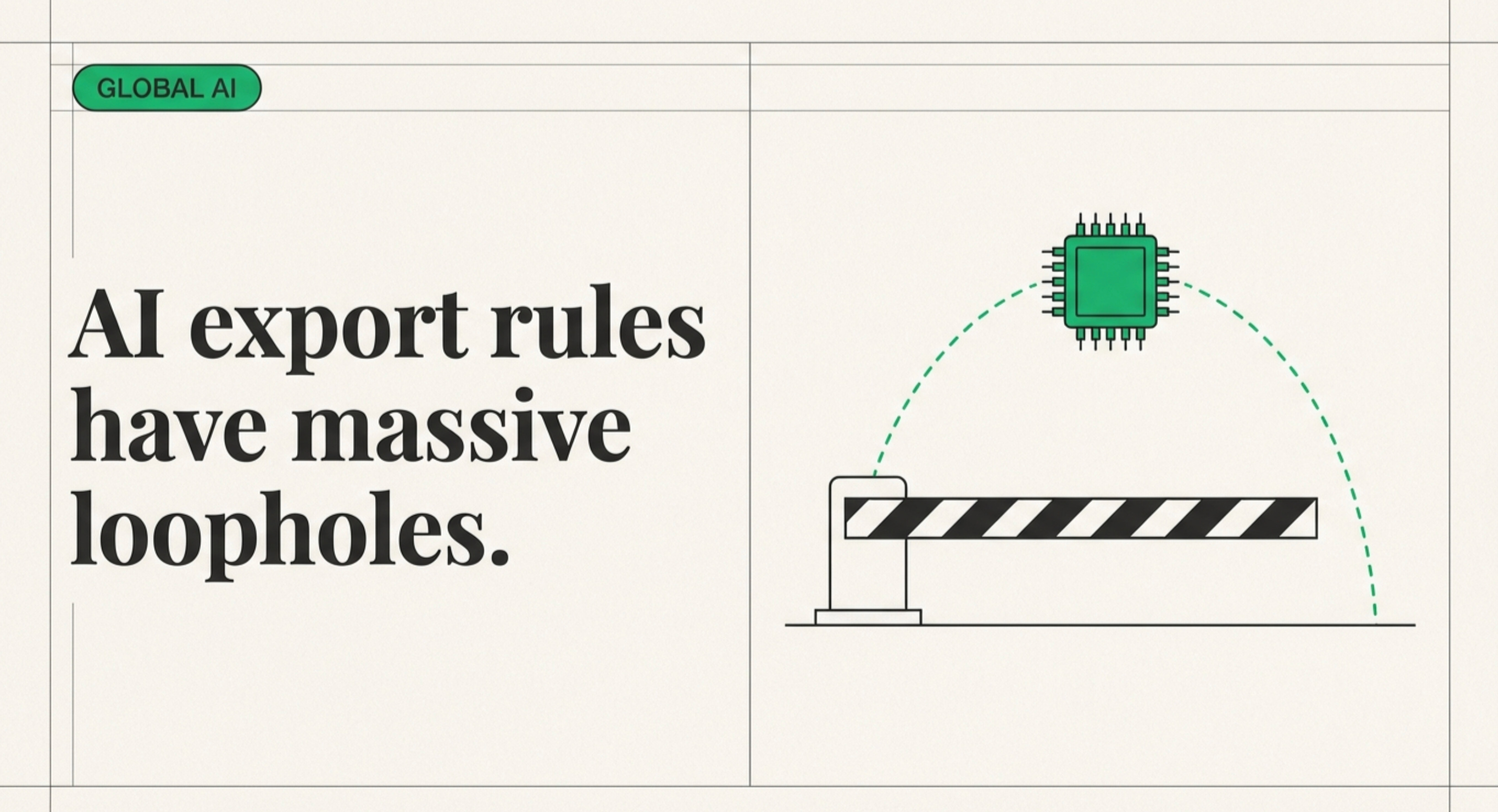
TikTok’s parent company ByteDance has found a creative workaround to U.S. chip export controls. Instead of trying to ship Nvidia’s top-tier Blackwell B200 chips into China (which is banned), ByteDance is partnering with Aolani Cloud, a Southeast Asian cloud firm, to deploy roughly 36,000 B200 chips in Malaysia. The hardware build-out would cost more than $2.5 billion.
The arrangement technically follows the rules. U.S. export restrictions only block chips from going to “controlled countries” like China, and Malaysia isn’t on that list. Nvidia says this is “by design” and that all cloud partners go through reviews before receiving products. But the move raises obvious questions about whether the spirit of the restrictions is being met when a Chinese company can access the world’s most advanced AI hardware by simply placing it in a neighboring country.
Why it matters: The global AI race isn’t just about who builds the best models. It’s about who gets the hardware to train them. ByteDance just showed that export controls have a massive loophole, and the implications go way beyond one company. If the rules can be sidestepped this easily, expect a policy debate that affects everyone from chip makers to cloud providers.
Sources: Reuters
3. Google Maps Gets a Gemini Brain and Its Biggest Update in a Decade
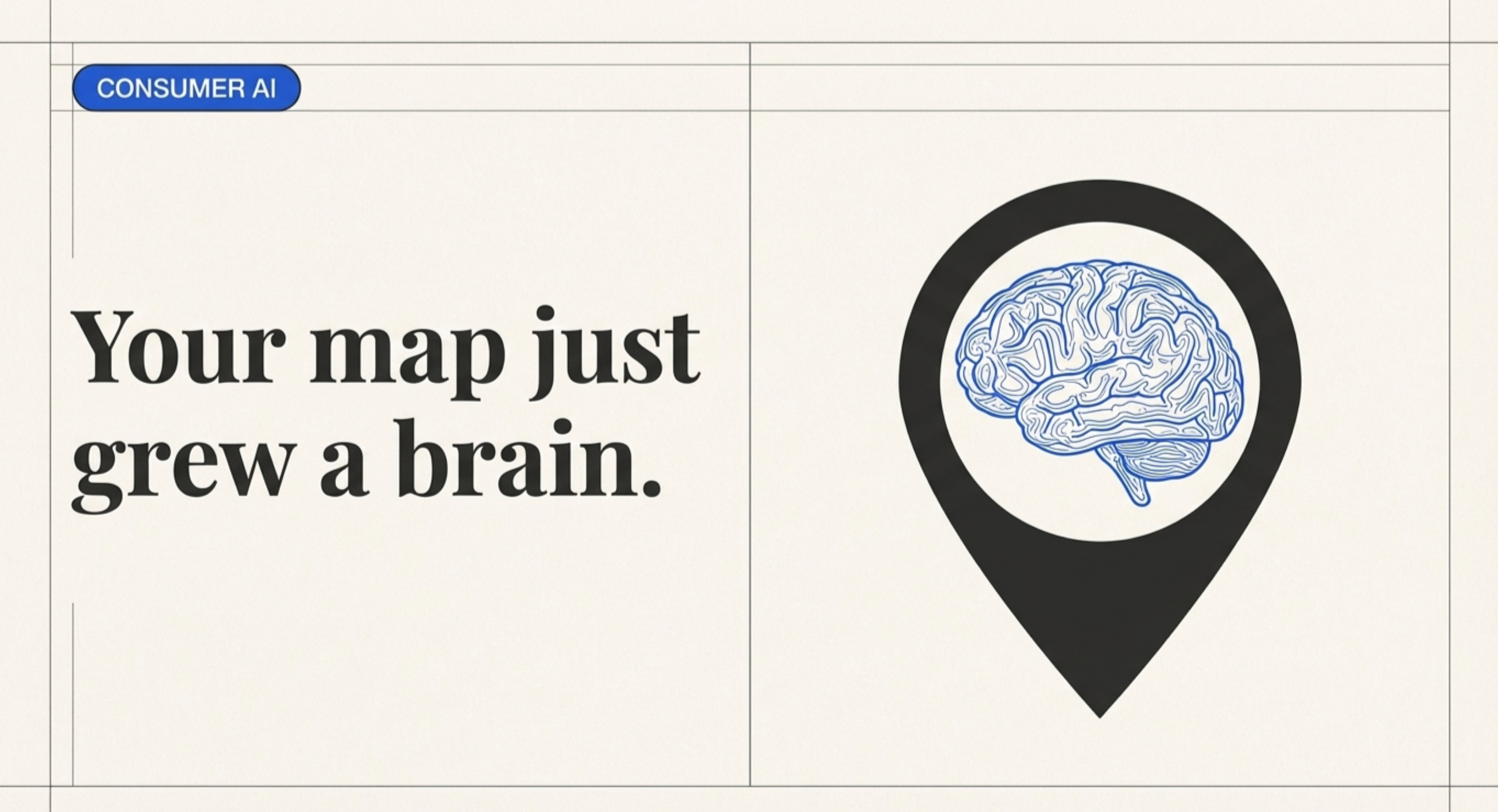
Google just dropped what it calls “the biggest update to Maps in over a decade.” The headline feature: Ask Maps, a Gemini-powered conversational search that lets you ask questions like “My phone is dying, where can I charge it without waiting in a long line for coffee?” or “Is there a public tennis court with lights on tonight?” It pulls from real user tips and personalizes answers based on your history. If you tend to search for vegan restaurants, it factors that in automatically.
The navigation side got a complete overhaul too. You now get 3D building views, highlighted crosswalks and traffic lights, transparent buildings so you can see upcoming turns, and voice directions that reference landmarks instead of just distances (”Go past this exit and take the next one for Illinois 43 South”). It also shows you a Street View preview of your destination before you leave, complete with parking recommendations and building entrance markers. Ask Maps is live now in the U.S. and India, with the navigation update rolling out across the U.S. on iOS, Android, CarPlay, and Android Auto.
Why it matters: This is what AI integration looks like when it’s done well. Instead of slapping a chatbot onto an existing product, Google rebuilt the core experience around Gemini. For the 2 billion people who use Google Maps monthly, this turns a directions app into something closer to a local expert who knows your preferences.
Sources: TechCrunch, The Verge
Quick Hits
-
Meta delayed its next AI model, codenamed “Avocado,” to May or later due to performance concerns. The company is reportedly unhappy with how it stacks up against competitors. (Reuters)
-
Microsoft launched Copilot Health, a new feature that connects to your medical records and wearable devices. It can track health metrics, answer questions about your conditions, and coordinate information across providers. (The Verge)
-
Bumble introduced an AI dating assistant called “Bee” that learns your values and communication style through private chats, then finds better matches. It’s a shift away from the swipe model toward something more like a personal matchmaker. (TechCrunch)
-
AI customer service startup Wonderful hit a $2 billion valuation after raising $150M in Series B funding, just four months after its $100M Series A. Investor appetite for AI agent startups shows no signs of slowing. (TechCrunch)
That’s it for today. The thread running through all of today’s news is the same: AI isn’t a feature you add to a product anymore. It’s becoming the product itself, and the companies that don’t rebuild around it are watching their stock price, their CEO, or both walk out the door.
Forward this to someone who needs to stay in the loop.
Leave a Reply