AI Literacy is Non-Negotiable
But not everyone needs to be an AI geek. Here’s what you actually need to know.
The Reality
“Should I learn AI?”
It’s the question everyone’s asking—parents wondering what to teach their kids, professionals wondering if they’re falling behind, executives wondering what their teams need to know.
Daniela Rus, MIT professor and head of the world’s largest AI lab, has a clear answer: yes. But with an important caveat.
“Everyone needs to understand something about AI and technology, but not everyone needs to understand everything about the technologies.”
That distinction matters. Because the pressure to become an “AI expert” is paralyzing people into learning nothing at all.
The Shift
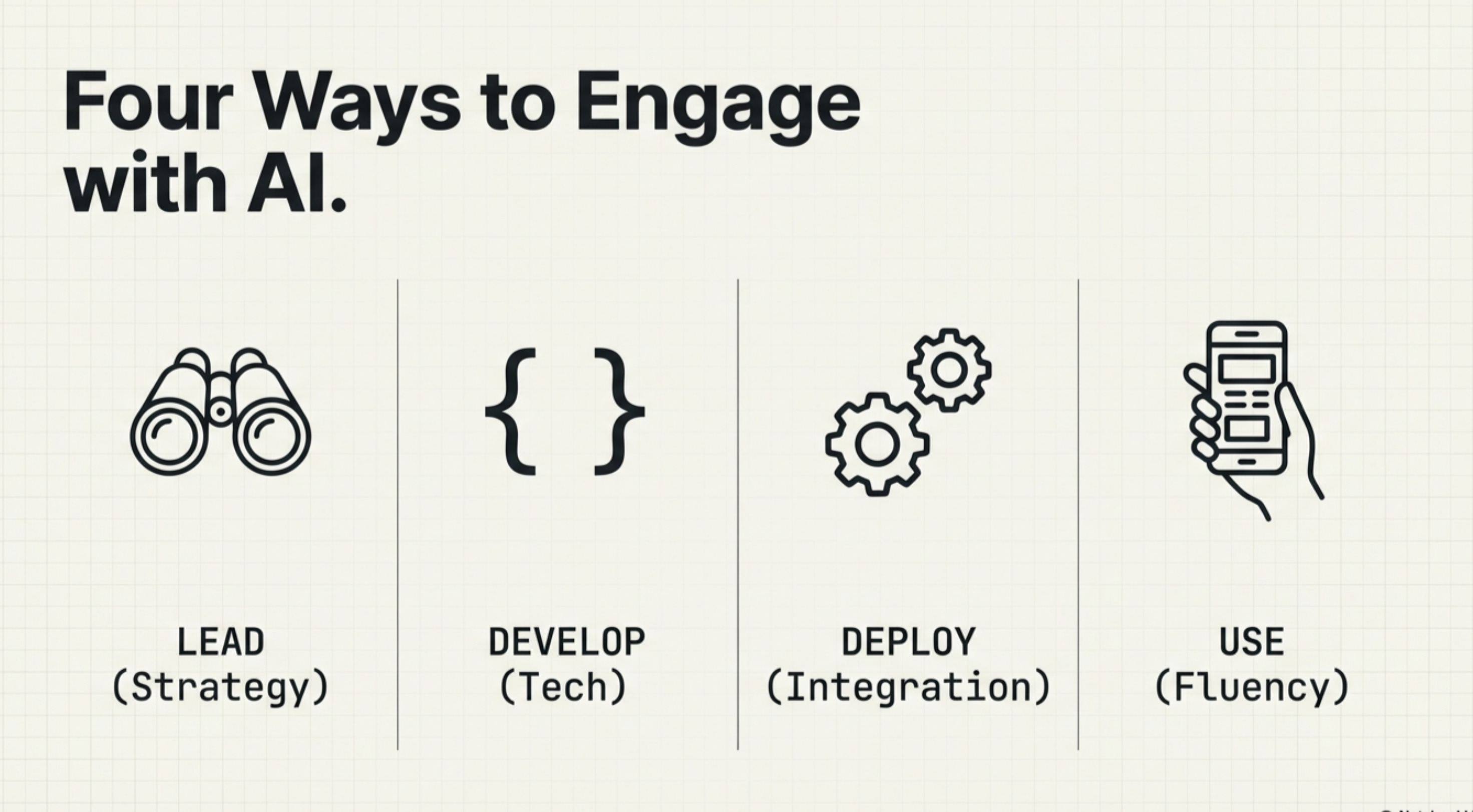
Rus breaks it down simply. There are different levels of AI involvement, and each requires different knowledge:
-
Lead with AI: Strategic understanding. Where is the technology going? What’s possible? What’s hype?
-
Develop AI: Technical depth. Algorithms, models, the math underneath.
-
Deploy AI: Implementation skills. How to integrate AI into existing systems and workflows.
-
Use AI: Practical fluency. How to work with AI tools to be more effective at your job.
Most people fall into that last category. And that’s fine.
You don’t need to understand how large language models work under the hood. You don’t need to train your own neural network. You don’t need a computer science degree.
But you need to know something. You need enough literacy to recognize what AI can do for your work, to evaluate tools, to spot opportunities, to avoid being left behind.
The Old Way: AI is for engineers and data scientists. Everyone else can ignore it.
The New Reality: AI literacy is like computer literacy in the 90s. Not optional. Not specialized. Baseline.
What To Do Next
Figure out which category you’re in. Be honest.
If you’re leading—you need to understand AI strategy, capabilities, and limitations. Read widely. Talk to people who are building.
If you’re deploying—you need to understand integration, workflows, and change management. The technology is only part of the puzzle.
If you’re using—you need hands-on fluency with tools relevant to your field. Not theory. Practice.
And regardless of category, Rus emphasizes that foundational skills still matter: math, science, critical thinking, creativity. AI doesn’t replace these. It amplifies them.
Start where you are. Learn what you need. Don’t let the pressure to know everything stop you from knowing something.
The One Thing to Remember
AI literacy is non-negotiable. But you don’t need to be an expert—you need to be literate enough to use, evaluate, and adapt. That’s within reach for everyone.
This insight comes from an interview with Daniela Rus, MIT professor and director of CSAIL. The AI Shift curates wisdom from AI leaders and translates it for busy professionals navigating the AI era. Where do you fall—leading, developing, deploying, or using AI? And are you learning what that level requires?
Leave a Reply