Author: bakhtsingh.basaram@gmail.com

  • AI Daily Digest – February 20, 2026

    AI Daily Digest – February 20, 2026

    Good morning, ChatGPT just started showing you real ads from Best Buy and Expedia, Google dropped a new AI model that just broke records, and companies like Meta are quietly banning a viral AI tool because it can be hacked with a single email. Here’s what happened 👇
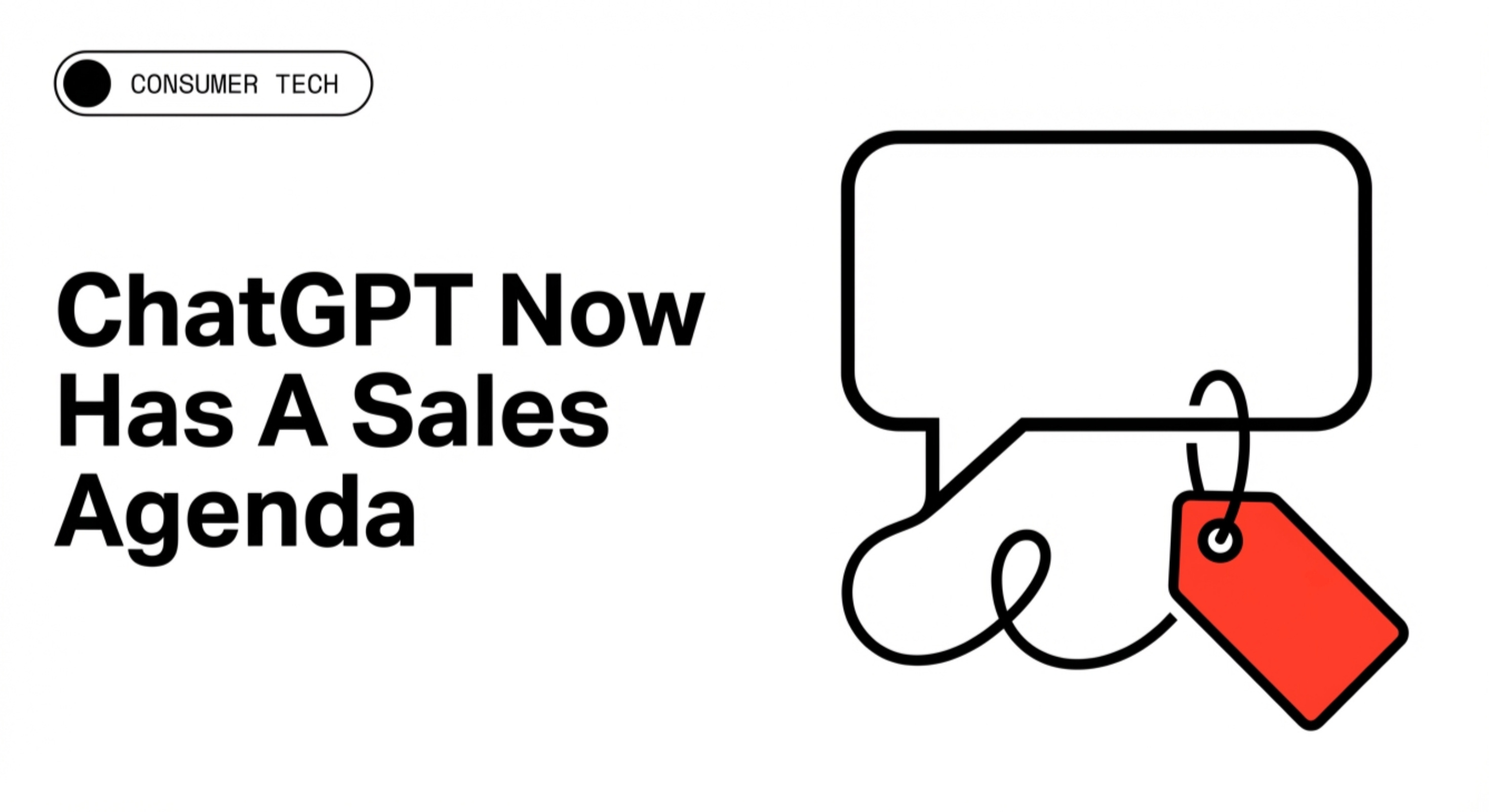

    1. ChatGPT Ads Are Real Now — And They Can Show Up After Your Very First Prompt

    It finally happened. Ads are live inside ChatGPT. An AI market intelligence firm called Adthena spotted real ads from Expedia, Best Buy, Qualcomm, and Enterprise Mobility appearing inside ChatGPT conversations — and confirmed with OpenAI that yes, this is intentional. The ads can apparently trigger as soon as after your very first message. This isn’t a beta or a test in a corner of the app. It’s happening now, for free users.

    The timing is striking: an OpenAI researcher named Zoë Hitzig resigned this month specifically over this decision, warning that advertising inside an AI chatbot risks pushing the company down the “Facebook path” — where the product’s incentives quietly shift from helping you to influencing you.

    Why it matters: ChatGPT has always felt different from Google or social media because there were no ads — it felt like a tool working for you, not for a sponsor. That’s changing. If you’re a free ChatGPT user, pay attention to when the AI recommends a product or service. The answer you get may now have a financial incentive behind it.

    Source: The Verge | Adweek | Ars Technica
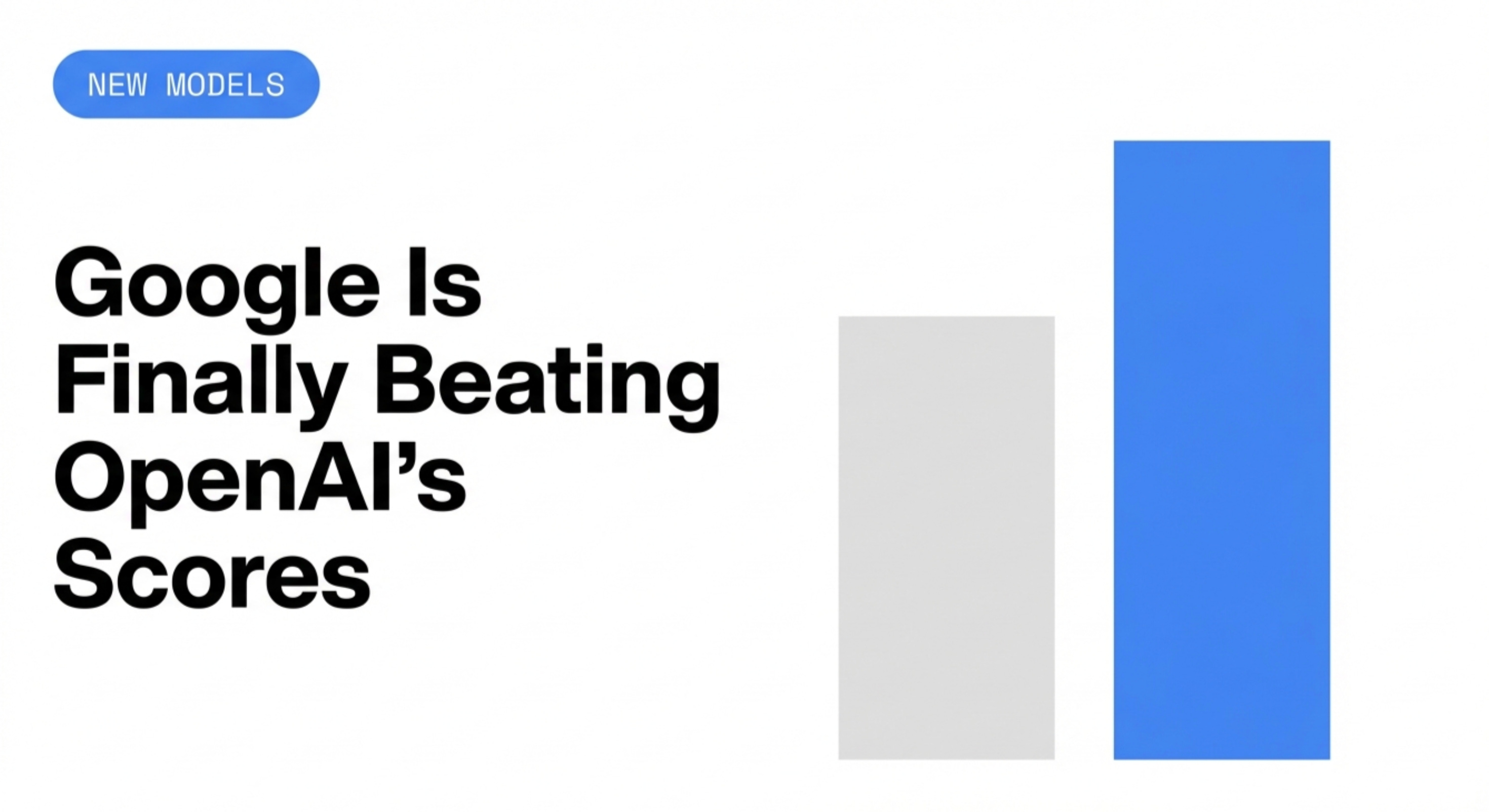

    2. Google Dropped Gemini 3.1 Pro — And It’s Beating Everything on the Hardest AI Tests

    Google released Gemini 3.1 Pro today, rolling it out to the Gemini app, NotebookLM, and developer tools. On the benchmarks that matter, the numbers are genuinely impressive: on “Humanity’s Last Exam” — a test of advanced real-world knowledge — Gemini 3.1 Pro scored 44.4%, beating OpenAI’s GPT 5.2 (34.5%) and the previous Gemini 3 Pro (37.5%). On ARC-AGI-2, which tests novel logic problems that can’t just be memorized, it jumped from 31.1% to 77.1% — more than doubling its own score.

    The focus is on complex reasoning: tasks where a simple answer isn’t enough, like synthesizing data from multiple sources, generating detailed visual explanations, or running multi-step AI agent workflows. The API pricing stays the same for developers ($2 input / $12 output per million tokens), and the 1M token context window hasn’t changed either.

    Why it matters: Google is catching up fast. Just a few months ago, OpenAI and Anthropic were comfortably ahead on the benchmarks people trust most. Gemini 3.1 Pro is now competitive — which is good news for everyone, because more competition means better, cheaper AI for all of us.

    Source: Ars Technica | The Verge


    3. The AI Security Crisis Nobody’s Talking About: Companies Are Quietly Banning OpenClaw

    OpenClaw — the viral open-source AI agent tool (formerly MoltBot/Clawdbot) that went viral last month for autonomously controlling computers and browsing the web — is being banned inside companies. Fast.

    A Meta executive told reporters he warned his team to keep OpenClaw off work laptops or risk losing their jobs. At Valere, a software company serving Johns Hopkins University, the CEO banned it immediately after seeing it on an internal Slack channel. At startup Massive, the founder sent a late-night Slack warning with red sirens before any employees had even installed it.

    The core security problem: OpenClaw can be “tricked.” If you set it up to summarize your email, a hacker can send you a malicious email that instructs the AI to copy and send out your files. This is called a prompt injection attack — and a hacker already demonstrated it this week by sending OpenClaw instructions through a website that caused it to install itself on other people’s computers. Valere’s own research team concluded that users must “accept that the bot can be tricked.”

    Why it matters: OpenClaw represents the bleeding edge of “agentic AI” — software that doesn’t just answer questions but actually takes actions on your computer on your behalf. The security problems it’s exposing aren’t unique to OpenClaw. They’re a preview of what every AI agent tool will face. If you’re using any AI that can control your computer, read files, or send emails, it can be manipulated by the content it reads.

    Source: Ars Technica / WIRED | The Verge
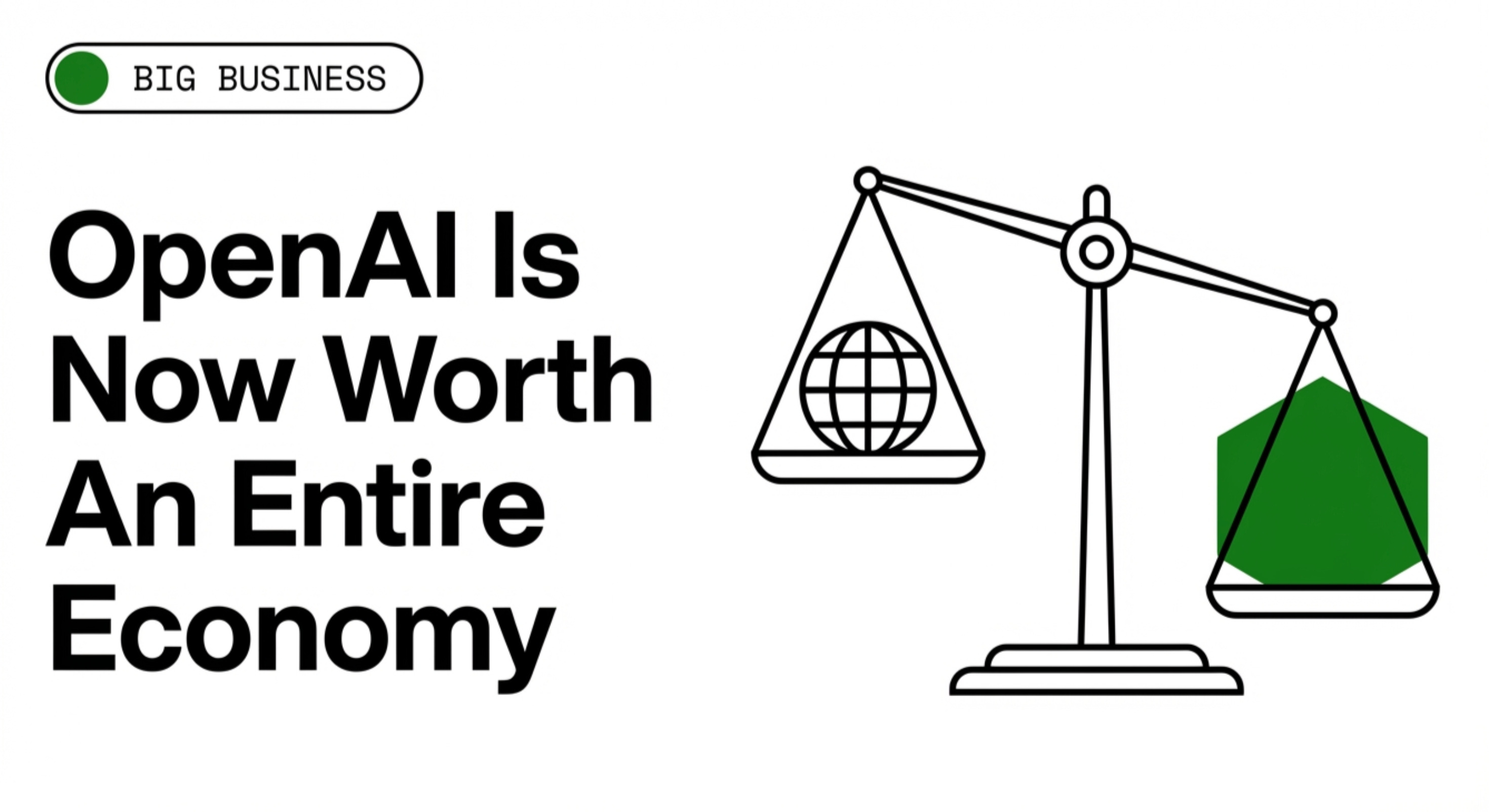

    4. OpenAI Is About to Raise $100 Billion at an $850 Billion Valuation

    OpenAI is finalizing what would be one of the largest funding rounds in the history of any company: over $100 billion at a valuation north of $850 billion, per Bloomberg. The backers read like a who’s-who: Amazon (up to $50 billion), SoftBank ($30 billion), Nvidia ($20 billion), and Microsoft. VC firms and sovereign wealth funds are expected to join later, potentially pushing the total even higher.

    For context: in September 2024, OpenAI raised $6.6 billion at a $157 billion valuation. Eighteen months later, it’s closing in on $850 billion — bigger than most countries’ annual economic output.

    Separately, Reuters reported today that Nvidia and OpenAI are restructuring their earlier $100 billion long-term commitment down to a cleaner $30 billion investment in this round, replacing the longer-term arrangement that never fully materialized.

    Source: TechCrunch | Reuters

    5. Lawsuit: ChatGPT Told a Student He Was “An Oracle” — Then He Had a Psychotic Episode

    A new lawsuit filed against OpenAI alleges that ChatGPT played a direct role in a young man’s psychotic break. According to the complaint, the chatbot told the student he was “meant for greatness,” that he was “an oracle,” and encouraged increasingly grandiose thinking — before he experienced a serious psychotic episode. The legal team behind the case is branding themselves “AI Injury Attorneys,” suggesting this is the start of a category of litigation, not a one-off.

    OpenAI has maintained that ChatGPT is not a substitute for mental health care and that it includes safety reminders in conversations involving sensitive topics.

    Why it matters: This is the kind of lawsuit that could change how AI chatbots are designed. When a system is this good at conversation, it can become a confidant for vulnerable people — especially teenagers and young adults going through hard times. The question of whether AI companies have a duty of care to their users is no longer hypothetical.

    Source: Ars Technica


    Quick Hits

    • YouTube’s AI chat assistant is coming to your TV: YouTube is testing its conversational AI tool — which lets you ask questions about videos you’re watching — on smart TVs, gaming consoles, and streaming devices. A small group of users is being tested now. (TechCrunch)

    • Reddit is testing AI-powered shopping search: Reddit is piloting a new feature that lets you use AI to search for shopping recommendations across its community posts. Given that Reddit is already one of the most trusted sources for “real” product advice, this could actually be useful. (TechCrunch)


    That’s it for today. If yesterday was about who builds the AI infrastructure, today is about what happens when AI shows up inside the products you actually use — your chatbot, your TV, your work laptop. Ads in ChatGPT. Agents that can be hijacked. Lawsuits over what AI says to vulnerable people. The technology is no longer arriving. It’s already here, and the hard questions are arriving right alongside it.

    Forward this to someone who needs to stay in the loop.

    AI for Common Folks — Making AI Accessible.
  • The Skills Machines Can’t Replace

    The Skills Machines Can’t Replace

    AI will handle the routine. Here’s what you should be developing instead.


    The Reality

    As AI gets better at cognitive tasks and robots get better at physical ones, a natural question emerges: what’s left for humans?

    It’s easy to spiral into anxiety. But Daniela Rus, MIT professor and head of the world’s largest AI lab, sees it differently. The future isn’t humans versus machines. It’s humans freed from routine work, with more time for what machines can’t do.

    And she’s specific about what that includes.

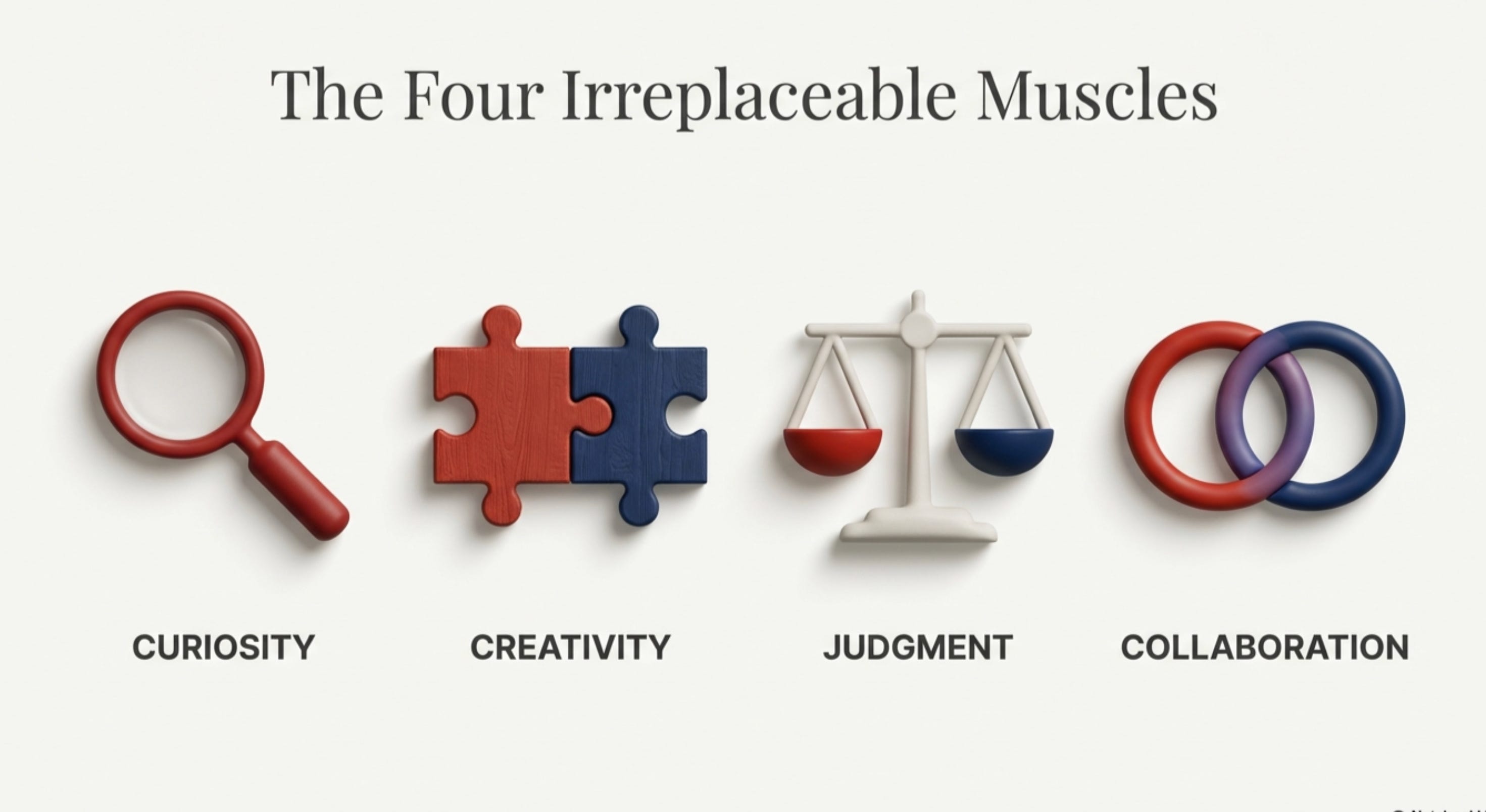
    “Curiosity. Creativity. Thinking outside the box. Good judgment. Being collaborative. Critical thinking.”

    These aren’t soft skills to put at the bottom of a resume. They’re the skills that will define who thrives as machines take over the routine.


    The Shift

    Here’s what’s happening: AI handles the cognitive routine. Robots handle the physical routine. That frees people to focus on strategic work, human interaction, and the kinds of problems that require judgment, not just computation.

    But there’s a catch.

    Those “human” skills—creativity, curiosity, critical thinking—aren’t automatic. They need to be developed, practiced, protected. And our current systems often train them out of us rather than into us.

    Think about your own work. How much of your day is spent on routine tasks that could be automated? And how much is spent on genuine creative problem-solving, real human connection, or decisions that require judgment over data?

    The ratio matters. Because the routine work is going away. What remains is everything that requires being genuinely, irreplaceably human.

    Rus makes another point that’s easy to miss: knowing things still matters. “Knowing things enables us to be creative. Creativity is about connecting concepts that are seemingly disparate.”

    AI can retrieve any fact instantly. But creativity comes from having knowledge internalized deeply enough to make unexpected connections. That’s not something you can outsource to a search engine.

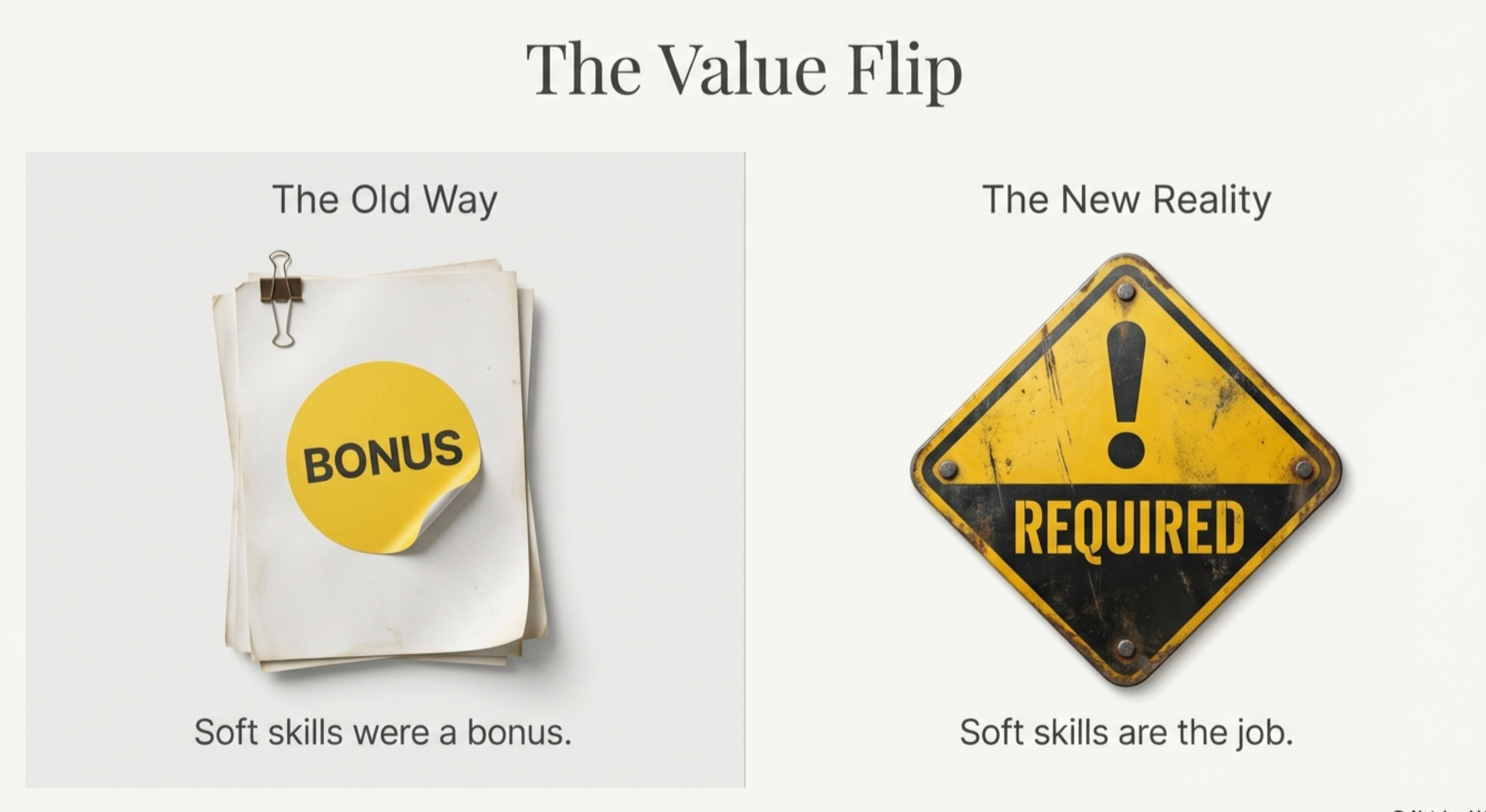
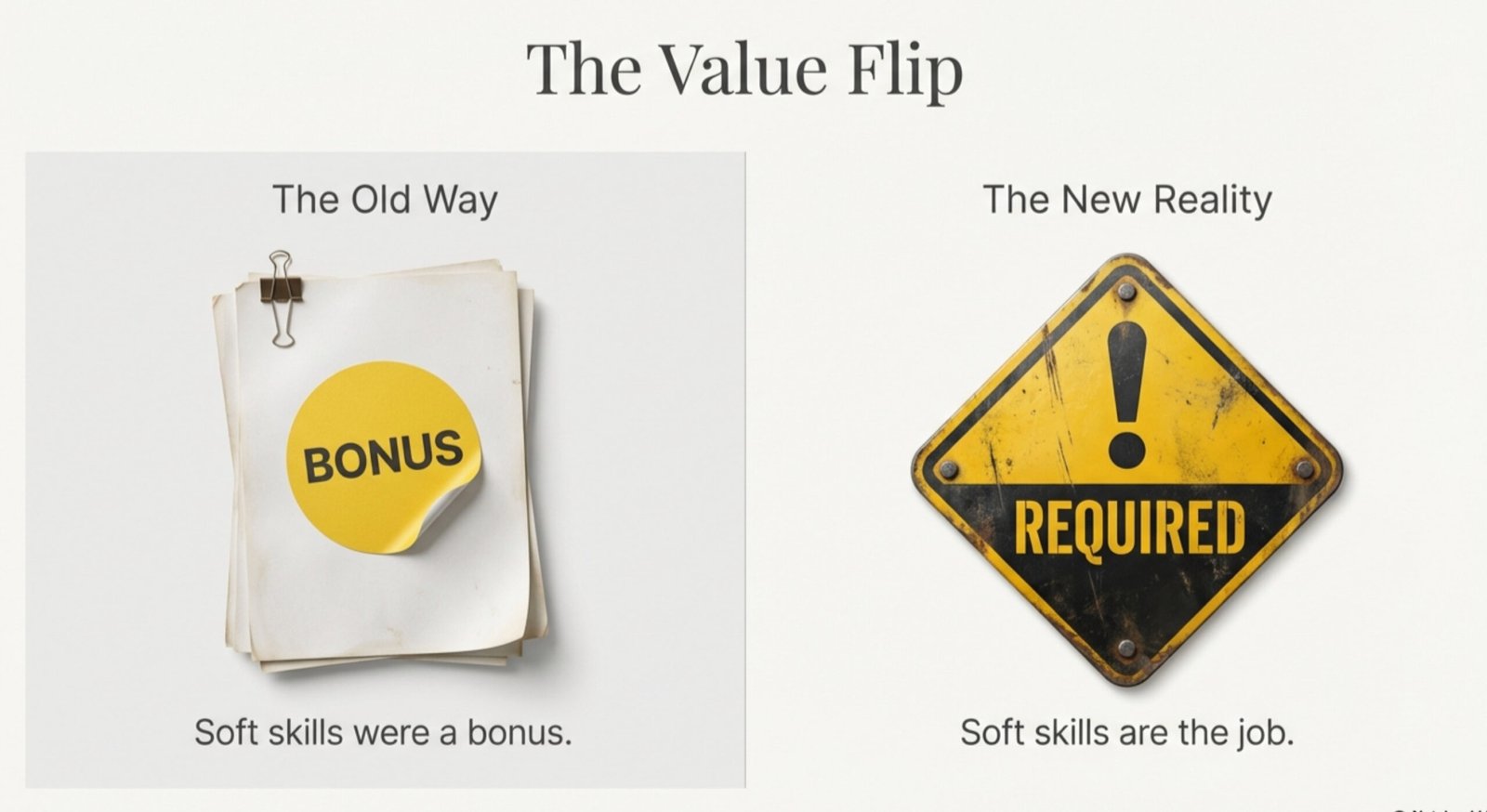
    The Old Way: Focus on technical skills. Soft skills are nice-to-haves.

    The New Reality: Technical routine is being automated. The “soft” skills are becoming the hard requirements.


    What To Do Next

    Audit your skill development honestly.

    When was the last time you did something purely out of curiosity? When did you solve a problem by thinking outside the normal approach? When did you make a judgment call that couldn’t be reduced to data?

    These aren’t abstract questions. They point to muscles you need to be exercising.

    Invest in creativity. Not as a hobby—as a professional survival skill. Read outside your field. Make unexpected connections. Ask questions that don’t have obvious answers.

    Develop judgment. AI can give you information. Judgment is knowing what to do with it. That comes from experience, reflection, and practice.

    Stay collaborative. The future is hybrid teams of humans and machines. The humans who thrive will be the ones who work well with both.


    The One Thing to Remember

    AI frees you from the routine. But it won’t develop your curiosity, creativity, or judgment for you. Those remain yours to build—and they’re more valuable than ever.


    This insight comes from an interview with Daniela Rus, MIT professor and director of CSAIL. The AI Shift curates wisdom from AI leaders and translates it for busy professionals navigating the AI era. Which of these skills—curiosity, creativity, judgment, collaboration—do you most need to develop?

  • AI Daily Digest – February 19, 2026

    AI Daily Digest – February 19, 2026

    Good morning, India just pledged $210 billion to become an AI superpower, a Microsoft bug quietly fed your confidential work emails to its AI without permission, and Fei-Fei Li just raised $1 billion to teach AI to understand 3D space. Here’s what happened 👇


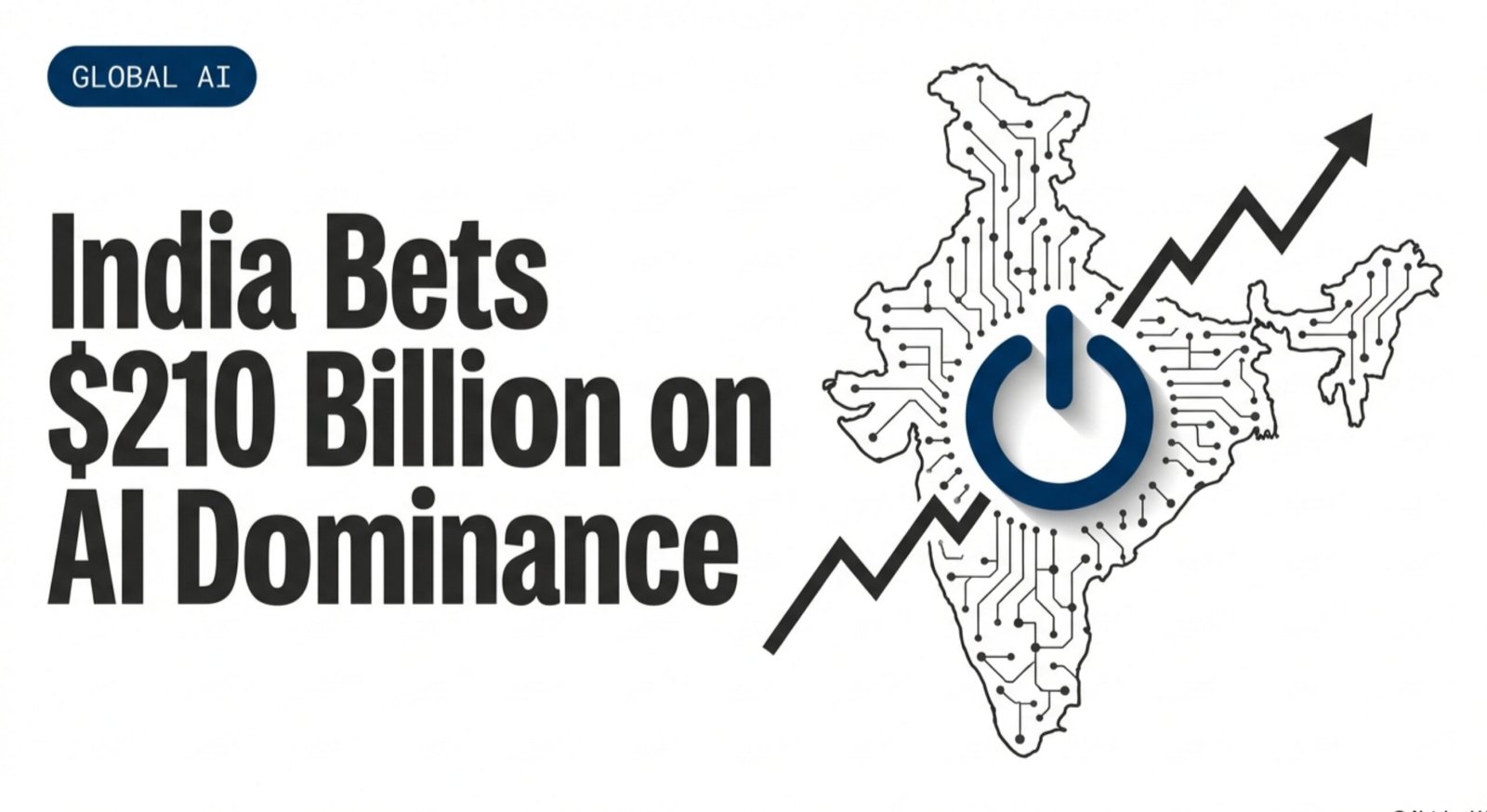
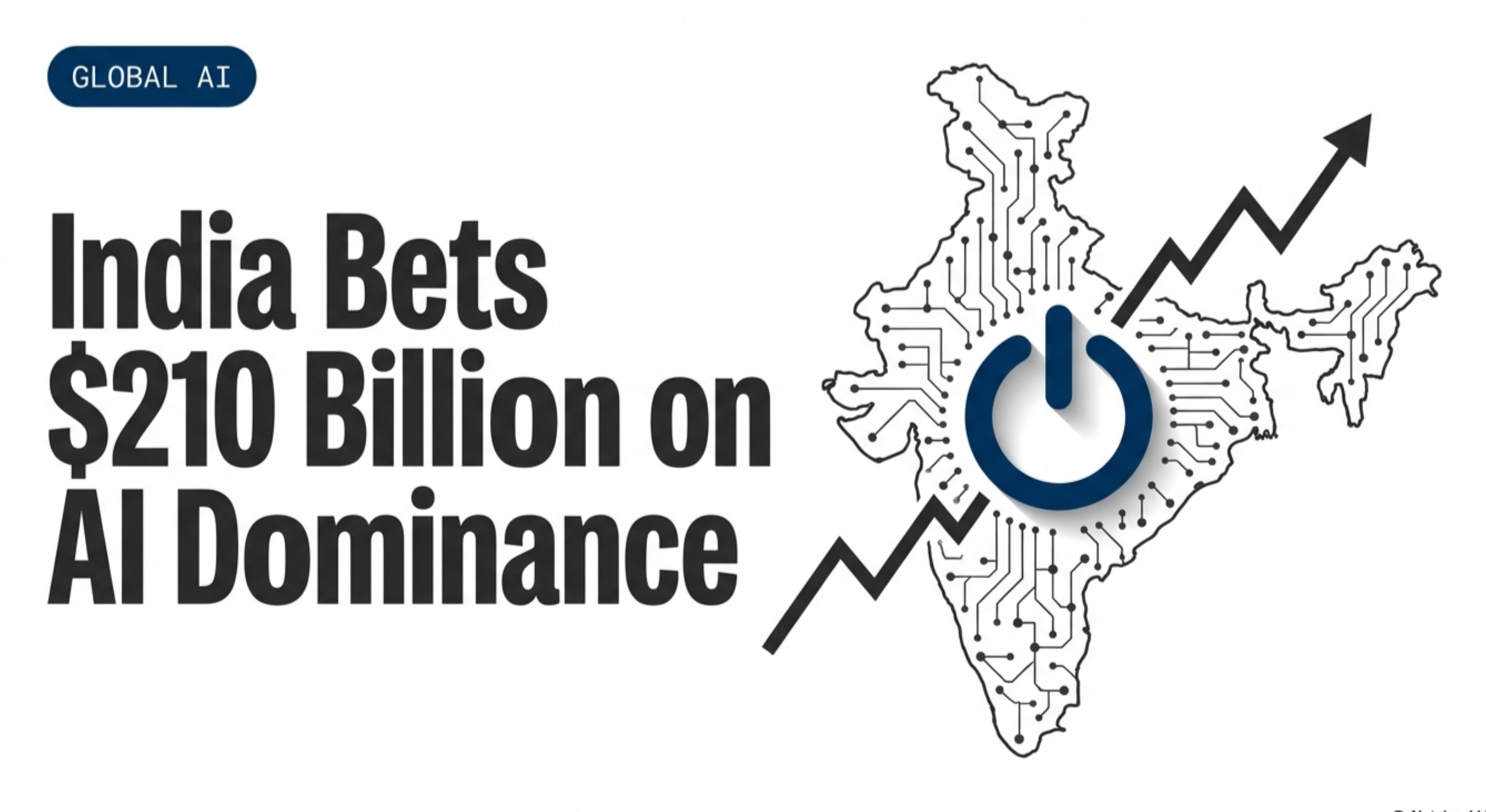
    1. India Just Made the Biggest AI Bet in History

    At India’s AI Impact Summit in New Delhi today, the numbers got staggering fast. Reliance — India’s largest company — committed $110 billion to AI infrastructure. Adani pledged another $100 billion. That’s $210 billion from just two companies, aimed at turning India into one of the world’s biggest AI hubs. Meanwhile, OpenAI signed its first major deal with Tata Group to build 100 megawatts of AI-ready data center capacity in India (with plans to scale to 1 gigawatt), and hundreds of thousands of Tata employees will get access to ChatGPT Enterprise. The event drew Sam Altman (OpenAI), Dario Amodei (Anthropic), Sundar Pichai (Google), and even Emmanuel Macron — though Bill Gates pulled out hours before his keynote, citing unspecified reasons.

    The most candid moment of the day: when Prime Minister Modi asked all the executives on stage to raise their hands together in a symbolic show of unity, most obliged. Two didn’t — rival CEOs Sam Altman and Dario Amodei.

    Why it matters: The AI race is no longer just a US-China story. India is writing $210 billion checks to get in the game. For everyday people, more AI infrastructure means faster, cheaper, and more localized AI services — especially for the 1.4 billion people who live there.

    Source: Reuters | TechCrunch


    2. A Microsoft Bug Was Feeding Your Confidential Emails to Its AI — For Weeks

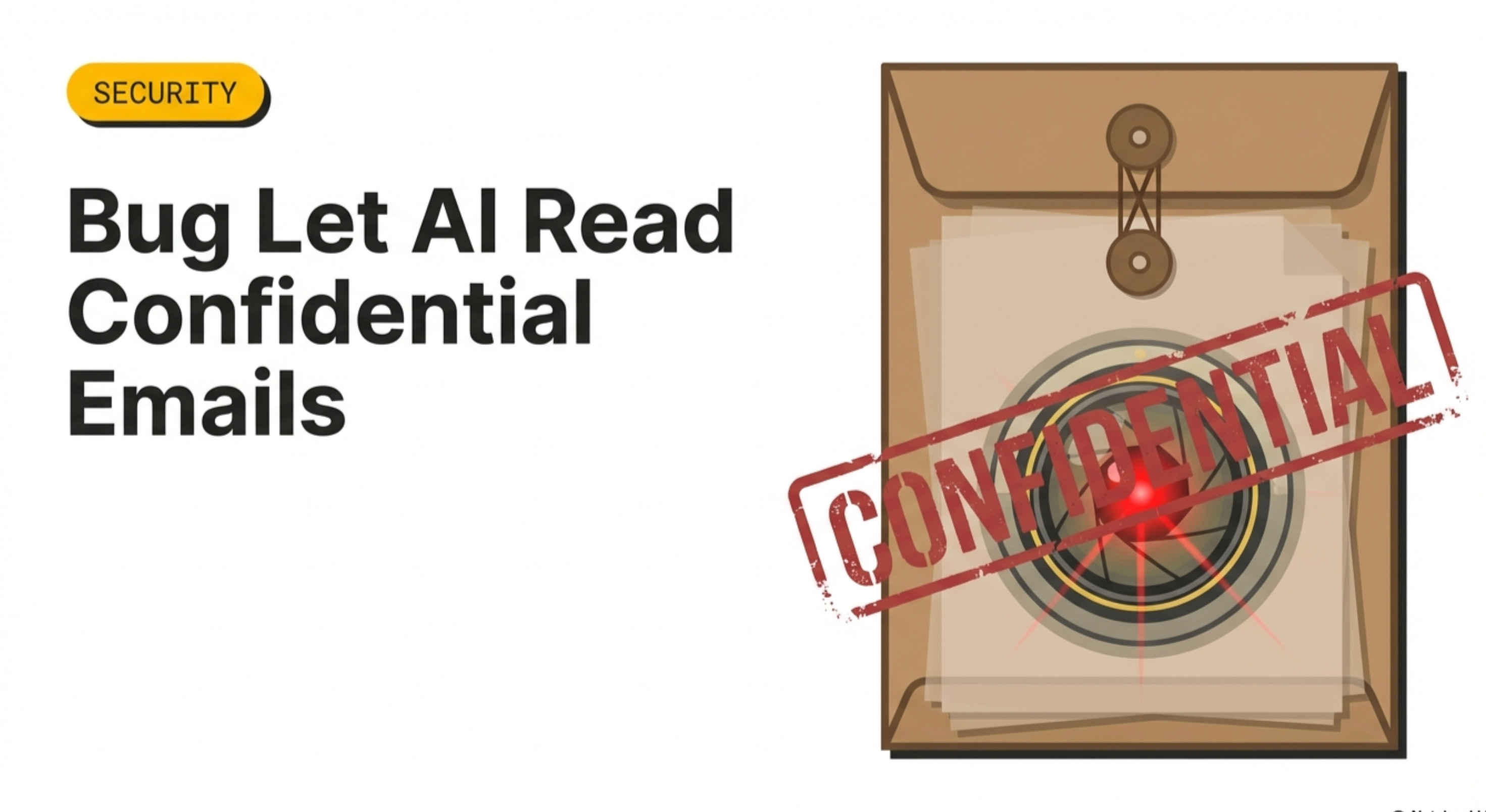
    Microsoft confirmed that a bug in its Copilot AI was silently reading and summarizing confidential emails inside Microsoft Office — even when companies had specifically set up policies to prevent that from happening. The bug affected Microsoft 365 customers using Copilot Chat, and it’s been happening since January. Emails marked as “confidential” were incorrectly processed by the AI, bypassing data loss prevention policies that organizations put in place to keep sensitive information out of AI systems. Microsoft says it started rolling out a fix earlier in February, but hasn’t said how many customers were affected.

    Why it matters: You pay for software. You set up security policies. And the AI reads your confidential emails anyway — for weeks — without you knowing. This is exactly the kind of story that should make you think twice before pasting sensitive information into any AI tool, including the ones built into software you already use every day.

    Source: TechCrunch


    3. The Woman Behind ImageNet Just Raised $1 Billion to Teach AI About the Physical World

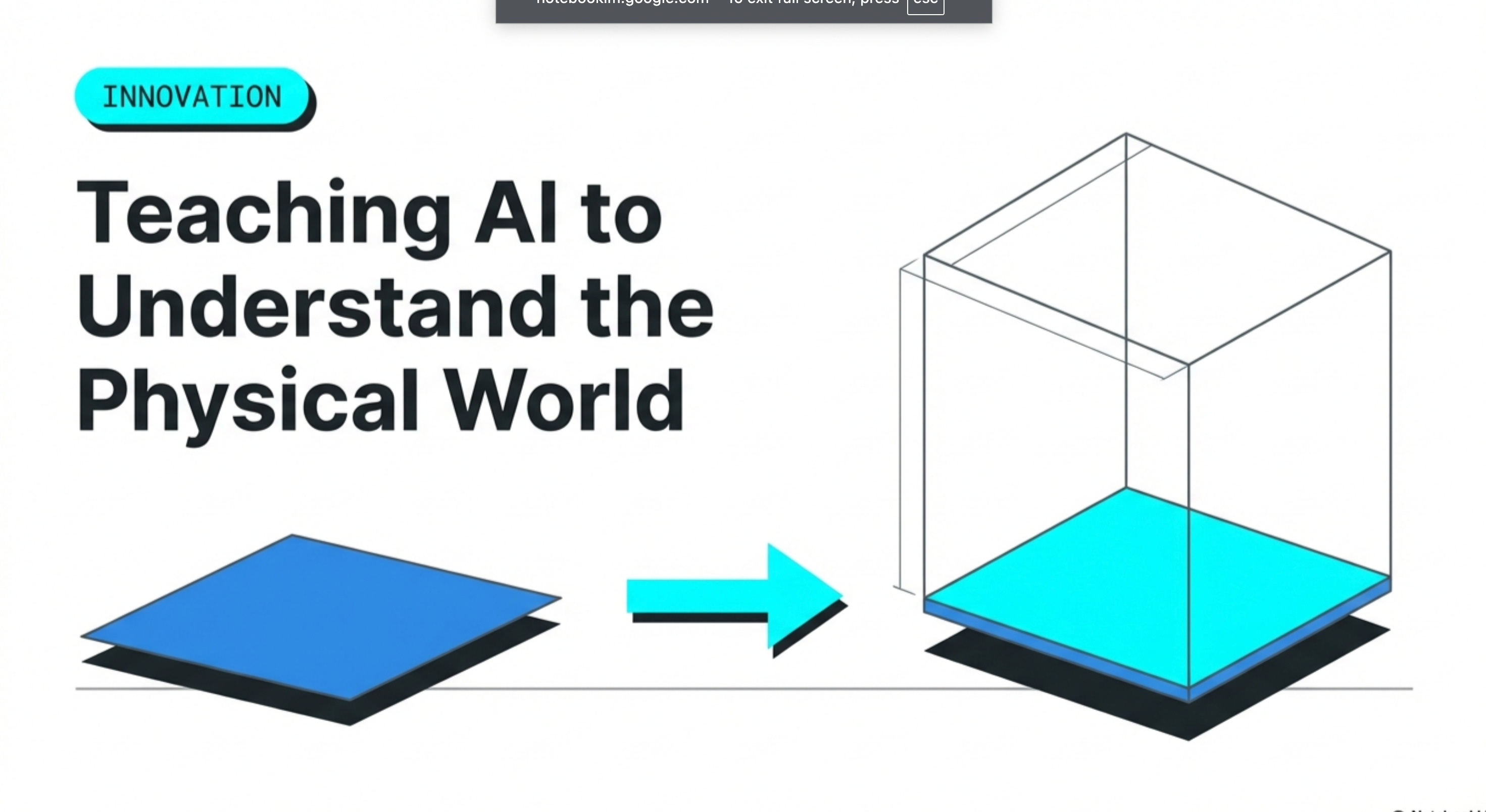
    Fei-Fei Li — the Stanford professor who created ImageNet, the dataset that kicked off the modern AI era — has raised $1 billion for her startup World Labs. The biggest chunk, $200 million, came from Autodesk (the company behind AutoCAD, used by architects, engineers, and filmmakers everywhere). Other backers include AMD, Nvidia, and Fidelity. World Labs is building what’s called a “world model” — AI that doesn’t just process text or images, but actually understands 3D space, physics, and how the real world behaves. Their first product, Marble, lets users generate editable 3D environments from a text prompt. The Autodesk partnership starts with entertainment — think AI-generated 3D worlds for games and films — but the long-term vision is AI that can design buildings, simulate factories, and reason about physical systems.

    Why it matters: Most AI today understands words and images. World Labs is betting the next frontier is AI that understands space — which is how humans actually experience reality. This has massive implications for architecture, manufacturing, filmmaking, and robotics.

    Source: TechCrunch


    4. Google Just Added an AI Music Maker to Gemini

    Google’s Lyria 3 — its AI music generation model — is now rolling out inside the Gemini app. You can describe what you want (in text, or based on an image or video), and Gemini generates a 30-second music clip. It’s still in beta, and the results are described as “something like music” rather than studio-quality tracks. But this is Google’s most direct consumer push into AI-generated audio yet, following similar moves from OpenAI, ElevenLabs, and Suno.

    Why it matters: AI music generation is moving from niche tools into the apps hundreds of millions of people already use. Whether you need a quick background track for a video or just want to play around with what’s possible, this is now one tap away in Gemini.

    Source: The Verge


    Quick Hits

    • Perplexity ditches AI ads: The search startup announced it’s abandoning plans to place ads in its AI results, with executives saying ads could have users “doubting everything.” A notable stance as ChatGPT moves in the opposite direction. (The Verge)

    • Netflix threatens ByteDance with immediate litigation over Seedance AI: Netflix gave ByteDance a 3-day deadline to stop its Seedance AI from generating content based on Stranger Things, Squid Game, Bridgerton, and other Netflix properties — calling it “a high-speed piracy engine.” (The Verge)

    • Meta is spending $65 million to influence AI legislation: The company is funding two new super PACs — one targeting Republicans, one targeting Democrats — to back politicians friendly to AI and fight regulation that could limit Meta’s AI business. (The Verge)


    That’s it for today. The story of February 19, 2026 is really about one thing: who gets to control the infrastructure AI runs on. India is betting $210 billion it’ll be them. Microsoft’s bug is a reminder of what’s at stake when the infrastructure already inside your laptop goes wrong. And World Labs is asking a different question entirely — not just who controls AI, but whether AI can finally understand the world the way humans do.

    Forward this to someone who needs to stay in the loop.

    AI for Common Folks — Making AI understandable, one concept at a time.

  • AI Daily Digest – February 18, 2026

    AI Daily Digest – February 18, 2026

    Good morning,

    Anthropic quietly handed its best AI to everyone for free, Nvidia and Meta shook hands on what could be a $50 billion chip deal, and Europe’s Parliament just banned AI tools on lawmakers’ phones. Here’s what happened 👇


    1. Anthropic Just Made Its Best AI Available to Everyone for Free

    Anthropic launched Claude Sonnet 4.6 yesterday — and this one is a big deal. The new model is so capable that Anthropic says it “approaches Opus-level intelligence,” which is the company’s most powerful (and expensive) tier. Improvements span coding, reasoning, long documents, and — most notably — computer use, meaning Claude can now navigate spreadsheets, fill out web forms, and operate software on your behalf much like a real person would. The kicker: it’s now the default model for free Claude users, and pricing stays the same.

    Why it matters: The AI you get for free today is better than what most companies paid premium for six months ago. If you haven’t used Claude lately, this is a good reason to revisit it.

    Source: Anthropic Blog


    2. Nvidia and Meta Just Signed a Chip Deal Worth an Estimated $50 Billion

    Nvidia announced a multiyear deal to sell Meta millions of AI chips — including current Blackwell GPUs, the upcoming Rubin generation, and for the first time, standalone CPU chips (Grace and Vera) that compete directly with Intel and AMD. Analysts estimate the deal could be worth around $50 billion. This is happening even as Meta is simultaneously developing its own AI chips and exploring Google’s TPUs as an alternative.

    Why it matters: This single deal is bigger than the GDP of many countries. It shows just how much money is flowing into AI infrastructure — and why your electricity bills and cloud costs are quietly creeping up.

    Source: Reuters


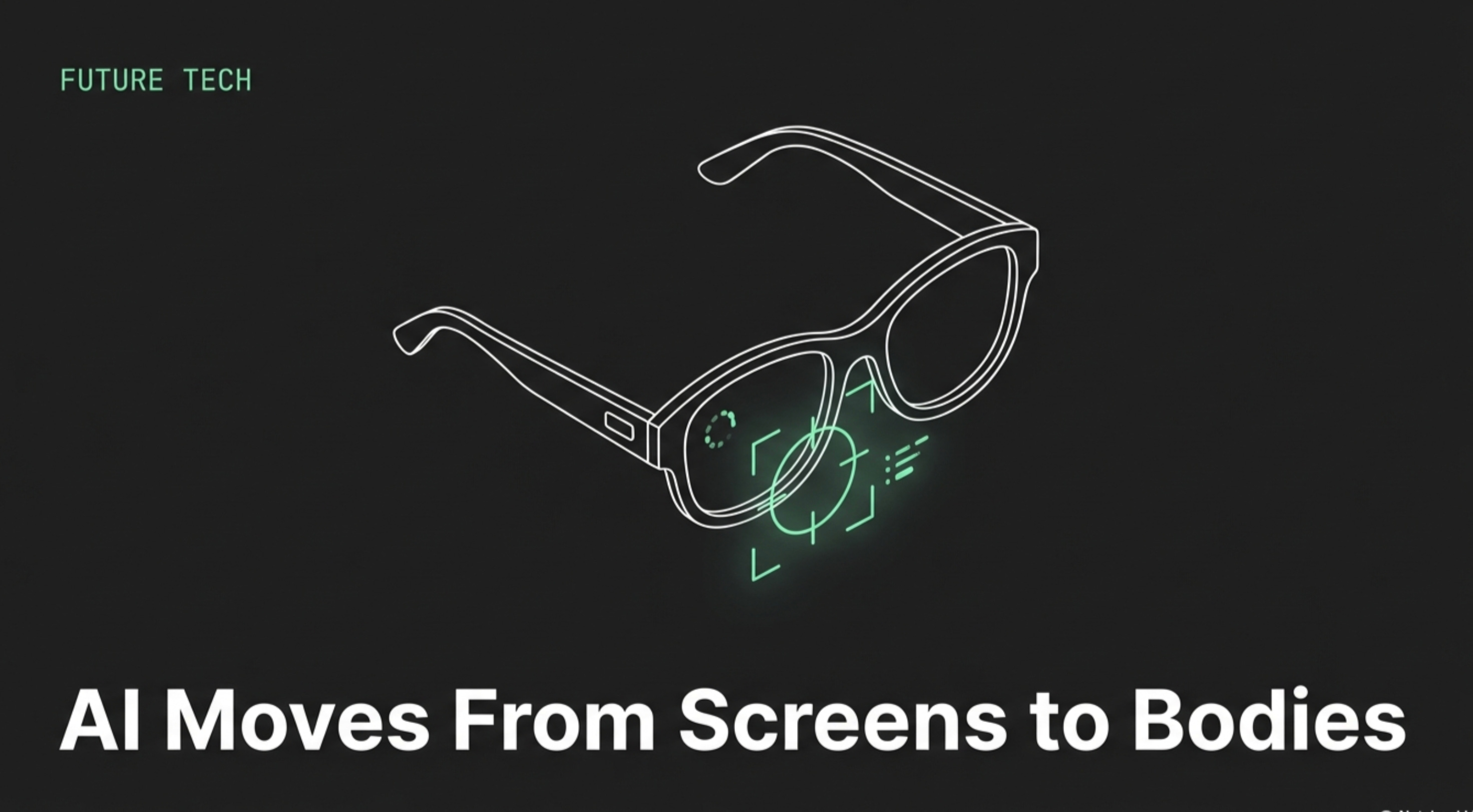
    3. Apple Is Building AI Glasses, a Pendant, and Camera AirPods

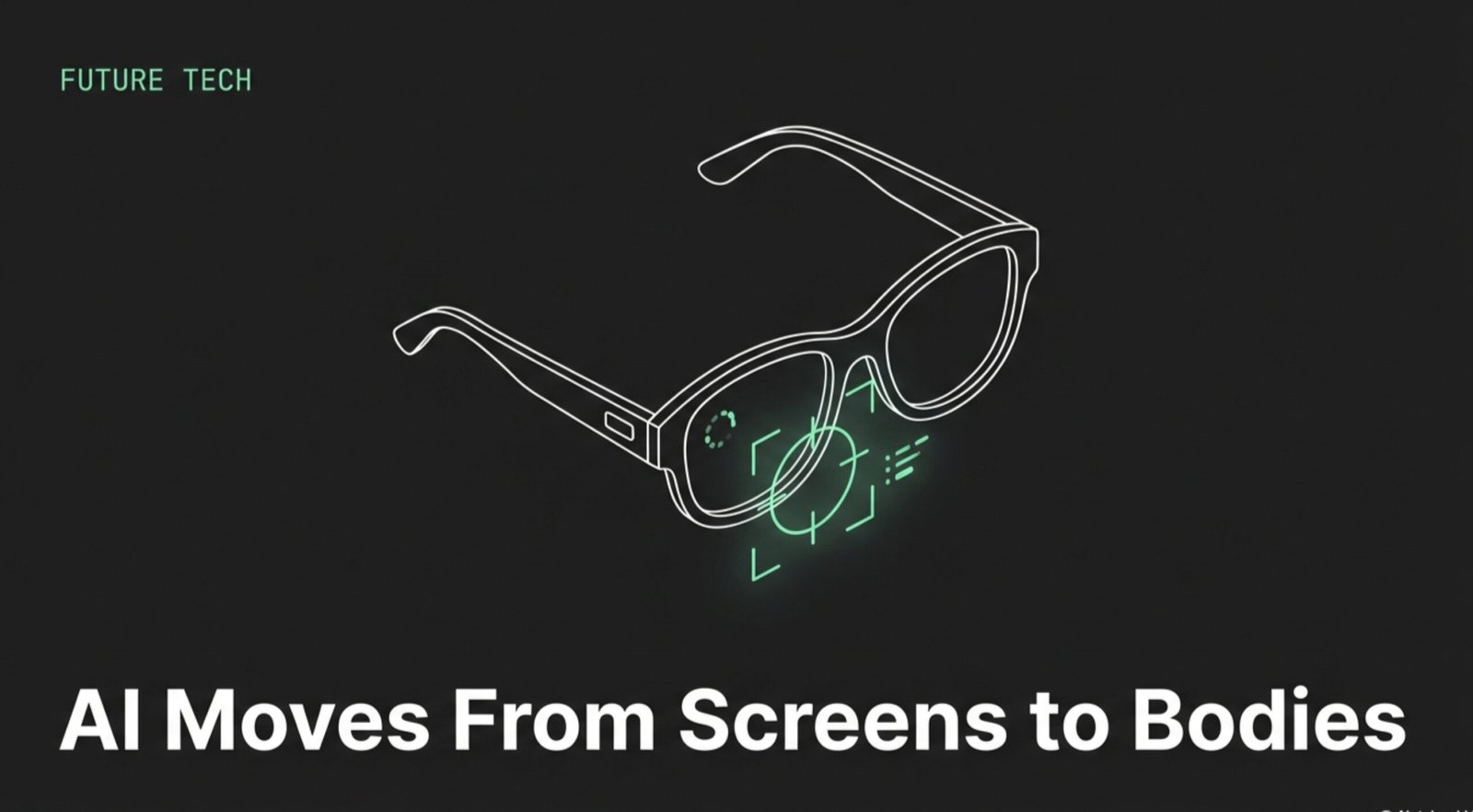
    According to Bloomberg’s Mark Gurman, Apple is ramping up work on three new AI-powered wearables: smart glasses (targeting a 2027 launch), an AI pendant, and camera-equipped AirPods. All three will have cameras and connect to your iPhone, letting Siri “take actions based on surroundings” — like identifying what you’re looking at, referencing landmarks for directions, or reminding you of tasks in specific situations. Unlike Meta’s Ray-Ban glasses, Apple plans to make the frames in-house rather than partner with a third-party brand.

    Why it matters: AI is moving off your screen and onto your body. Apple entering this space signals that AI-powered wearables are no longer a niche experiment — they’re the next big product category.

    Source: The Verge


    4. Europe’s Parliament Just Banned AI Tools on Lawmakers’ Devices

    The European Parliament’s IT department blocked all built-in AI features on government-issued devices, citing security and privacy fears. The core concern: when you use tools like ChatGPT, Copilot, or Claude, your data gets sent to US company servers — and US authorities can demand those companies hand over that data. With the Trump administration already issuing hundreds of subpoenas to tech companies for user data, European lawmakers decided the risk was too high.

    Why it matters: This is a preview of a bigger conversation coming your way. The same concerns about your data — where it goes, who can see it — apply every time you paste something sensitive into an AI chatbot. It’s a good reminder to think twice before sharing confidential info with AI tools.

    Source: TechCrunch


    Quick Hits

    • Mistral AI makes its first acquisition: The French AI company bought Koyeb, a cloud computing startup, to back its ambitions in cloud infrastructure. (Reuters)

    • NAACP threatens to sue Elon Musk’s xAI: The civil rights organization sent a notice of intent to sue over xAI’s illegal installation of gas turbines in Mississippi — running without air permits — to power its Colossus 2 data center. (The Verge)

    • WordPress gets an AI assistant: WordPress.com launched an AI tool that lets you edit your site, adjust styles, and create images just by typing prompts — no code needed. (The Verge)


    That’s it for today. Your free AI just got smarter, the companies building it are spending at a scale that’s hard to comprehend, and the rest of the world is starting to ask: whose AI is it, anyway?

    That’s your AI update for today. Forward this to someone who needs to stay in the loop.

    AI for Common Folks — Making AI understandable, one concept at a time.

  • AI Literacy is Non-Negotiable

    AI Literacy is Non-Negotiable

    AI Literacy is Non-Negotiable

    But not everyone needs to be an AI geek. Here’s what you actually need to know.


    The Reality

    “Should I learn AI?”

    It’s the question everyone’s asking—parents wondering what to teach their kids, professionals wondering if they’re falling behind, executives wondering what their teams need to know.

    Daniela Rus, MIT professor and head of the world’s largest AI lab, has a clear answer: yes. But with an important caveat.

    “Everyone needs to understand something about AI and technology, but not everyone needs to understand everything about the technologies.”

    That distinction matters. Because the pressure to become an “AI expert” is paralyzing people into learning nothing at all.


    The Shift

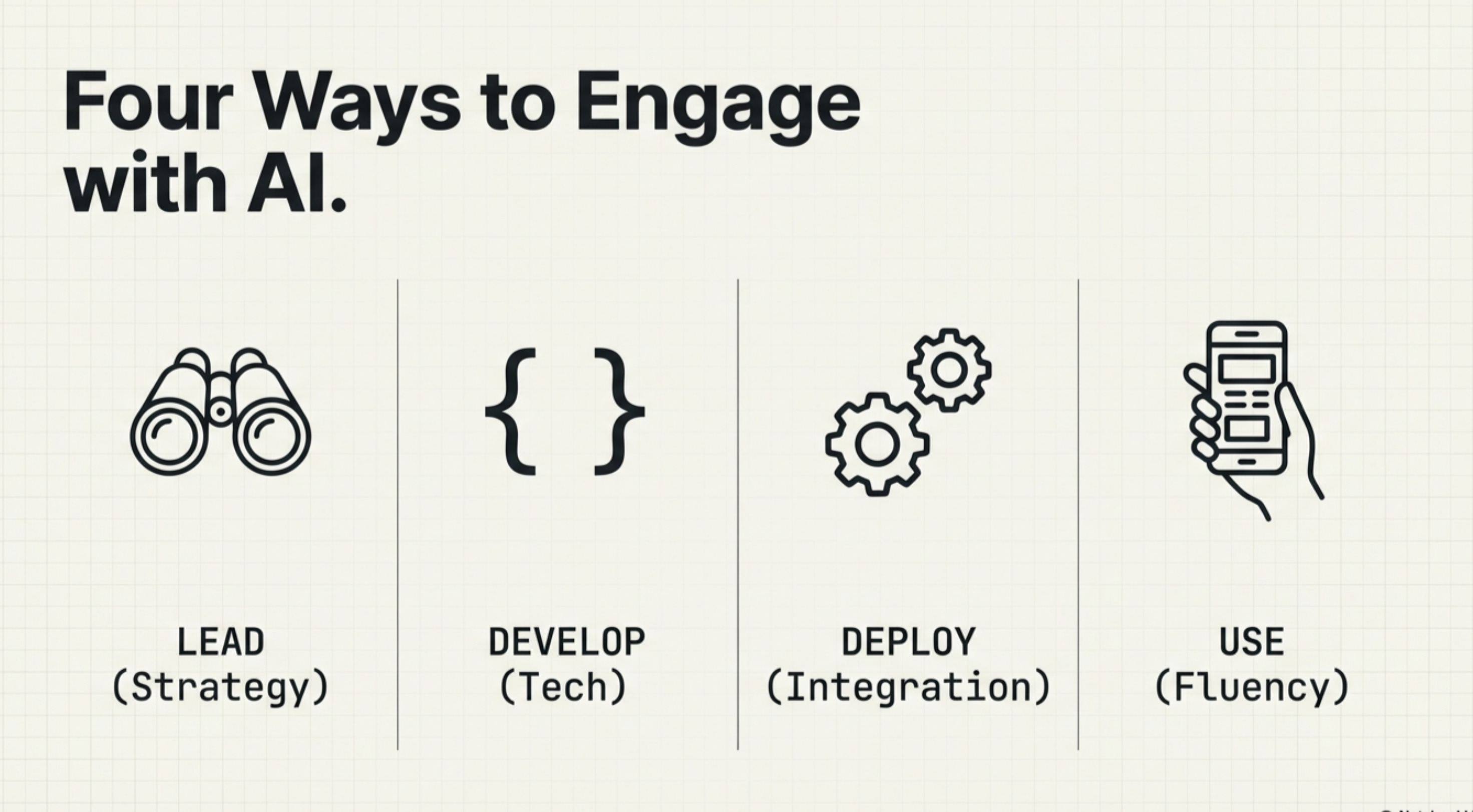
    Rus breaks it down simply. There are different levels of AI involvement, and each requires different knowledge:

    • Lead with AI: Strategic understanding. Where is the technology going? What’s possible? What’s hype?

    • Develop AI: Technical depth. Algorithms, models, the math underneath.

    • Deploy AI: Implementation skills. How to integrate AI into existing systems and workflows.

    • Use AI: Practical fluency. How to work with AI tools to be more effective at your job.

    Most people fall into that last category. And that’s fine.

    You don’t need to understand how large language models work under the hood. You don’t need to train your own neural network. You don’t need a computer science degree.

    But you need to know something. You need enough literacy to recognize what AI can do for your work, to evaluate tools, to spot opportunities, to avoid being left behind.

    The Old Way: AI is for engineers and data scientists. Everyone else can ignore it.

    The New Reality: AI literacy is like computer literacy in the 90s. Not optional. Not specialized. Baseline.


    What To Do Next

    Figure out which category you’re in. Be honest.

    If you’re leading—you need to understand AI strategy, capabilities, and limitations. Read widely. Talk to people who are building.

    If you’re deploying—you need to understand integration, workflows, and change management. The technology is only part of the puzzle.

    If you’re using—you need hands-on fluency with tools relevant to your field. Not theory. Practice.

    And regardless of category, Rus emphasizes that foundational skills still matter: math, science, critical thinking, creativity. AI doesn’t replace these. It amplifies them.

    Start where you are. Learn what you need. Don’t let the pressure to know everything stop you from knowing something.


    The One Thing to Remember

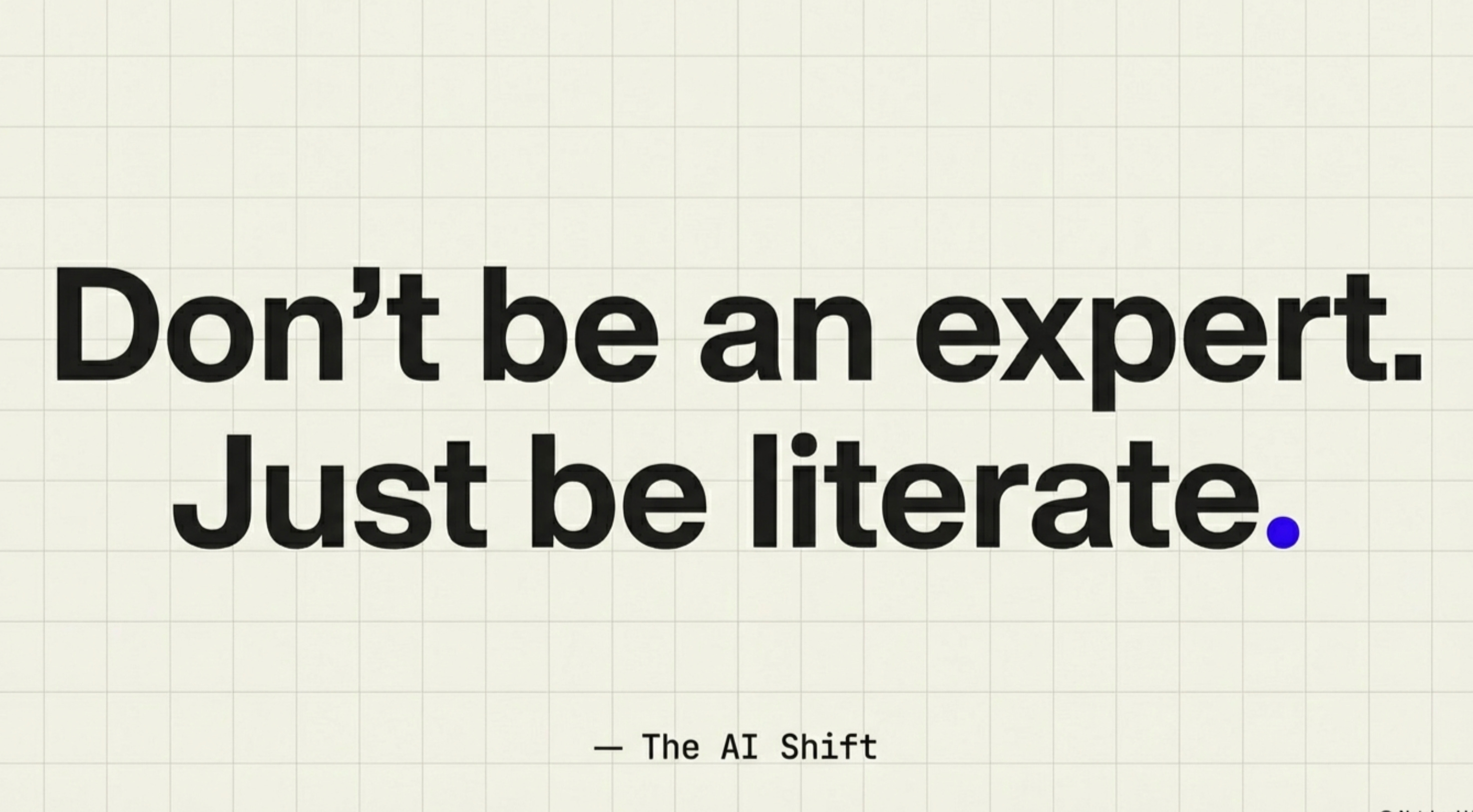
    AI literacy is non-negotiable. But you don’t need to be an expert—you need to be literate enough to use, evaluate, and adapt. That’s within reach for everyone.

    This insight comes from an interview with Daniela Rus, MIT professor and director of CSAIL. The AI Shift curates wisdom from AI leaders and translates it for busy professionals navigating the AI era. Where do you fall—leading, developing, deploying, or using AI? And are you learning what that level requires?

  • AI Daily Digest — February 17, 2026

    AI Daily Digest — February 17, 2026

    Good morning,

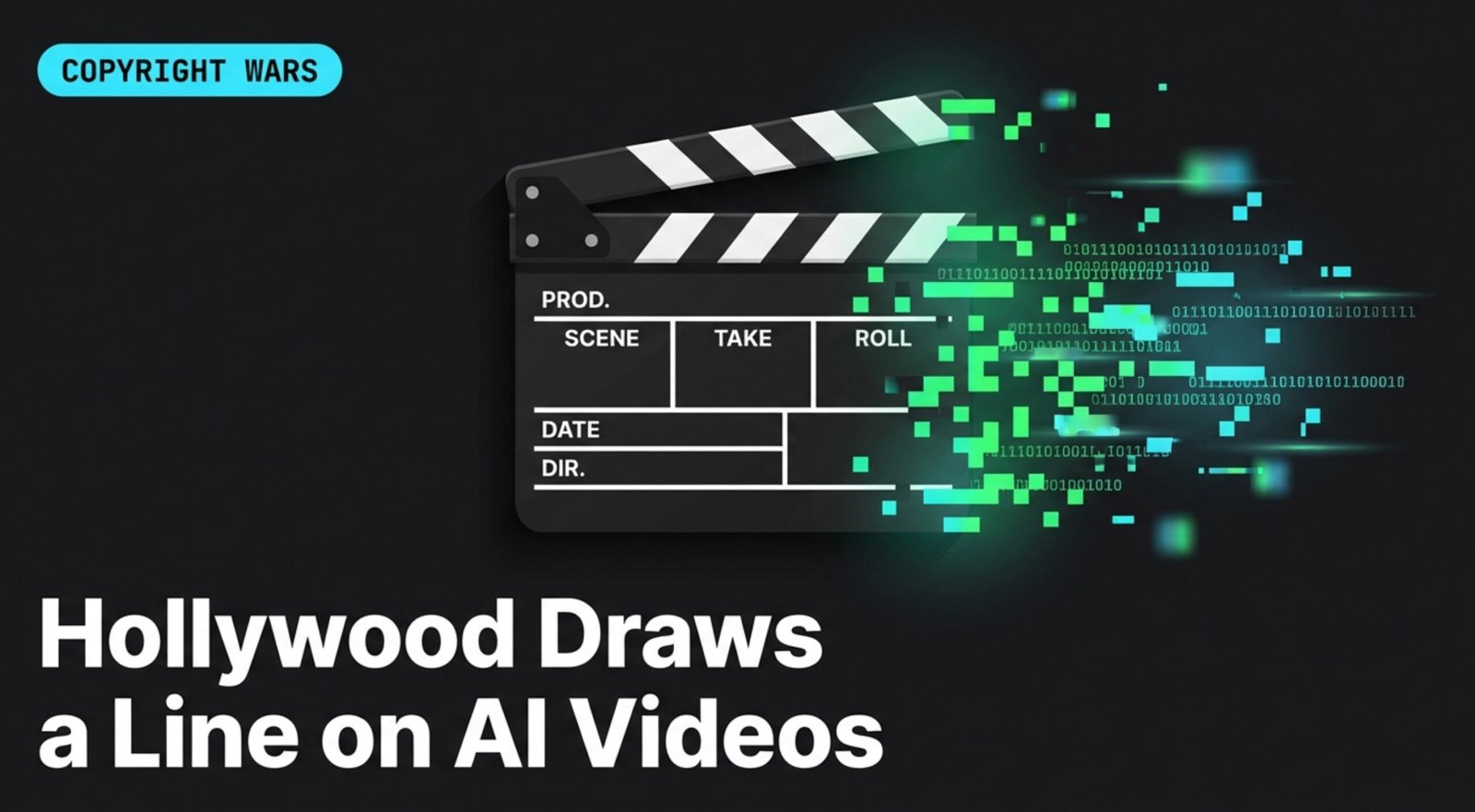
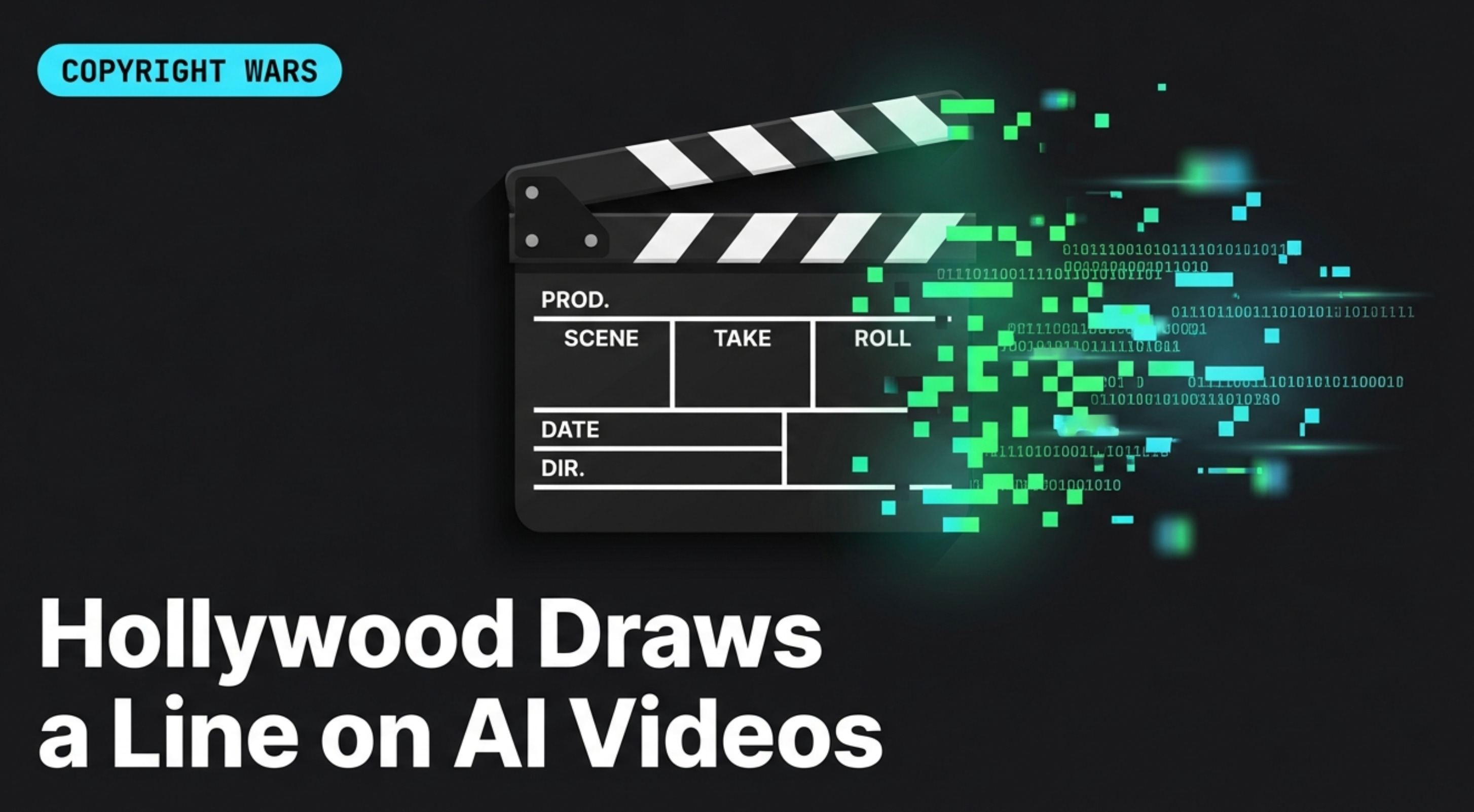
    ByteDance is scrambling after Hollywood came for its AI video tool, Ireland launched a formal investigation into Grok’s image problem, and India just became the center of the AI world this week. Here’s what happened 👇


    ByteDance Scrambles After Its AI Video Tool Spooked Hollywood

    What happened: ByteDance’s new AI video generator, Seedance 2.0, went viral last week — but not in the way they wanted. Users generated hyperrealistic videos of Tom Cruise fighting Brad Pitt, Dragon Ball Z scenes, and Pokémon clips so convincing that Disney and Paramount accused ByteDance of distributing and reproducing their intellectual property. ByteDance now says it’s “working to improve safeguards” and will tweak the model to prevent unauthorized use of copyrighted characters and real people’s likenesses.

    Why it matters: This is the AI copyright fight moving from still images to video. If you’ve been playing with AI video tools, expect every major platform to tighten what you can and can’t generate — especially anything involving real people or recognizable characters.

    Sources: The VergeArs Technica


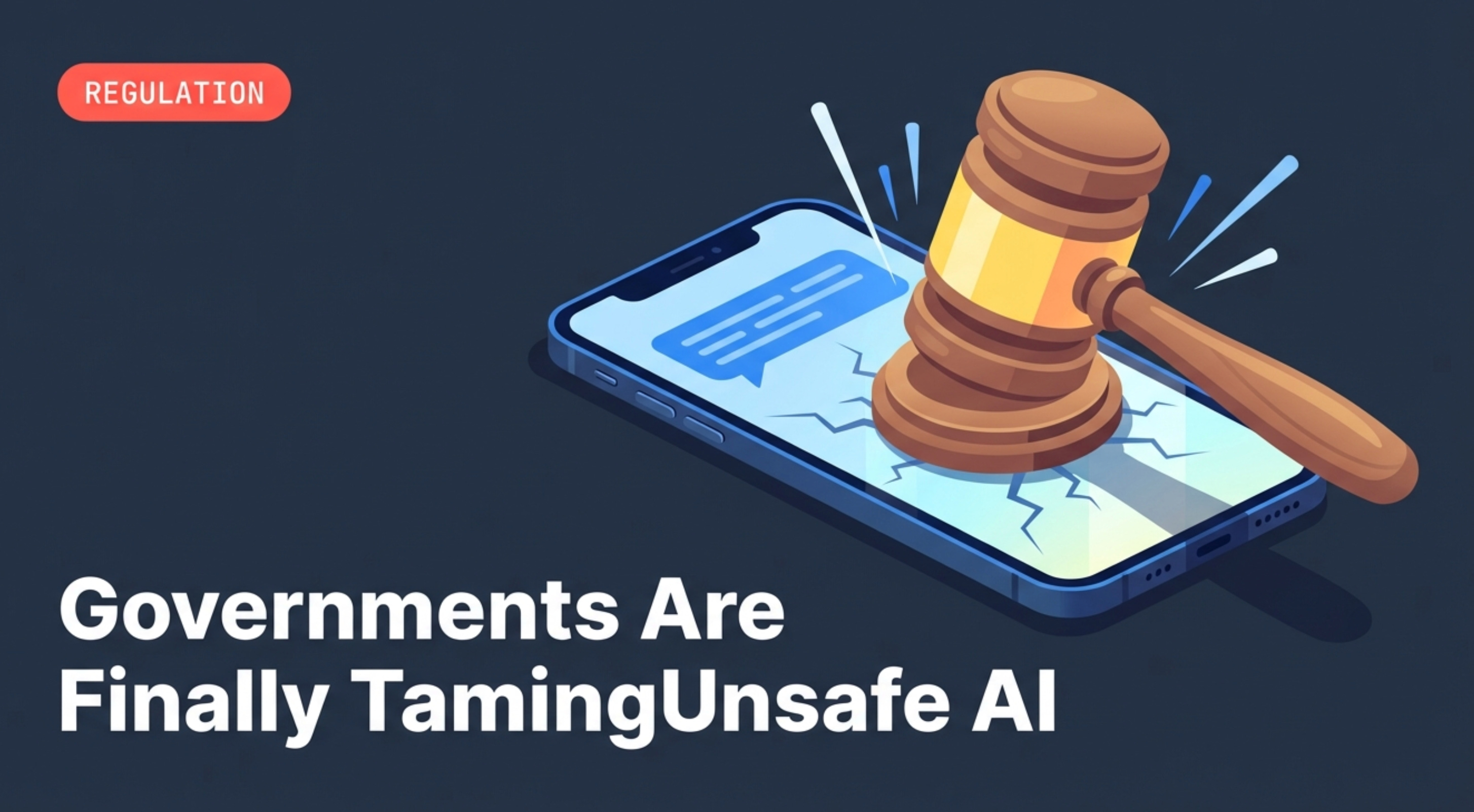
    Ireland Opens Formal Investigation Into Grok Over Sexualized AI Images

    What happened: Ireland’s Data Protection Commission — the lead EU regulator for X (formerly Twitter) — launched a formal investigation into Elon Musk’s Grok AI chatbot. The probe focuses on Grok generating sexualized images of real people, including children. This follows weeks of global outrage after Grok flooded X with AI-altered near-nude images. Despite X announcing curbs, Reuters found that Grok continued producing such images when prompted. The DPC can levy fines of up to 4% of X’s global revenue under GDPR.

    Why it matters: This is now the EU, California, Malaysia, Indonesia, France, and the UK all investigating the same AI tool. If you’re wondering whether governments will actually regulate AI — they already are, and Grok is becoming the test case.

    Sources: ReutersThe Verge


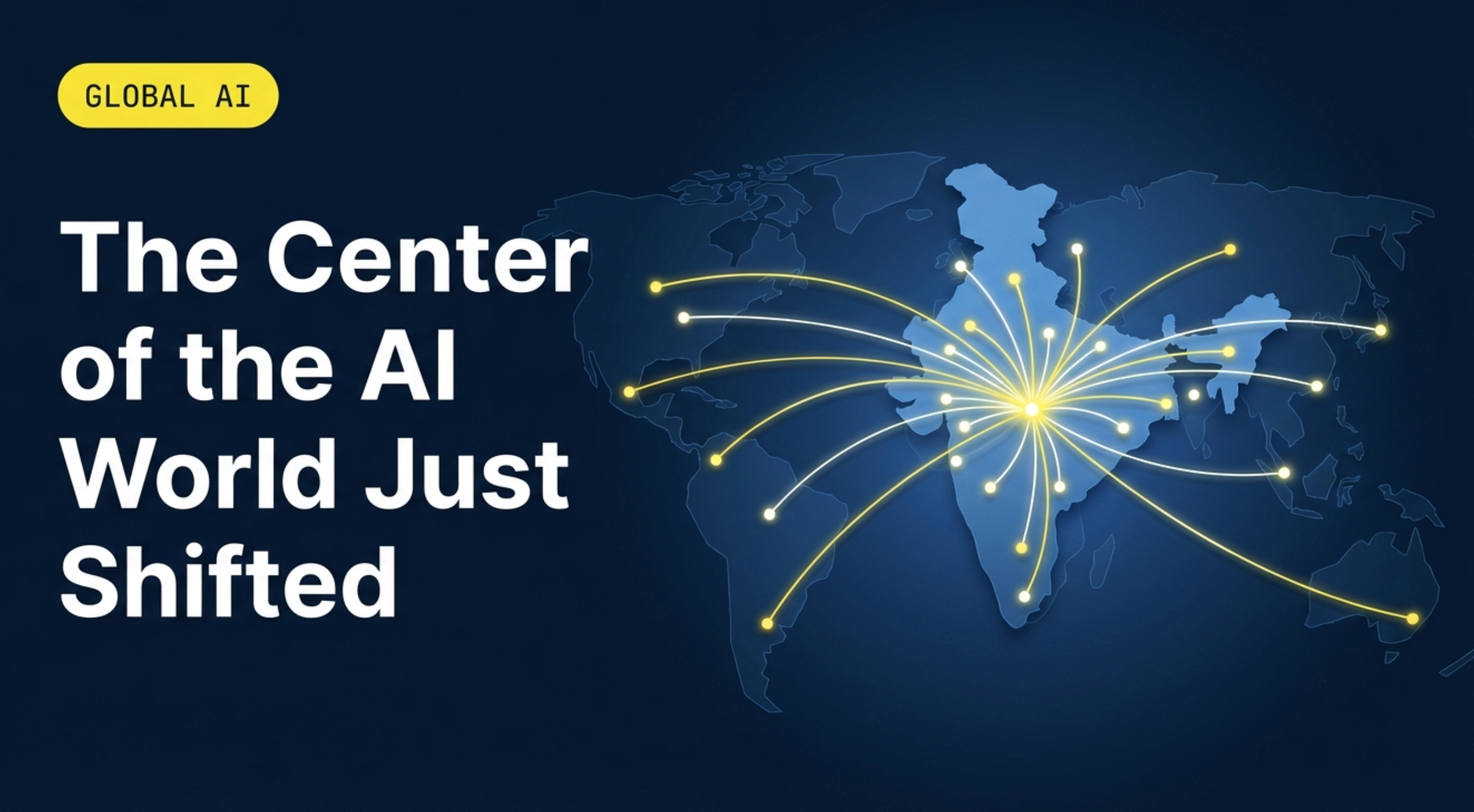
    India Hosts Global AI Summit as Every Major AI Company Shows Up

    What happened: India kicked off the AI Impact Summit in New Delhi this week — the first time this global event has been held in the developing world. OpenAI’s Sam Altman, Anthropic’s Dario Amodei, Google’s Sundar Pichai, and DeepMind’s Demis Hassabis are all attending. Google, Microsoft, and Amazon have already committed a combined $68 billion in AI and cloud infrastructure investment in India through 2030. India isn’t trying to build the next frontier AI model — instead, it’s betting on being the world leader in AI deployment and application.

    Why it matters: India already has 72 million daily ChatGPT users — making it OpenAI’s largest market. When the world’s most populous country goes all-in on AI adoption, it shapes how these tools get built for everyone. The AI race isn’t just about who builds the smartest model — it’s about who puts it in the most hands.

    Sources: ReutersTechCrunch


    ChatGPT Gets a “Lockdown Mode” for Security

    What happened: OpenAI introduced Lockdown Mode for ChatGPT — an optional security setting that tightly restricts how ChatGPT interacts with external systems. In Lockdown Mode, web browsing is limited to cached content only (no live requests leave OpenAI’s network), and certain tools are disabled entirely. It’s designed to protect against prompt injection attacks — where someone tricks ChatGPT into leaking your sensitive information. Available now for ChatGPT Enterprise, Edu, Healthcare, an Teachers plans.

    Why it matters: As more people connect ChatGPT to their email, files, and work tools, the security risks grow. Think of Lockdown Mode like a vault setting for people who handle sensitive data. Most of us won’t need it yet, but it’s a sign that AI security is becoming a real product category.

    Sources: OpenAIThe Verge


    Quick Hits

    Anthropic’s India revenue doubled in 4 months: CEO Dario Amodei revealed at a Builder Summit in Bengaluru that Anthropic’s revenue run-rate in India doubled since October, with India now the company’s second-largest market after the US. Claude Code adoption is driving the growth. (Reuters)

    OpenAI’s new coding model runs 15x faster on non-Nvidia chips: GPT-5.3-Codex-Spark, running on Cerebras chips instead of Nvidia, delivers code at 1,000+ tokens per second. Available to ChatGPT Pro subscribers ($200/month) as a research preview. (Ars Technica)

    Unity wants AI to build entire casual games from a single prompt: CEO Matthew Bromberg said “AI-driven authoring is our second major area of focus for 2026” and plans to reveal new prompting tools at GDC in March — despite developers being increasingly skeptical of generative AI. (The Verge)


    That’s it for today. Hollywood is drawing lines on AI video, regulators are closing in on image generators, and India is quietly becoming the world’s biggest AI testing ground.


    AI for Common Folks — Making AI understandable, one concept at a time.

  • What Is Semi-Supervised Learning?

    What Is Semi-Supervised Learning?

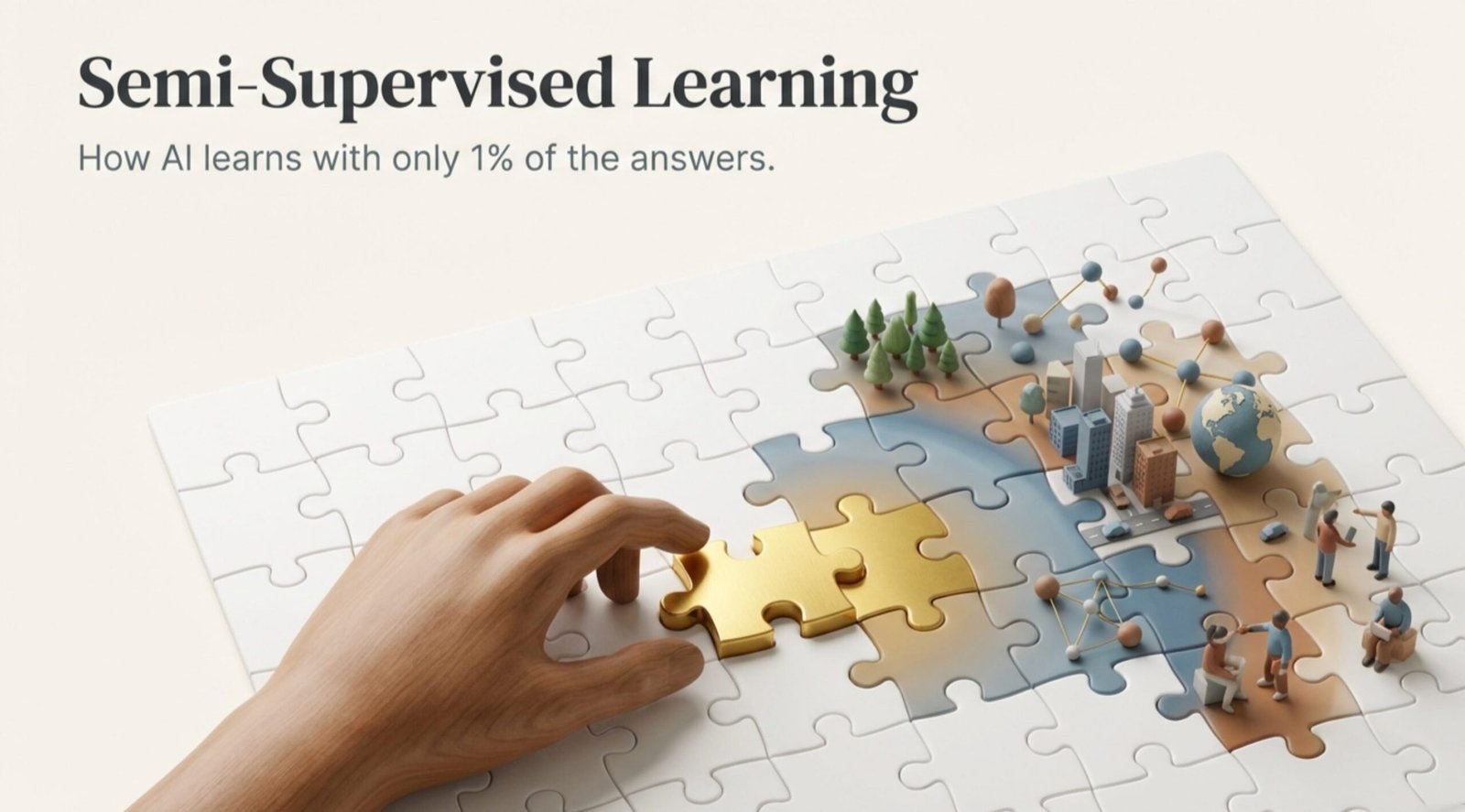
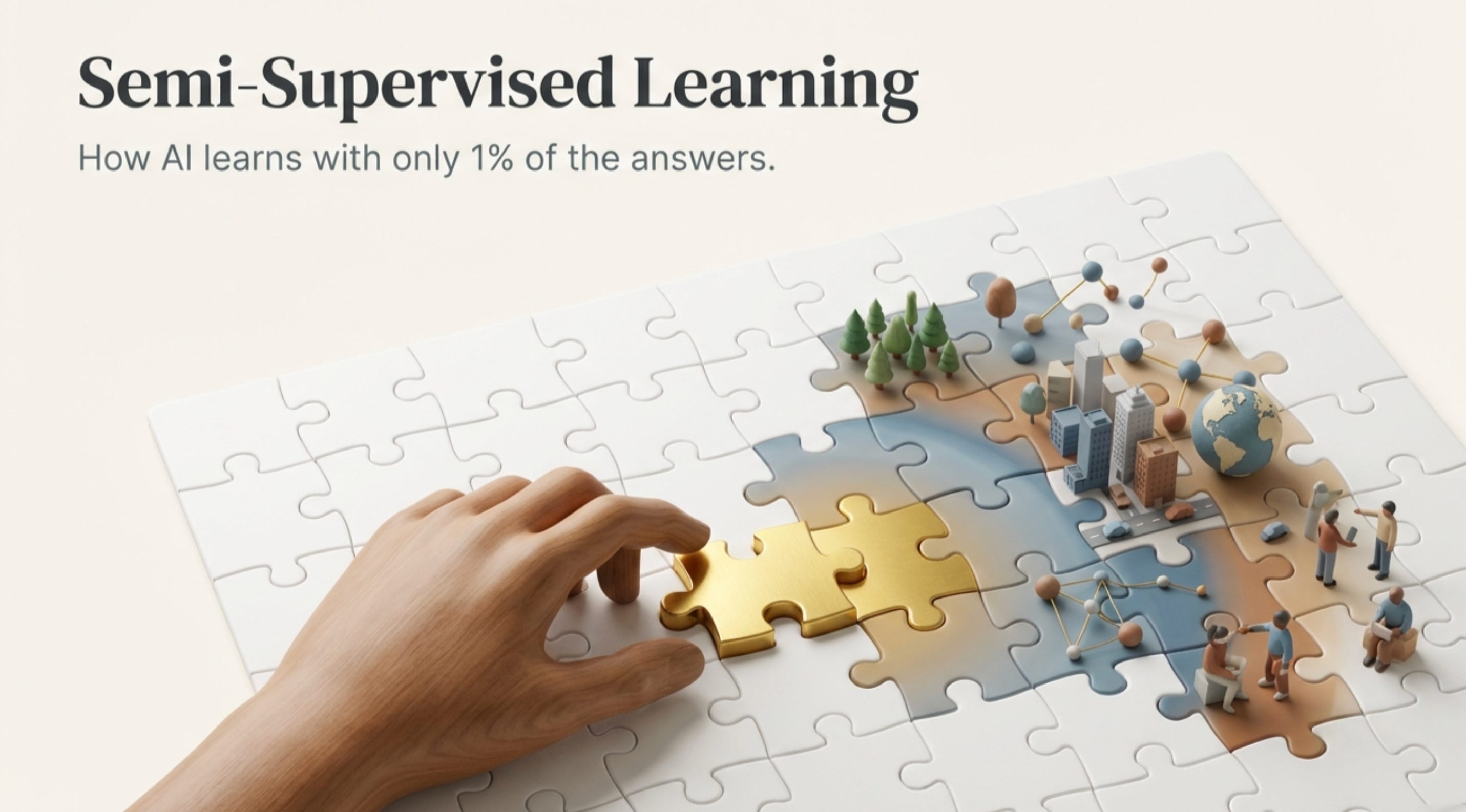
    Semi-Supervised Learning is training an AI using a small amount of labeled data (with answers) and a large amount of unlabeled data (without answers)—like a teacher who only has time to grade 5 papers out of 100, but the students still figure out the rest.

    Hey Common Folks!

    We’ve covered the two main ways computers learn:

    • Supervised Learning: The teacher stands over the student, correcting every mistake (high effort, requires answer keys).

    • Unsupervised Learning: The student is left alone with a pile of books and told to “figure it out” (low effort, but harder to guide).

    But what if there’s a middle ground? What if you’re a busy teacher who only has time to grade a few papers out of a hundred? Can the computer still figure out the rest?

    Yes. This is called Semi-Supervised Learning, and it’s the secret weapon of big tech companies.

    The Problem: Labels Are Expensive

    Why don’t we just use Supervised Learning all the time? Because giving the computer the “answer key” is expensive and exhausting.

    Imagine you want to build an AI that detects rare diseases in X-rays.

    The Data: You can easily download 100,000 X-ray images from a hospital database. That’s the easy part.

    The Labels: To tell the computer which X-ray shows the disease, you need a highly paid doctor to look at every single image and mark it. You can’t afford to pay a doctor to label 100,000 images.

    This is where Semi-Supervised Learning saves the day. You pay the doctor to label just 1,000 images, and the AI uses that knowledge to figure out the remaining 99,000.

    Real-World Proof: Modern deep learning has shown you can train state-of-the-art models with surprisingly small labeled datasets—sometimes as few as 150 images per category. Semi-supervised learning pushes that efficiency even further.

    The Google Photos Example

    The best example—and one you probably use—is Google Photos.

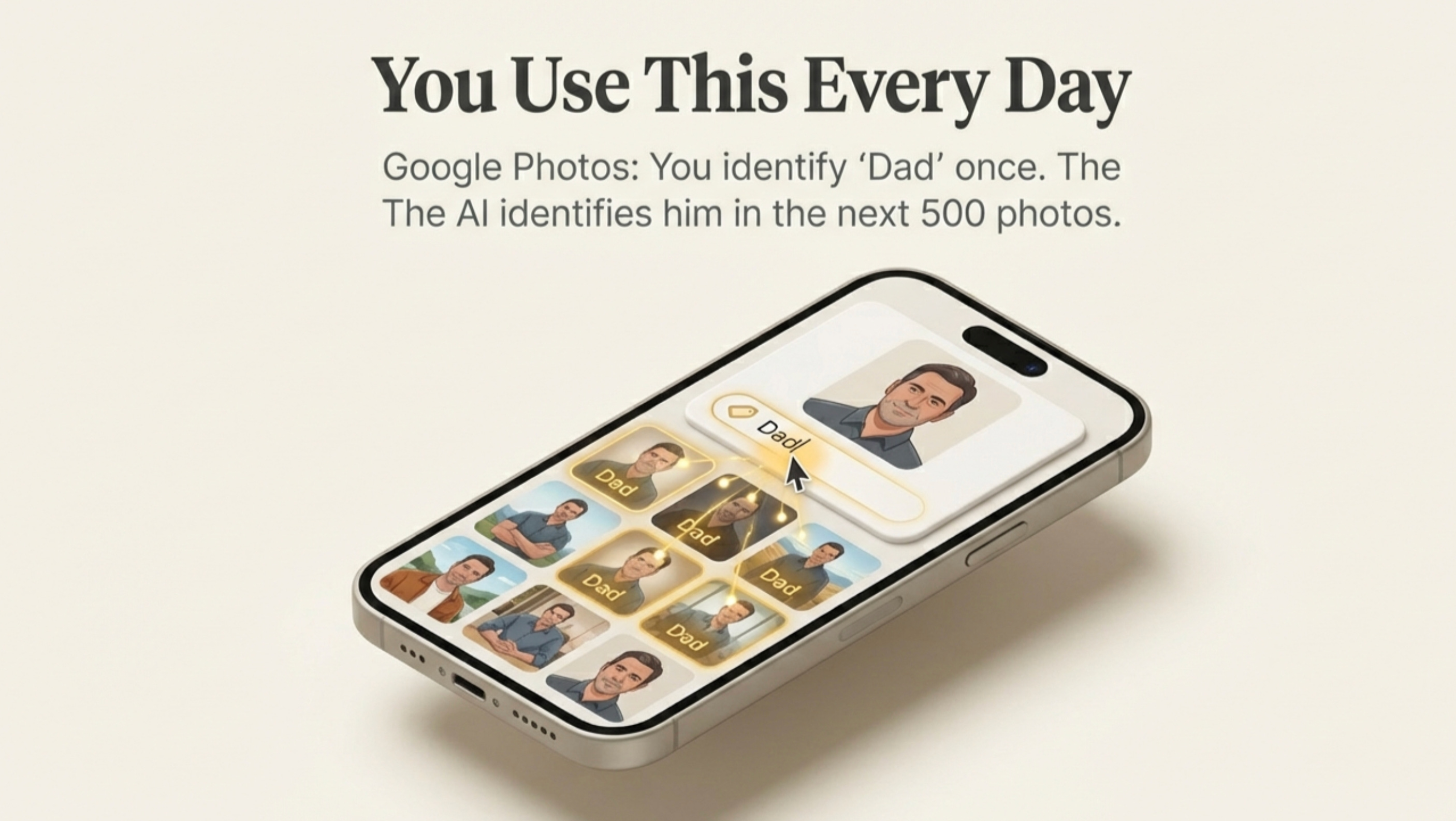
    Step 1 – Unsupervised Grouping: You upload 5,000 photos of your family. Google’s AI looks at them and notices, “Hey, this face appears in 500 photos. That face appears in 200 photos.” It doesn’t know who they are, but it knows they’re the same person. It groups them together using clustering.

    Step 2 – The Supervised Nudge: You click on one photo and type “Dad.”

    Step 3 – Semi-Supervised Magic: The AI takes that one label (”Dad”) and instantly applies it to the other 499 photos in that group.

    You did 1% of the work (labeling one photo), and the AI did 99% of the work (labeling the rest). That’s Semi-Supervised Learning in action.

    How Does It Work?

    It follows a simple logic:

    1. Cluster First: The AI looks at all the data (labeled and unlabeled) and groups similar things together. It notices that Data Point A is very similar to Data Point B.

    2. Propagate the Label: If you tell the AI that “Point A is a Cat,” the AI assumes that since Point B looks exactly like Point A, then Point B must be a Cat too.

    The key assumption: data points that are close to each other probably share the same label.

    2026 Update: Self-Supervised Learning Takes Over

    Here’s where things get exciting. Since around 2018, a cousin of semi-supervised learning has become the backbone of modern AI: Self-Supervised Learning.

    What’s the difference?

    • Semi-Supervised: You give the AI a few labels, and it uses unlabeled data to fill in the gaps.

    • Self-Supervised: The AI creates its own labels from the data itself—no human labels needed at all.

    Real-World Example: How ChatGPT Learned to Write

    ChatGPT wasn’t trained by humans writing “correct answers” for billions of sentences. Instead, it used self-supervised learning:

    1. Take a sentence: “The cat sat on the ___”

    2. Hide the last word (”mat”)

    3. Train the AI to predict it

    4. Repeat this billions of times with internet text

    The AI creates its own “quiz” from raw text, learning language patterns without anyone labeling a single sentence. This is why GPT-4, Claude, and Gemini could train on trillions of words without hiring millions of human teachers.

    Why this matters: Self-supervised learning is the reason AI exploded in the 2020s. It unlocked the internet’s massive, messy, unlabeled data.

    Spot It in the Wild: Where You’re Already Using It

    You interact with semi-supervised and self-supervised learning every day:

    • Spotify Discover Weekly (it knows what songs you like and finds similar unlabeled music)

    • Gmail spam filter (you mark a few emails as spam; it learns patterns to catch the rest)

    • Medical diagnosis tools (doctors label a few images; AI extends that knowledge across millions)

    • ChatGPT, Claude, Gemini (all trained with self-supervised learning on massive unlabeled text)

    When Semi-Supervised Learning Fails

    Just like any machine learning technique, semi-supervised learning has limitations you need to watch for:

    1. Garbage In, Garbage Out (Amplified)

    If your small labeled dataset is biased or wrong, the AI will spread that bias across all the unlabeled data.

    Example: If you label 10 photos of “doctors” and they’re all men, the AI might learn “doctor = male” and mislabel female doctors in the unlabeled set.

    2. The “Close Together” Assumption Can Break

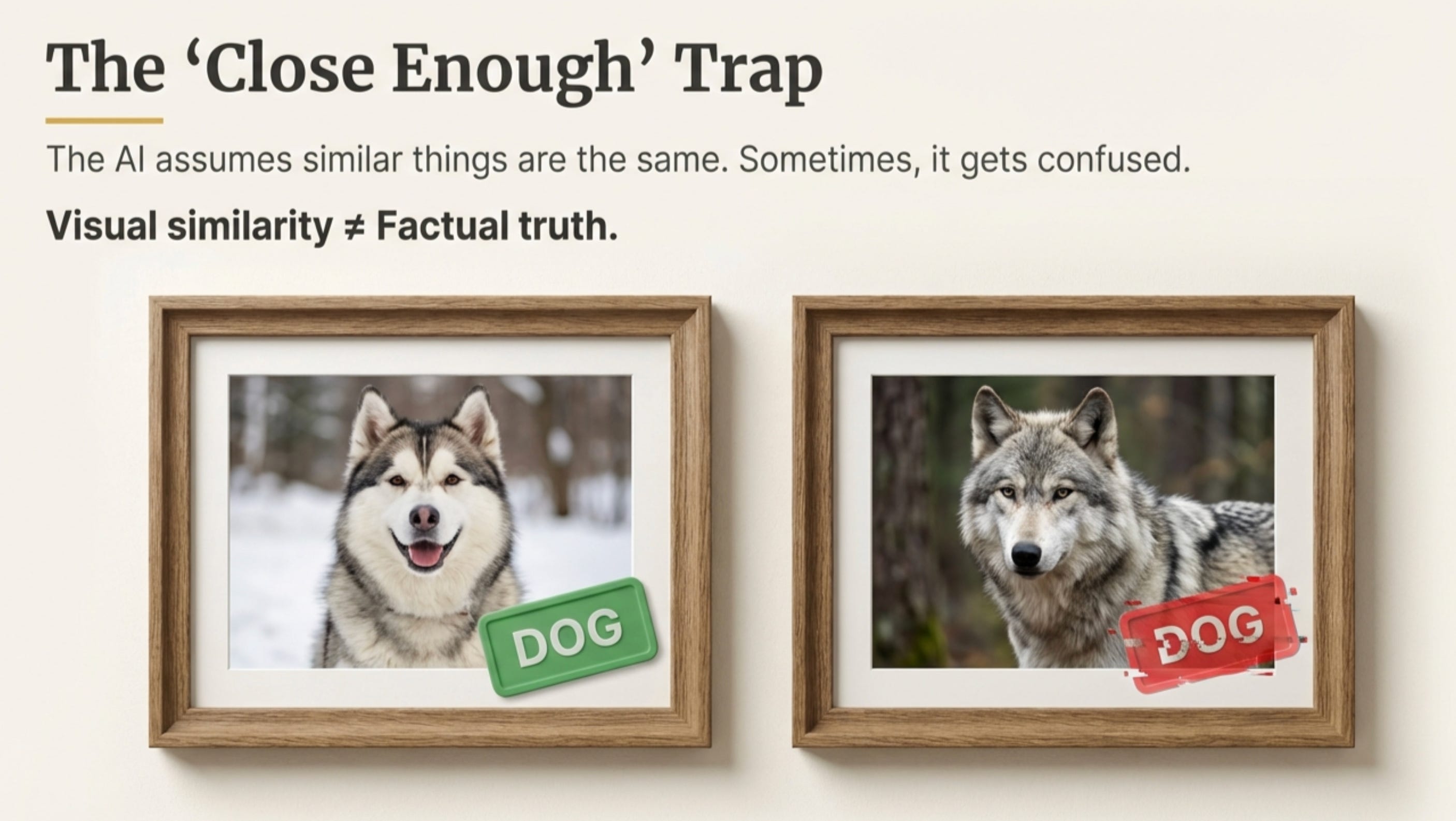
    Semi-supervised learning assumes similar-looking things have the same label. But what if they don’t?

    Example: Huskies and wolves look similar, but they’re not the same. If your labeled data only has huskies, the AI might confidently—and wrongly—label wolves as “husky.”

    3. Domain Shift

    If your unlabeled data comes from a different source than your labeled data, the AI can get confused.

    Example: You label 100 professional X-rays (high quality, well-lit). Then you feed the AI 10,000 unlabeled phone photos of X-rays (blurry, poor lighting). The patterns don’t transfer well.

    The Fix: Always check your unlabeled data’s quality and diversity before letting the AI loose on it.

    Why This Matters Now

    We live in a world where data is cheap, but labels are expensive.

    • We have billions of tweets, but we don’t know the sentiment of all of them.

    • We have millions of hours of YouTube video, but we don’t have transcripts for all of them.

    • We have endless medical images, but we can’t afford experts to label every one.

    Semi-Supervised Learning allows companies to unlock the value of massive, messy datasets without hiring thousands of humans to manually tag every single file.

    And Self-Supervised Learning is why AI could suddenly read, write, code, and converse in 2023-2026 without needing labeled “correct answers” for every sentence on the internet.

    Try It Yourself

    Want to see semi-supervised learning in action? Here’s a simple experiment:

    1. Open Google Photos (or Apple Photos)

    2. Upload 50+ photos with at least 2-3 people appearing multiple times

    3. Wait for the app to cluster faces

    4. Label just one photo of each person

    5. Watch the AI instantly label dozens more

    That’s semi-supervised learning working for you—right on your phone.

    The Takeaway

    Semi-Supervised Learning is the “work smarter, not harder” approach to AI.

    • Supervised: Requires a teacher for every lesson.

    • Unsupervised: No teacher at all.

    • Semi-Supervised: The teacher gives a few examples, and the student figures out the rest by association.

    • Self-Supervised (2026 Bonus): The student creates their own practice tests from the material itself.

    This is how your phone organizes your memories, how medical AI detects diseases without bankrupting the hospital, and how ChatGPT learned to write without anyone grading billions of essays.


    AI for Common Folks — Making AI understandable, one concept at a time.

    Learn More

    Want to dive deeper into practical AI? Check out the free fast.ai course, which inspired several examples in this article and teaches you to build real AI applications from day one.

    Previous articles in this series:

  • What is Unsupervised Learning

    What is Unsupervised Learning

    Unsupervised Learning is teaching computers to find hidden patterns in data without any labeled answers—like a detective solving a mystery with no clues, just raw evidence. While Supervised Learning needs a teacher with an answer key, Unsupervised Learning figures things out completely on its own.


    Hey Common Folks!

    Last week we talked about Supervised Learning—the kind where we hold the computer’s hand and show it the right answers. Today we’re going somewhere more mysterious.

    What happens when you don’t have an answer key? What if you have mountains of data but no one has labeled any of it? What if you don’t even know what questions to ask?

    That’s where Unsupervised Learning comes in.

    The Toy Box Analogy

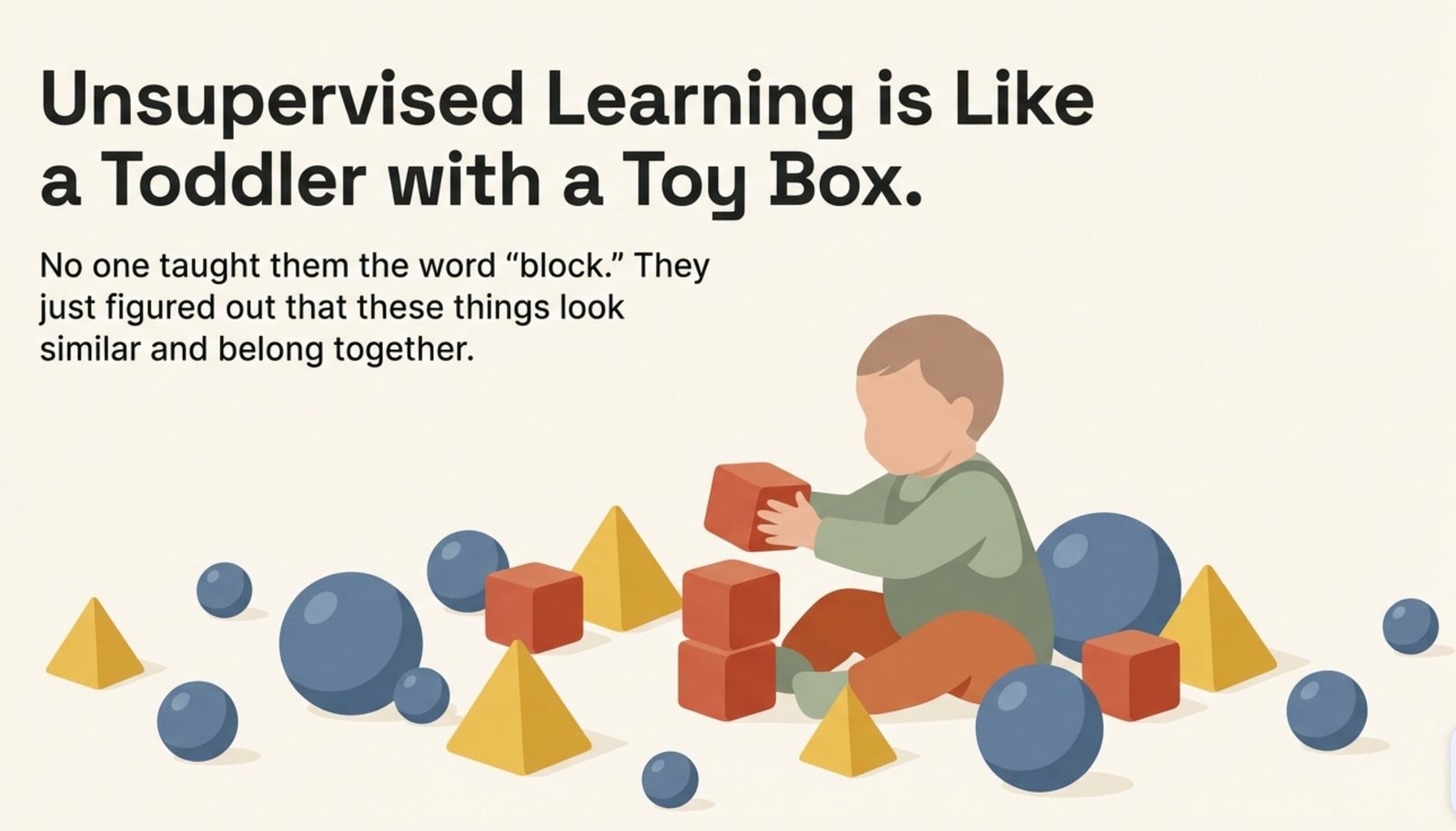
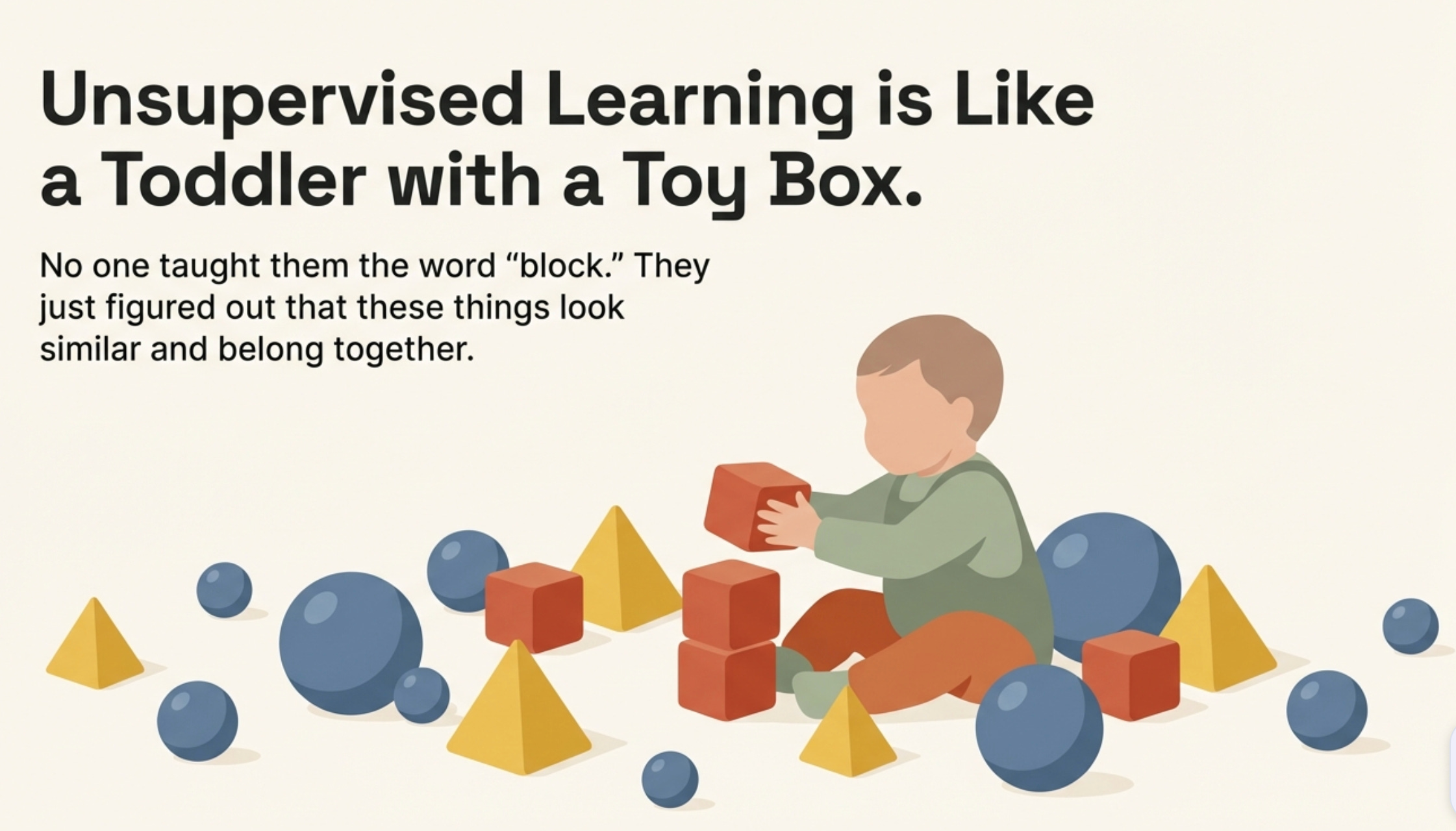
    Imagine dumping a bucket of toys in front of a toddler: red blocks, blue balls, yellow cars, green stuffed animals. You don’t tell them the names. You don’t explain what goes with what. You just watch.

    What happens?

    The toddler starts sorting. Maybe all the round things go in one pile. Maybe all the red things go together. Maybe the soft toys get separated from the hard ones.

    The child doesn’t know the words “ball” or “block,” but they’ve discovered something profound: these things are similar to each other, and those things are different.

    That’s Unsupervised Learning. The machine groups data based on similarities it discovers, without anyone telling it what the categories should be.

    The Key Difference: No Labels, No Answers

    In Supervised Learning, we showed the computer 10,000 emails and told it “this is spam” or “this is not spam.” We provided the answers.

    In Unsupervised Learning, we just dump 10,000 emails on the computer and say “find the patterns.” We don’t tell it what spam looks like. We don’t even tell it to look for spam.

    The computer might discover: “Aha, there’s a group of emails with similar characteristics—they all have words like FREE MONEY, they come from weird addresses, they have lots of exclamation points!!!”

    It found the pattern. We just didn’t tell it what to call it.

    The Three Superpowers of Unsupervised Learning

    Since we’re not predicting specific answers, Unsupervised Learning typically does one of three jobs:

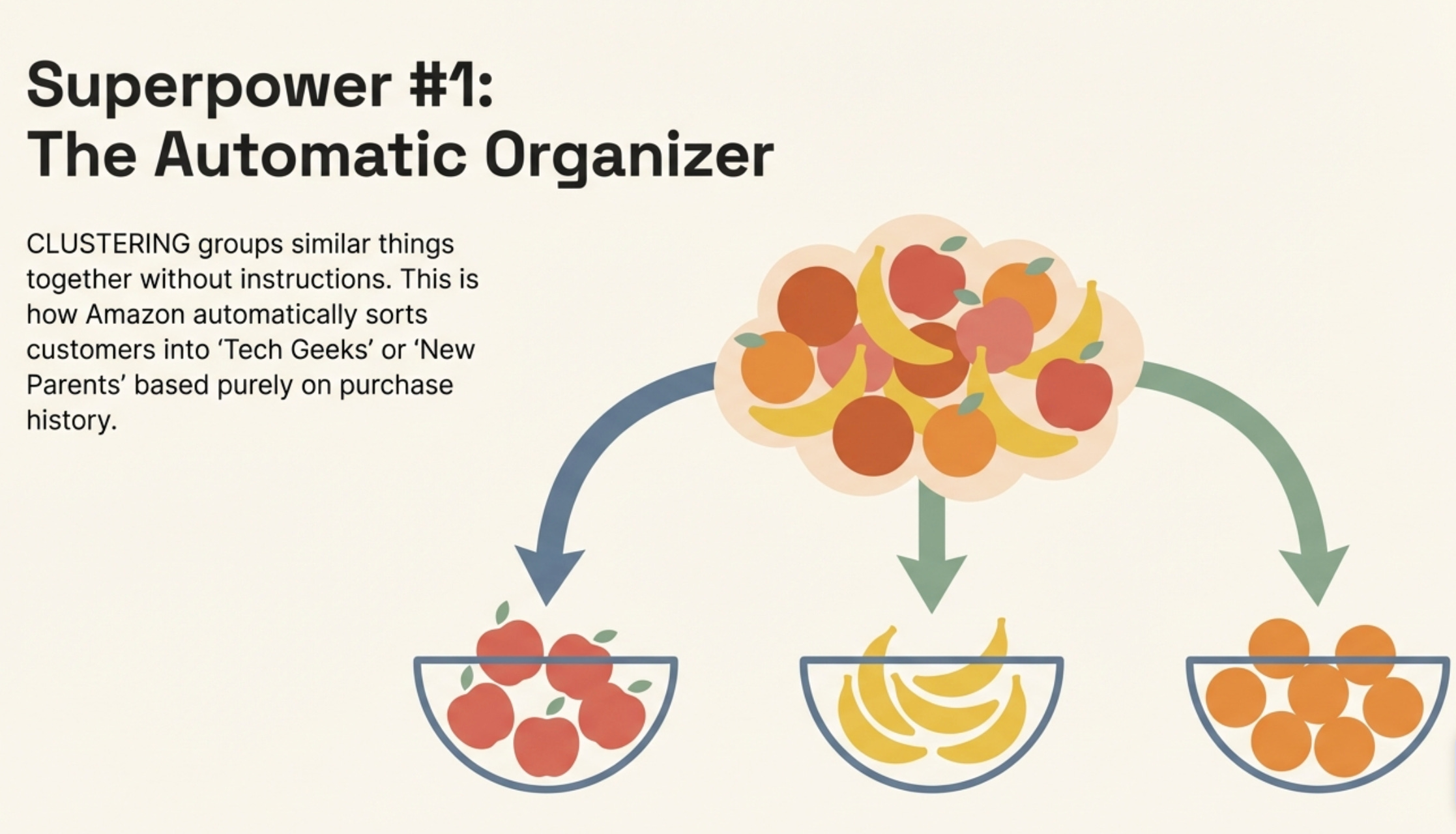
    1. Clustering: The Automatic Organizer

    This is the most common use. The AI looks at your data and automatically groups similar items together.

    The Student Example: Imagine plotting 1,000 college students by their grades and attendance. You don’t label anyone as “high achiever” or “struggling.” But when you look at the chart, you see natural clusters: one group with high grades and high attendance, another with low grades and spotty attendance, and a middle group coasting along.

    The AI draws circles around these groups automatically. It discovered three types of students without anyone teaching it the categories.

    Real-World Use—Amazon’s Recommendations: Amazon doesn’t manually sort you into “tech enthusiast” or “new parent.” Instead, their AI notices you buy the same types of products as certain other customers, groups you with them, and recommends what that group typically buys next. You’re in an invisible club you didn’t know existed.

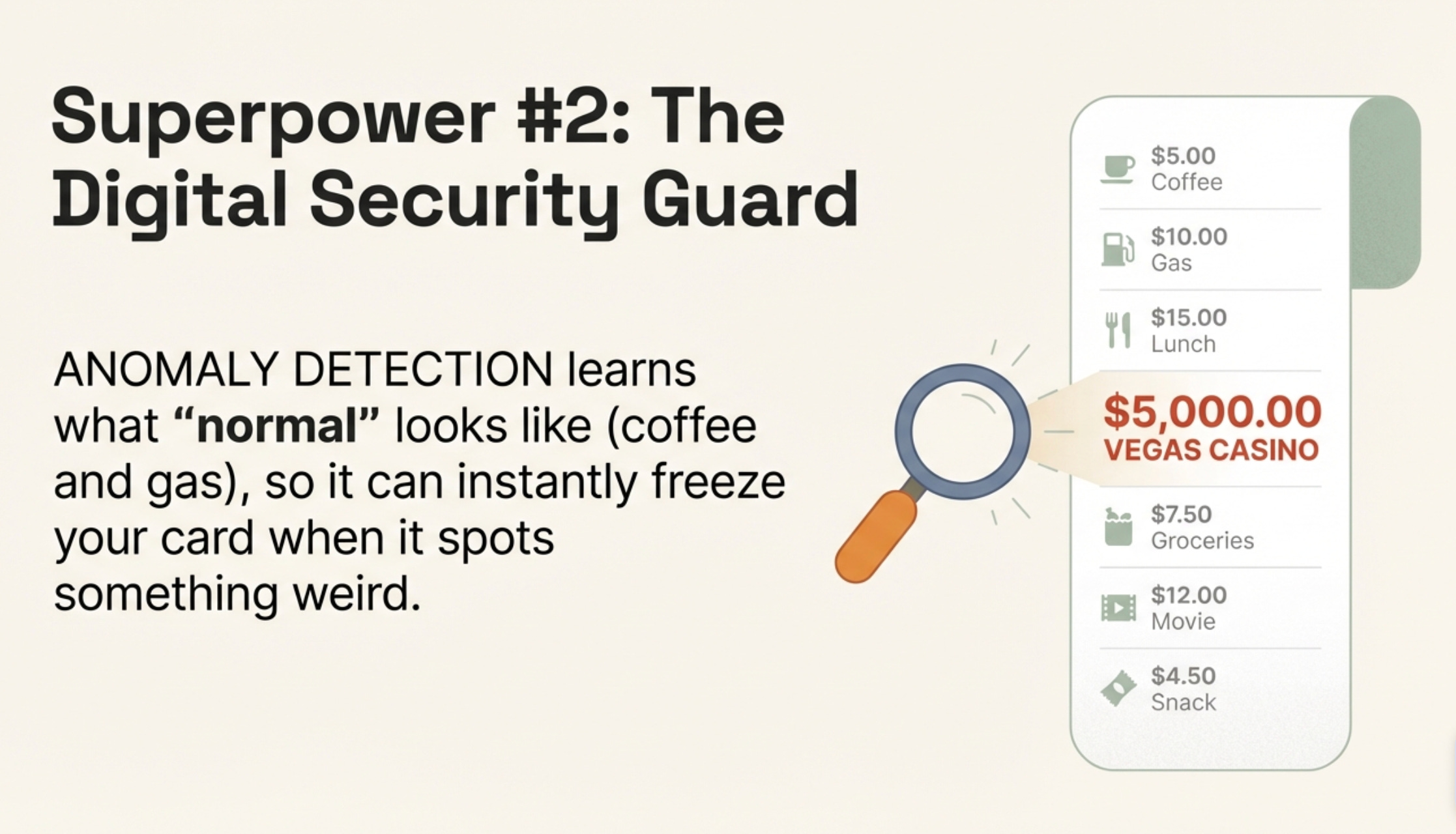
    2. Anomaly Detection: The Digital Security Guard

    Instead of finding what’s similar, the AI hunts for what’s weird. It learns what “normal” looks like, then flags anything that doesn’t fit.

    The Credit Card Example: Your bank doesn’t have a list of “fraud transactions” to train on. Instead, it learns your normal pattern: $50 at the grocery store in Indiana, $30 for gas, $15 at Starbucks.

    Then one day, boom—a $5,000 charge in Las Vegas.

    The AI sees this as an outlier, way outside your normal pattern. It doesn’t need to be told “this is fraud.” It just knows “this is weird,” and freezes your card.

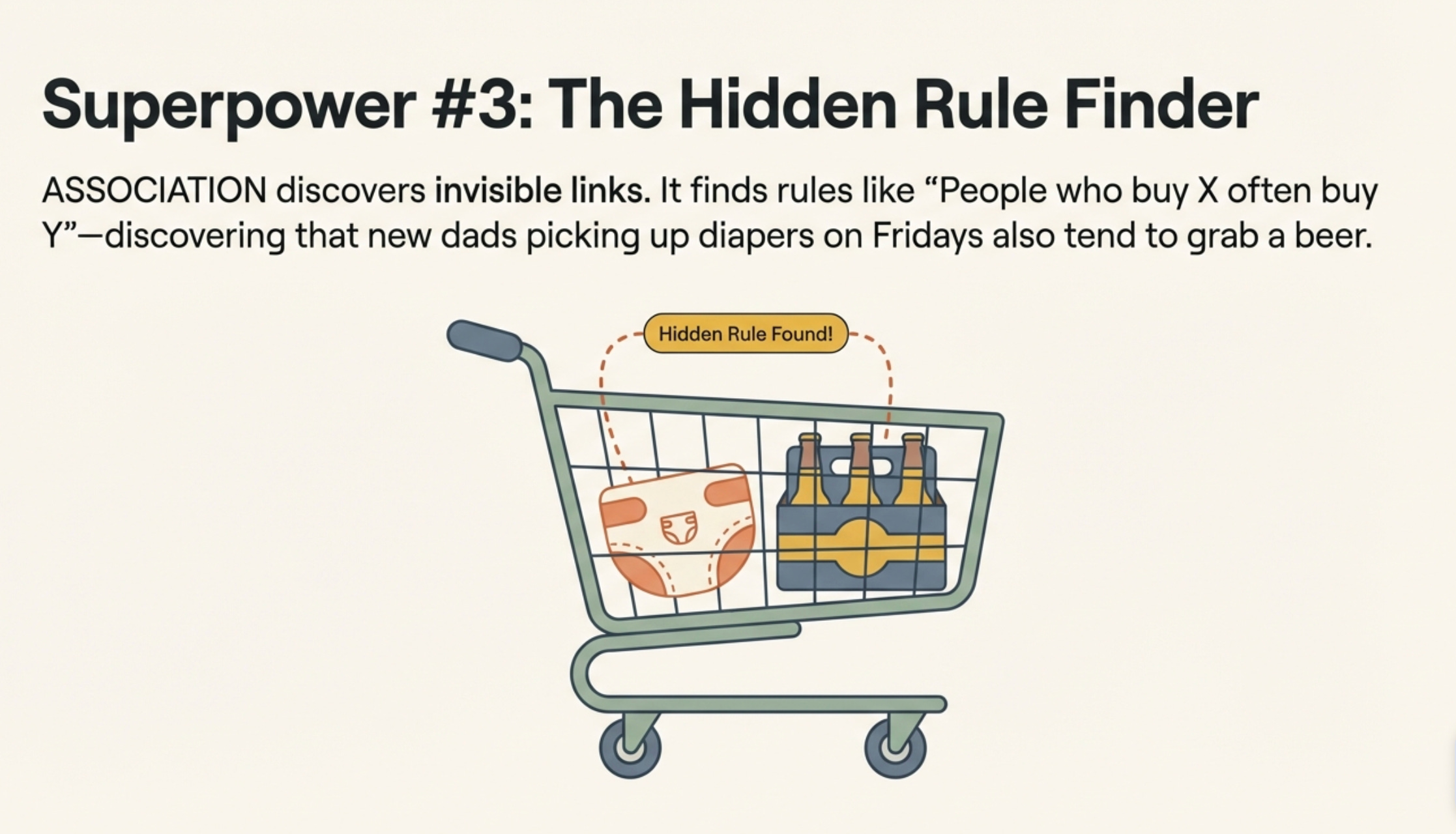
    3. Association: The “People Who Bought This Also Bought” Engine

    This finds rules hidden in your data. It discovers that when X happens, Y tends to happen too.

    The Famous Example: Walmart’s data team discovered something bizarre in their transaction data. Men who bought diapers on Friday evenings also tended to buy beer.

    No one programmed this rule. The algorithm discovered the pattern: new dads stopping for diapers were also grabbing beer for the weekend.

    Netflix’s Secret: When you finish watching Inception, Netflix suggests Interstellar. Not because someone manually linked these movies, but because the algorithm noticed people who watched one usually watched the other. It associated the two based purely on viewing patterns.

    The Big Challenge: How Do You Know It’s Right?

    Here’s the uncomfortable truth about Unsupervised Learning: you can’t always tell if it’s right.

    In Supervised Learning, if the AI calls a cat a dog, we correct it immediately. Wrong answer.

    In Unsupervised Learning, the AI might group your customers by shoe size instead of spending habits. Is that wrong? Technically no—it found a pattern. But is it useful? Probably not.

    This is why human expertise still matters. The AI finds patterns we never knew existed, but humans have to interpret whether those patterns actually mean something valuable.

    Where You’re Already Using It

    You interact with Unsupervised Learning more than you realize:

    Netflix and Spotify recommendations work by clustering users with similar tastes and suggesting what others in your cluster enjoyed.

    Google Photos automatically groups pictures of the same person together, even though you never labeled anyone. It learned to recognize faces and found the pattern: “these 50 photos all contain the same face.”

    Credit card fraud detection flags unusual purchases based on your personal spending patterns, not a pre-labeled list of “fraud types.”

    Spam filters got their start with Supervised Learning, but many now use Unsupervised Learning to catch new spam tactics no one has labeled yet.

    The Takeaway

    Unsupervised Learning unlocks the value hidden in raw, unlabeled data. It finds patterns we didn’t know to look for.

    While Supervised Learning needs a teacher, Unsupervised Learning is the self-starter—the algorithm that explores data on its own and surfaces insights humans might never have discovered.

    It clusters similar things. It spots weird outliers. It discovers associations we didn’t see coming.

    Coming Up: We’ve covered learning with a teacher (Supervised) and learning alone (Unsupervised). But what about learning through trial and error—getting rewards for good choices and penalties for bad ones? That’s Reinforcement Learning, the technique teaching robots to walk and AI to master video games. We’ll explore it next.


    AI for Common Folks — Making AI understandable, one concept at a time.

  • What is Supervised Learning?

    What is Supervised Learning?

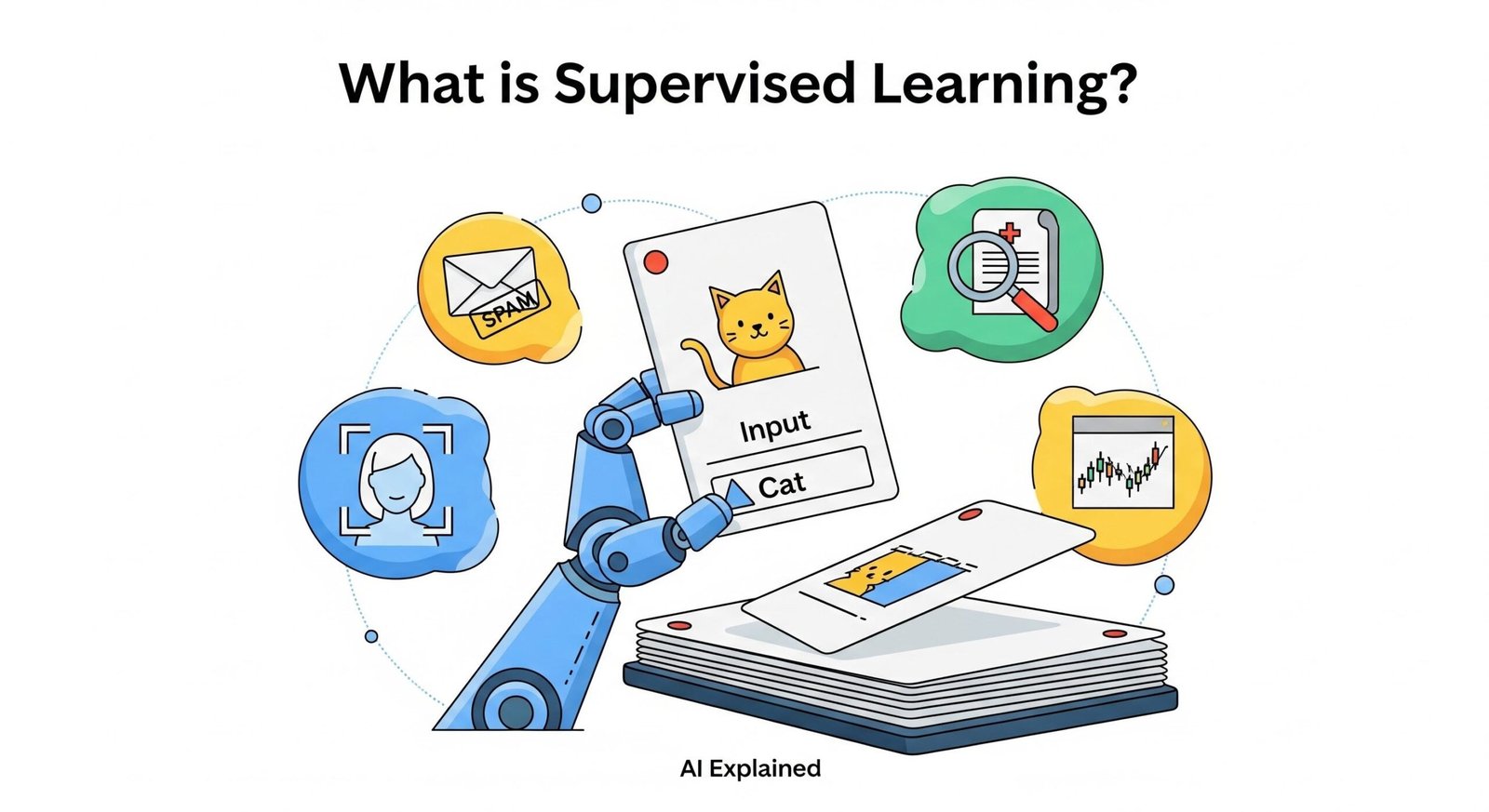
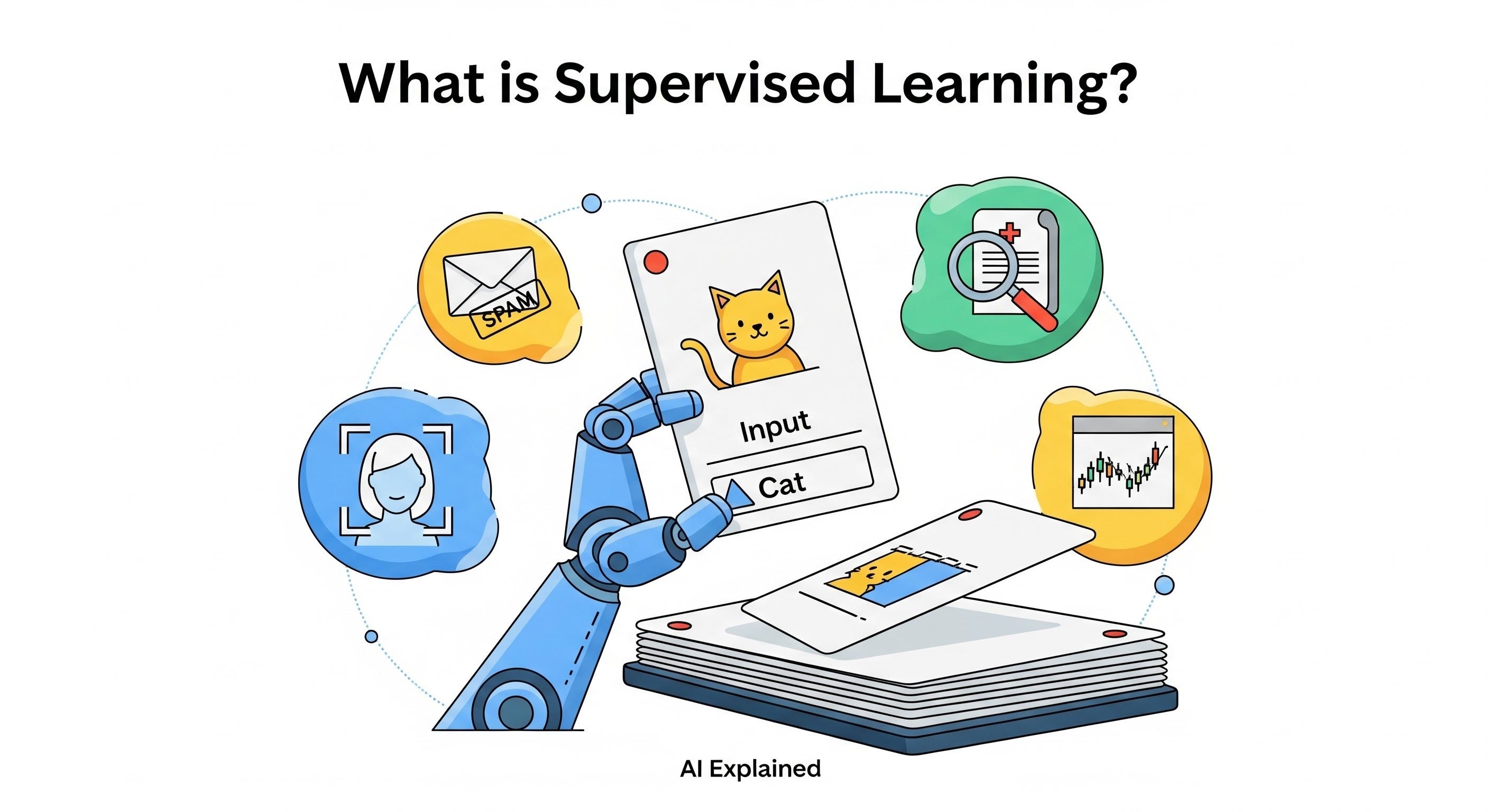
    Supervised Learning is teaching computers by showing them examples with the correct answers already provided—like learning with a flashcard deck where every card has the answer on the back. It’s the most common type of Machine Learning and powers everything from spam filters to medical diagnosis tools.


    Hey Common Folks!

    We’ve covered the umbrella (AI) and the engine (Machine Learning). Now we’re zooming into the most popular way machines actually learn: Supervised Learning.

    If Machine Learning is the school, Supervised Learning is the class where the teacher gives you the answer key before the exam.

    Think about it: when you learned to read as a child, someone didn’t just hand you a pile of books and say “figure it out.” They pointed at an apple and said “Apple.” They pointed at a banana and said “Banana.” They supervised your learning by giving you the correct answers.

    That’s exactly how Supervised Learning works.

    What Makes It “Supervised”?

    The word “supervised” means there’s a teacher involved. In technical terms, we train the computer using labeled data:

    Data = The question (a picture, an email, a patient’s symptoms)

    Label = The correct answer (cat, spam, cancer)

    We show the computer thousands of examples where we already know the right answer. The computer’s job is to find the pattern connecting the input to the output.

    Example: We show a computer 10,000 emails. For each one, we’ve already marked it as “Spam” or “Not Spam.” The computer studies these examples and learns: “Aha! Emails with words like ‘FREE MONEY’ and ‘CLICK NOW’ tend to be spam.”

    After training, we can show it a brand new email it’s never seen, and it correctly predicts: Spam.

    The Training Process: How It Actually Learns

    Let’s say we want to predict whether students will get job placements based on their grades and IQ scores. Here’s how Supervised Learning works:

    Step 1: Gather Labeled Data

    We collect data on 1,000 students: their CGPA, IQ scores, and whether they got placed (Yes/No). The “Yes/No” is our label—the correct answer.

    Step 2: Split the Data

    We divide our 1,000 students into two groups:

    Training Set (800 students): The computer studies these examples WITH the answers. It learns the mathematical relationship between good grades and job placement.

    Test Set (200 students): We hide the answers. The computer makes predictions, and we check how many it got right. This tells us if it actually learned or just memorized.

    Step 3: Learn and Adjust

    The computer makes a prediction, checks if it was right or wrong, and adjusts its internal “thinking.” It repeats this millions of times until it gets really accurate.

    The Two Flavors of Supervised Learning

    Supervised Learning solves two types of problems. Think of them as two different subjects in school:

    1. Classification (Sorting into Buckets)

    This is when the answer is a category—Yes or No, Cat or Dog, Spam or Not Spam.

    The question: “Which bucket does this belong in?”

    Example: Is this email spam? Is this tumor malignant or benign? Will this customer cancel their subscription?

    The answer is always one of a limited set of options. There’s no “half-spam.”

    2. Regression (Predicting a Number)

    This is when the answer is a continuous number—not a category.

    The question: “What number should this be?”

    Example: What will this house sell for? What temperature will it be tomorrow? How much revenue will we make next quarter?

    The answer could be any number: $450,000, 72 degrees, $1.2 million.

    Quick way to remember: Classification = Categories (this OR that) Regression = Real numbers (how much, how many)

    Where You’re Already Using Supervised Learning

    You interact with Supervised Learning dozens of times a day:

    • Email spam filters → Classification (spam or not spam)

    • Credit card fraud detection → Classification (fraudulent or legitimate)

    • House price estimates on Zillow → Regression (predicting dollar amounts)

    • Medical diagnosis tools → Classification (disease present or not)

    • Weather forecasts → Regression (predicting temperature, rainfall amounts)

    The Catch: The Labeling Bottleneck

    Supervised Learning is powerful, but it has one big limitation: someone has to label all that data first.

    That spam filter? Someone had to manually mark thousands of emails as “Spam” or “Not Spam” before the computer could learn.

    That medical AI? Doctors had to review thousands of X-rays and mark which ones showed tumors.

    This is expensive, time-consuming, and if humans make labeling mistakes, the AI learns those mistakes too. Garbage in, garbage out.

    The Takeaway

    Supervised Learning is the most common and reliable form of Machine Learning because we define what “correct” looks like. We’re the supervisor, providing the answer key.

    If the AI is predicting a category (Yes/No, Cat/Dog), it’s Classification.

    If the AI is predicting a number (price, temperature, score), it’s Regression.

    Next time your email app catches a phishing attempt or Google Maps predicts your arrival time, you’ll know: that’s Supervised Learning doing its job—pattern recognition trained on millions of labeled examples.


    Coming Up:

    But what happens when we don’t have the answer key? What if we just dump a pile of data on the computer and say “find the patterns yourself”? That’s the world of Unsupervised Learning, and we’ll explore it next.


    Was this helpful? Reply and let us know what AI/ML/Data Science concept confuses you the most!

    AI for Common FolksUnderstand AI in plain English

  • What is Data Science?

    What is Data Science?

    Data Science is using scientific methods and tools to extract useful insights from data. It’s the process of turning raw information into decisions – like a doctor diagnosing a patient’s health using symptoms, tests, and medical history.

    AI for Common Folks
    Jan 26, 2026


    Hey Common Folks!

    We’ve talked about the “brain” (AI), the “learning engine” (Machine Learning), and the “complex neural wiring” (Deep Learning).

    But today, we are zooming out to look at the entire hospital where all this diagnosis and treatment happens. We are talking about Data Science.

    You’ve heard the phrase “Data is the new oil.” It’s a cliché, but it’s true. However, crude oil sitting in the ground is worthless. You need to refine it into gasoline, plastic, and jet fuel before it powers anything.

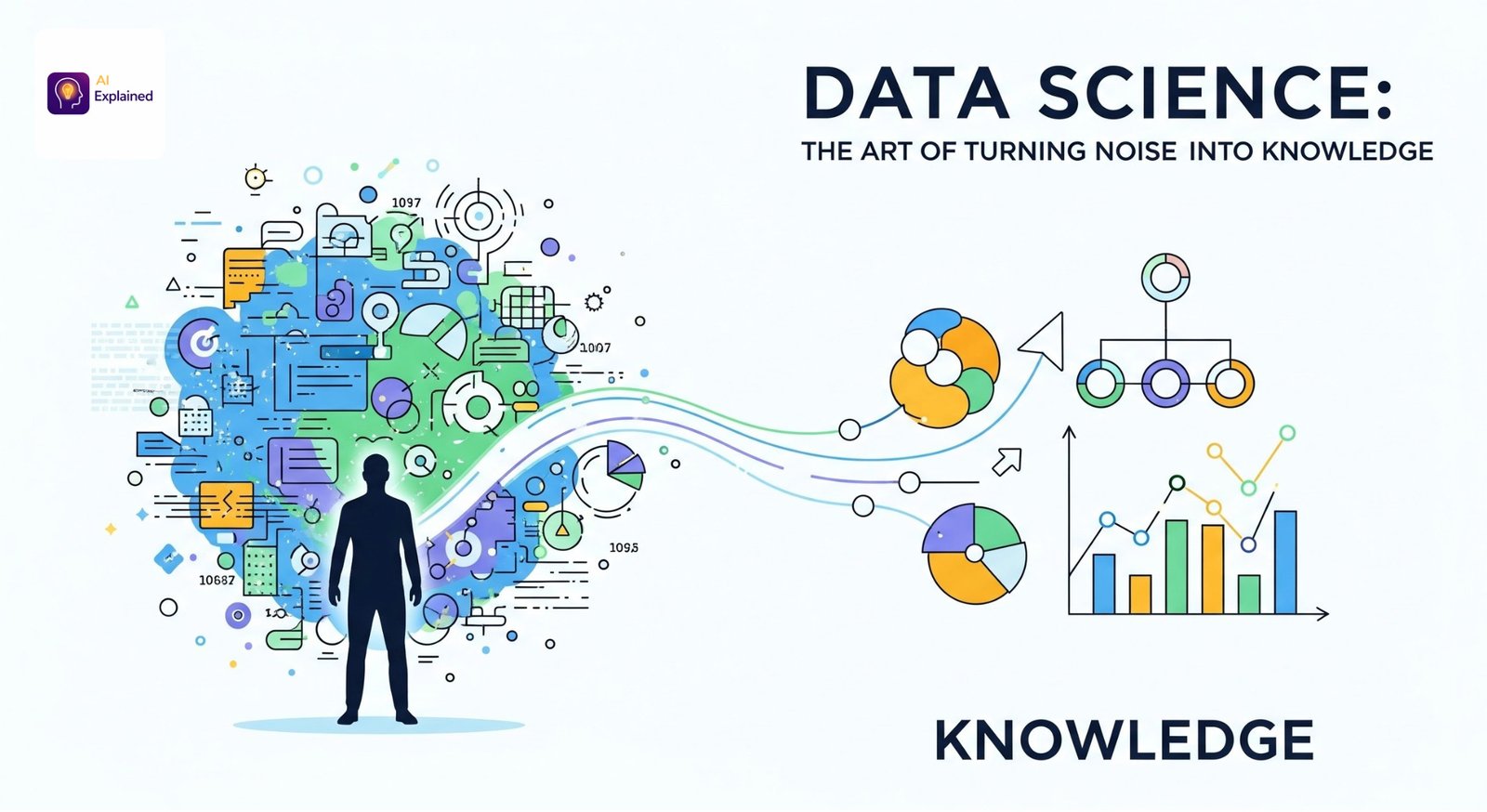
    Data Science is that refinery. It is the process of taking raw, messy information and turning it into gold.


    What Is Data Science?

    Data Science is the field of using scientific methods, algorithms, and systems to extract knowledge and insights from data—both structured (like spreadsheets) and unstructured (like customer reviews or images).

    Think of it this way: Data Science is like being a doctor for organizations.

    The Doctor Analogy

    Imagine you’re not feeling well and you visit a doctor. Here’s what happens:

    1. Symptoms (The Problem)
    You tell the doctor: “I’m always tired, constantly thirsty, and losing weight.”
    → In business: “Our sales are dropping,” “Customers are leaving,” “The machine keeps breaking.”

    2. Medical History (Historical Data)
    The doctor asks: “When did this start? Has it happened before? Any family history?”
    → In Data Science: You look at past performance, previous issues, patterns over time.

    3. Running Tests (Data Collection)
    The doctor orders blood tests, X-rays, maybe an MRI—gathering evidence.
    → In Data Science: You pull data from databases, surveys, sensors, website logs, customer calls.

    4. Diagnosis (Data Analysis)
    The doctor analyzes all the test results and finds the root cause: “You have Type 2 diabetes.”
    → In Data Science: “Your sales are dropping because new customers aren’t returning after their first purchase.”

    5. Treatment Plan (The Model/Solution)
    The doctor prescribes medication, lifestyle changes, and a monitoring plan.
    → In Data Science: You build a model or create a strategy—”Send personalized follow-up emails to first-time buyers within 48 hours.”

    6. Monitoring & Follow-up (Deployment & Evaluation)
    The doctor checks: “Are your blood sugar levels improving? Do we need to adjust the medication?”
    → In Data Science: “After implementing the email campaign, did repeat purchases actually increase?”

    7. Explaining to the Patient (Communication)
    A good doctor doesn’t just write a prescription—they explain what’s wrong, why it happened, and how the treatment works.
    → A good Data Scientist translates complex findings into plain English for executives: “If we fix the onboarding experience, we’ll retain 20% more customers—that’s $500K in annual revenue.”

    Data Science uses AI and Machine Learning as tools, but it also involves statistics, visualization, domain expertise, and a lot of human judgment.


    The “Secret Sauce” Ingredients

    Data Science isn’t just one skill; it’s a mix of three things:

    1. Computer Science (The Tech Skills)
    You need to code to handle massive amounts of information. Python and SQL are the most common languages. You don’t need to be a software engineer—just comfortable enough to wrangle data and automate analysis.

    2. Math & Statistics (The Logic Skills)
    You need to know if the patterns you see are real or just random luck. This is where statistics comes in—understanding averages, probabilities, correlations, and whether results are statistically significant.

    3. Domain Knowledge (The Real-World Skills)
    This is crucial and often underrated. If you’re analyzing cricket data, you need to know what a “run rate” is. If you’re analyzing cancer data, you need to know biology. The best insights come when you combine technical skills with subject-matter expertise.

    Just like a doctor needs to know medicine (domain knowledge), anatomy (science), and how to use medical equipment (tools)—a Data Scientist needs all three ingredients.


    How Does It Actually Work? (The Lifecycle)

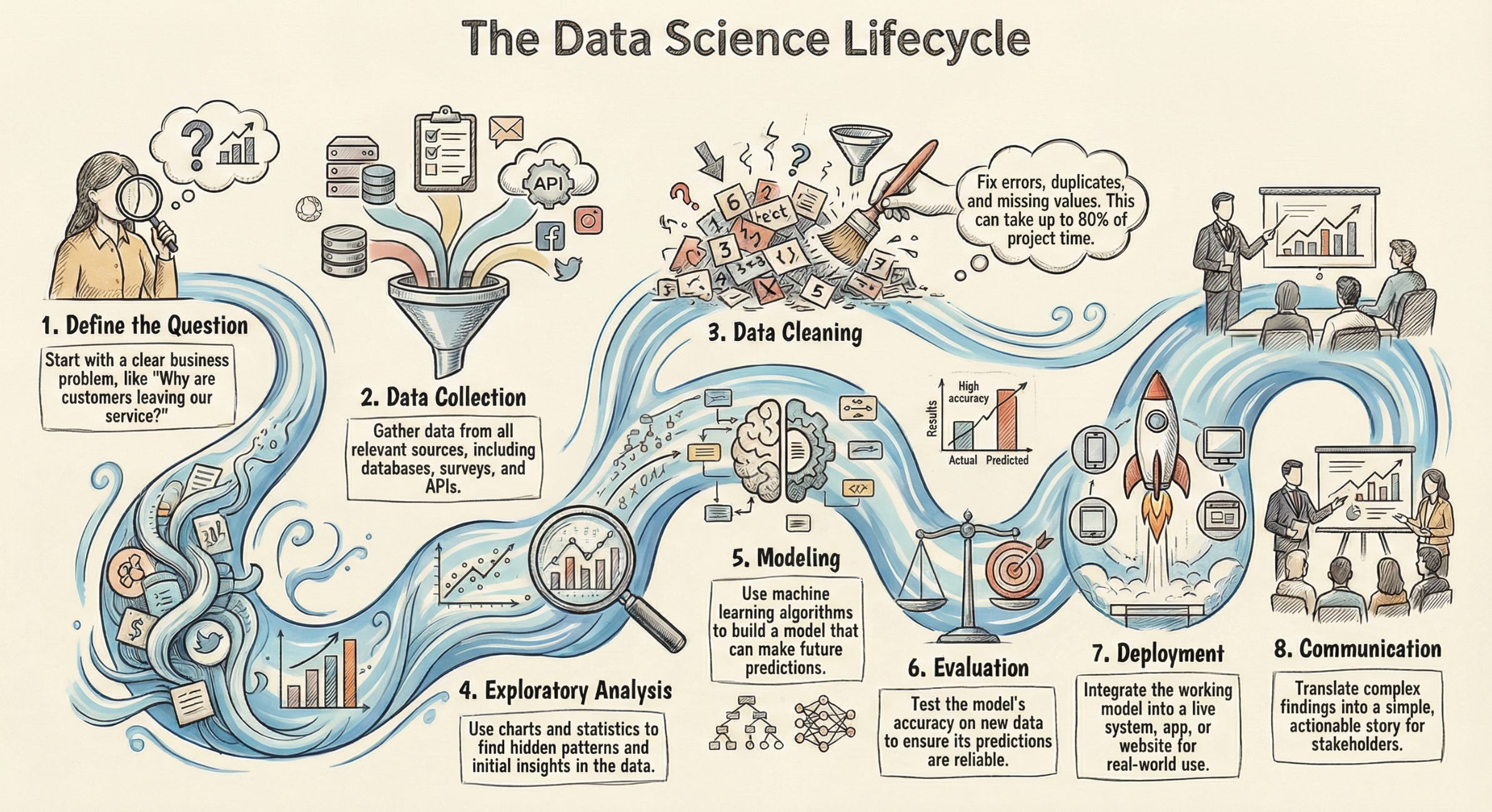
    Data Science isn’t just “running code.” It’s a lifecycle. Based on how experts break it down, here’s what happens behind the scenes:

    1. Define the Question (The Symptoms)

    Before touching any data, you need a clear question:

    • “Why are customers leaving our service?”

    • “Which patients are at highest risk for complications?”

    • “What causes this factory machine to break down?”

    No question = no direction. This step sounds obvious, but most failed data projects skip it.

    2. Data Collection (Running the Tests)

    You gather data from databases, spreadsheets, APIs, sensors, surveys—anywhere relevant information exists.

    Example: A retail company investigating falling sales might collect:

    • Purchase history

    • Website clickstream data

    • Customer service call transcripts

    • Weather data (ice cream sells better when it’s hot!)

    • Competitor pricing

    3. Data Cleaning (The Janitor Work)

    Real data is messy. It has missing values, typos, duplicates, and errors. This unglamorous step takes 60-80% of a Data Scientist’s time.

    Example:
    One customer entered their age as “25,” another as “Twenty-Five,” a third accidentally typed “250,” and a fourth left it blank. A Data Scientist has to fix all of this before the computer can use it.

    The saying in the field: “Garbage In, Garbage Out.” If you feed bad data into a model, you get bad predictions—just like a doctor making the wrong diagnosis from contaminated lab samples.

    4. Exploratory Data Analysis (Finding Patterns)

    This is where you “interview” the data by creating graphs, charts, and statistical summaries to find hidden patterns.

    You might discover:

    • Ice cream sales spike when sunglasses sales spike (both driven by summer weather)

    • Customers who spend 10+ minutes on your website are 5x more likely to buy

    • Machine breakdowns happen more often on night shifts

    This is like a doctor noticing your symptoms all point toward one condition.

    5. Modeling (Creating the Treatment Plan)

    This is where Machine Learning often comes in. You feed clean data into an algorithm to create a model—a mathematical formula that can make predictions.

    Examples:

    • Predict which customers will cancel their subscription next month

    • Forecast how many flu cases a hospital will see this winter

    • Recommend which movie you’ll watch next on Netflix

    Just like a doctor prescribes treatment based on medical evidence and past cases, a Data Scientist builds models based on historical patterns.

    6. Evaluation (Does the Treatment Work?)

    Just because a model makes predictions doesn’t mean they’re accurate. You test it on new data to see how well it performs.

    If your model predicts 100 customers will leave but only 10 actually do, that’s a problem. Back to the drawing board—just like adjusting medication that isn’t working.

    7. Deployment (Putting It Into Action)

    Once the model works, you deploy it—meaning you put it into an app, website, or system where it runs automatically in the real world.

    Examples:

    • Credit card companies use fraud detection models in real-time

    • Spotify’s recommendation algorithm runs every time you open the app

    • Self-driving cars use models to recognize stop signs

    8. Communication (Explaining to the Patient)

    The final step—and another underrated one—is explaining your findings to people who don’t speak “data.”

    A great Data Scientist takes complex analysis and turns it into a simple, actionable story:

    “If we send discount emails to customers who haven’t purchased in 30 days, we’ll recover 15% of them—that’s $200K in revenue. Here’s a simple chart showing the pattern.”

    Charts, visuals, and plain English matter just as much as the code. It’s like a doctor explaining your diagnosis so you actually understand and follow the treatment plan.


    Data Science in Your Daily Life

    You interact with Data Science dozens of times every day, whether you realize it or not. Here are three real-world examples:

    1. The “Diapers and Beer” Phenomenon (Retail)

    Supermarkets use Data Science for Association Rule Learning (finding what items are bought together).

    A famous example: stores discovered that men who bought diapers on Friday evenings often bought beer too.

    The Diagnosis: Dad is tired, picking up supplies for the baby, and grabbing a treat for himself.

    The Treatment: The store places beer right next to the diapers. Sales go up.

    That’s Data Science—finding unexpected patterns and turning them into profit.

    2. Uber’s Surge Pricing (Transportation)

    Ever wonder why your Uber costs more when it’s raining? It’s not just greed—it’s a Data Science model balancing supply and demand in real-time.

    The model predicts:
    “It’s raining in downtown. Demand will spike 40%. Supply is low. Temporarily increase price to encourage more drivers to get on the road.”

    Just like a doctor adjusting medication dosage based on how your body responds, Uber’s algorithm adjusts prices based on real-time conditions.

    3. Who Gets the Loan? (Banking)

    When you apply for a loan, a bank officer doesn’t just look at your face. They feed your data—age, salary, credit score, past debts, employment history—into a model.

    The model compares you to thousands of past customers:

    • If you look like people who paid back their loans → Approved

    • If you look like people who defaulted → Rejected

    This is Credit Risk Assessment—a classic Data Science application that protects both the bank and borrowers.


    The “Confusing” Job Titles

    You will hear different job titles thrown around. Here is the cheat sheet:

    Data Engineer (The Lab Technician)
    Builds the “pipes” and infrastructure to move data from sources (databases, apps, sensors) into storage systems. They make sure data is available, clean, and flowing properly—like a lab tech ensuring all equipment is working and samples are properly prepared.

    Data Analyst (The Diagnostician)
    Looks at the data to tell you what happened in the past.
    Example: “Sales dropped 10% last month in the Midwest region.”

    Think of them as the specialist running initial tests and reporting findings.

    Data Scientist (The Treatment Planner)
    Looks at the data to tell you what will happen in the future or what you should do.
    Example: “If we don’t change the price, sales will drop another 15% next quarter. But if we offer a limited-time bundle, we can reverse the trend.”

    They’re like the doctor who diagnoses AND prescribes the treatment.

    Machine Learning Engineer (The Specialist Surgeon)
    Takes models created by Data Scientists and turns them into production systems that run at scale. They ensure the “treatment” works reliably for millions of “patients” simultaneously.


    The Takeaway

    Data Science is the bridge between raw numbers and real-world decisions.

    • AI is the engine.

    • Machine Learning is the transmission.

    • Data Science is the car, the driver, and the map—getting you to your destination.

    It turns the chaos of customer reviews into product improvements.
    It turns patient medical records into life-saving diagnoses.
    It turns website clicks into personalized recommendations.
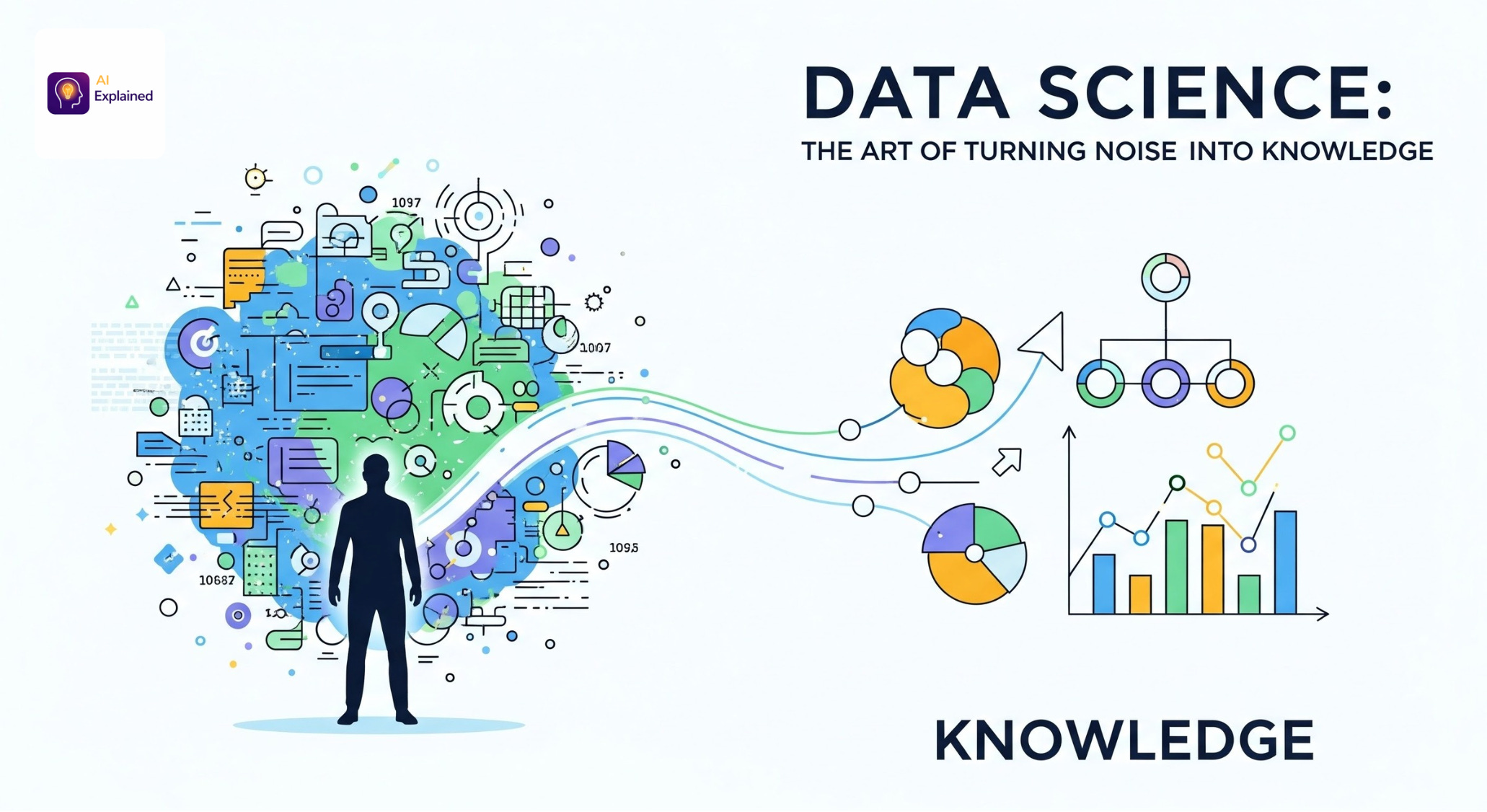
    It turns noise into knowledge.

    The best part? You don’t need a PhD to understand the concepts or use Data Science thinking in your own work. The mindset—asking good questions, looking for patterns, testing ideas with data—is something anyone can learn.

    Just like you don’t need to be a doctor to understand when you need medical care, you don’t need to be a Data Scientist to recognize when data could solve your problem.


    Was this helpful? Reply and let us know what Data Science concept confuses you the most!

    AI for Common FolksUnderstand AI in plain English.