AI can make you smarter. AI can also make your mind atrophy. The difference is in how you use it.
The Reality
When astronauts spend months in zero gravity, their muscles and bones atrophy dramatically—up to 20% loss.
AI is zero gravity for your thinking.
No friction. No load. No growth.
Most people use AI as a wheelchair for the mind. “Write my LinkedIn post.” “Fix my resume.” “Summarize this book.”
That’s like going to the gym and asking someone else to lift weights on your behalf. Sure, the weights got lifted. But you didn’t get stronger.
And this is happening faster than at any point in human history.
The Shift
There’s a principle the top performers understand:
For information tasks, use AI to remove friction. For transformation tasks, use AI to add friction.
Here’s how to apply it.
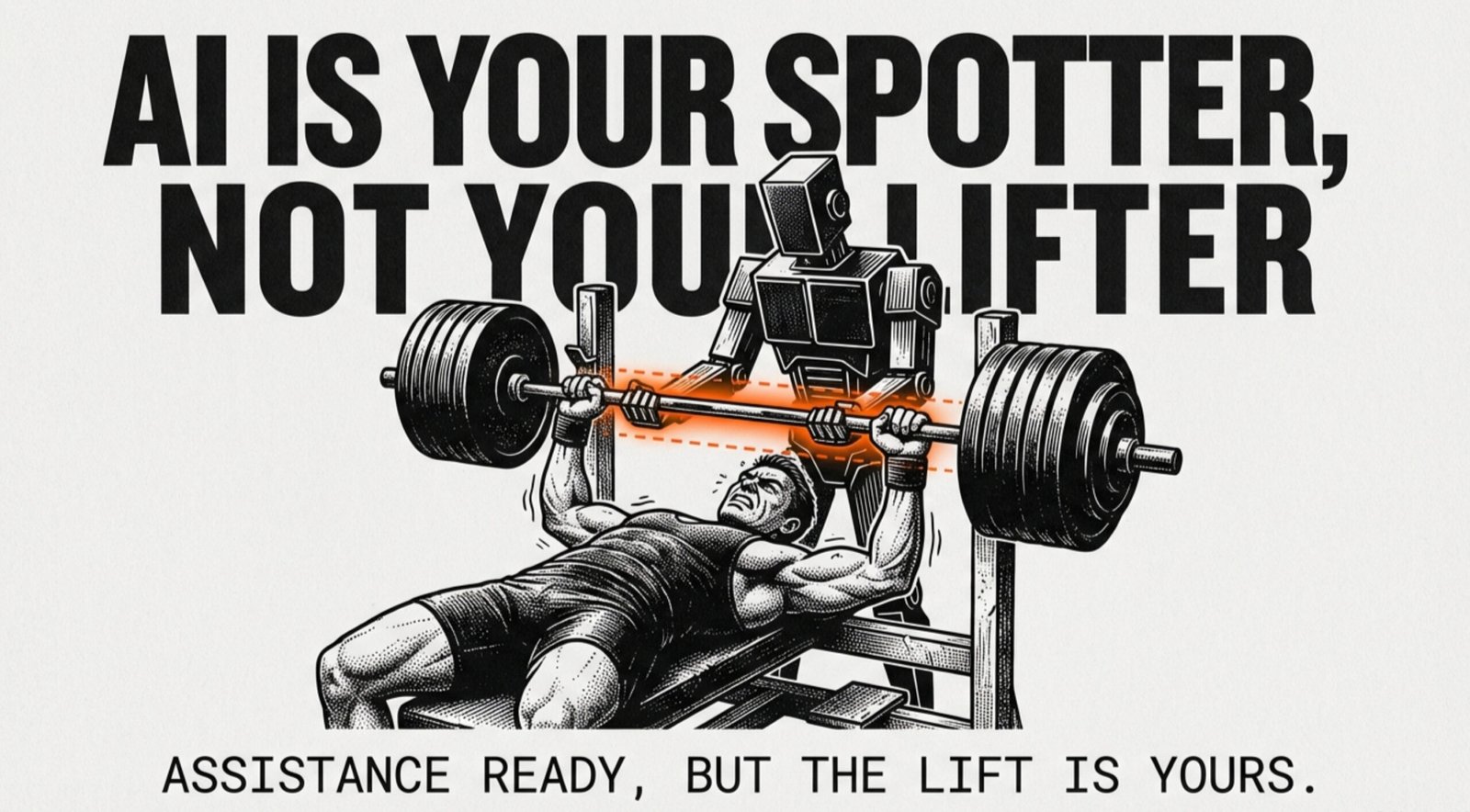
Think of AI as your spotter at the gym. A spotter doesn’t lift the weight for you. They stand next to you and help you lift. They make sure you don’t get crushed when you’re pushing your limits.
That’s the relationship you want with AI for things where you need to actually get smarter and more capable.
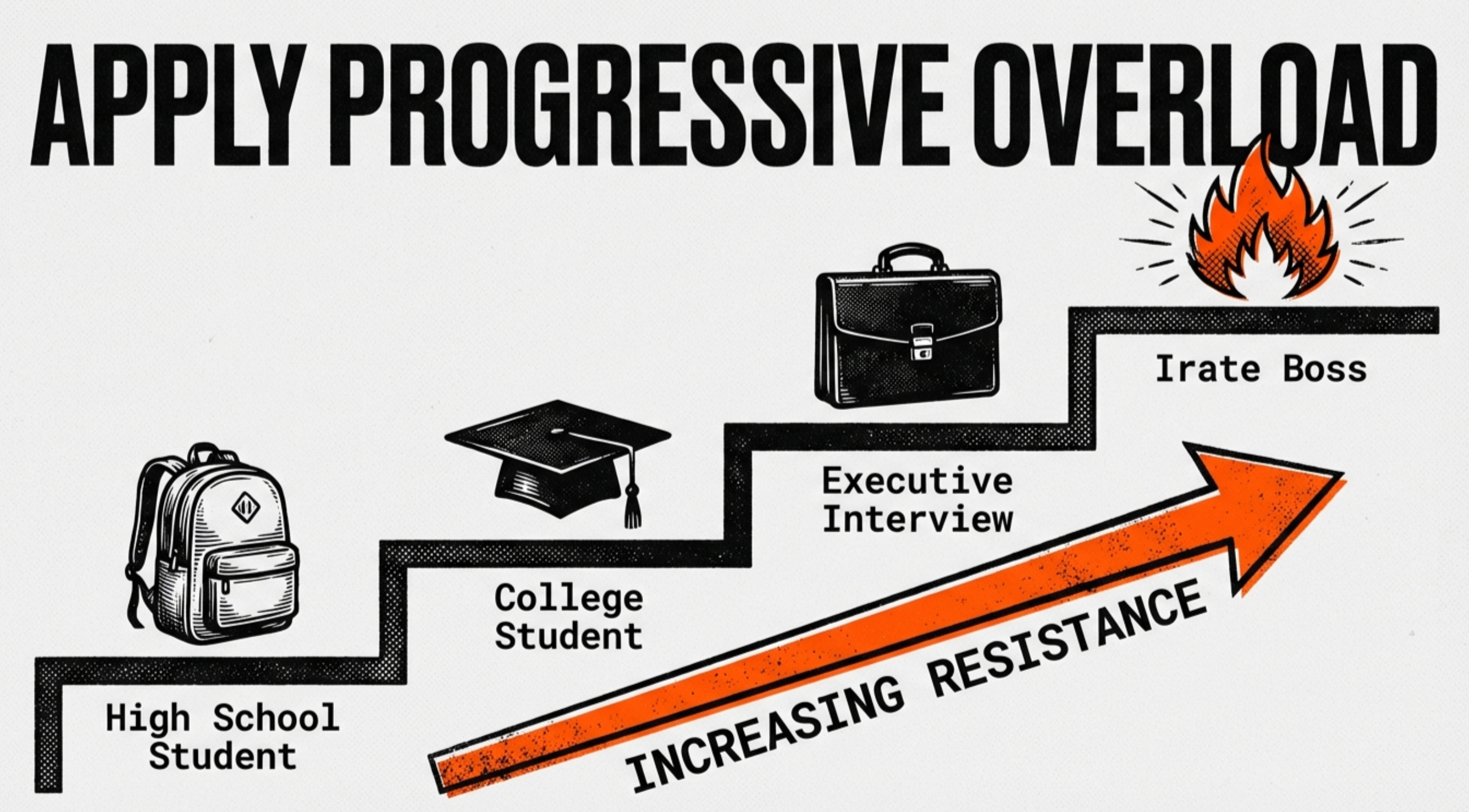
The Progressive Overload Method:
Say you want to master a concept. Don’t ask AI to explain it to you. Study it yourself first. Struggle with it. Then go to your spotter.
Paste the concept and prompt: “I need to master this concept. Quiz me on it.”
Then apply progressive overload—four levels:
Level 1: “Quiz me like I’m a high school student.”
Level 2: “Ask me questions like I’m a college student.”
Level 3: “Grill me like you’re interviewing me for an executive job.”
Level 4: “Challenge me like an irate boss who thinks I’m unprepared.”
Each level adds resistance. Each level forces deeper understanding.
The Old Way: Use AI to get answers faster.
The New Reality: Use AI to test your understanding harder.
What To Do Next
Pick one concept you need to master in your field. Not something new—something you should already know but don’t understand as deeply as you’d like.
Study it yourself first. Don’t touch AI yet. Let yourself struggle.
Then open your AI tool. Paste the concept. Ask it to quiz you.
Start at level one. Move up only when you can answer confidently.
By level four, you’ll know whether you actually understand it—or whether you were just fooling yourself.
The discomfort is the point. That’s where the growth happens.
The One Thing to Remember
AI can be a wheelchair or a gym. A wheelchair makes movement easier while your legs atrophy. A gym adds resistance so you grow stronger. Choose the gym.
This insight comes from “Give Me 18 Minutes and I’ll Make You Dangerously Smart (with AI).” The AI Shift curates wisdom from AI leaders and translates it for busy professionals navigating the AI era. What’s one skill you’ve been letting AI do for you that you should be training yourself on instead?
Leave a Reply