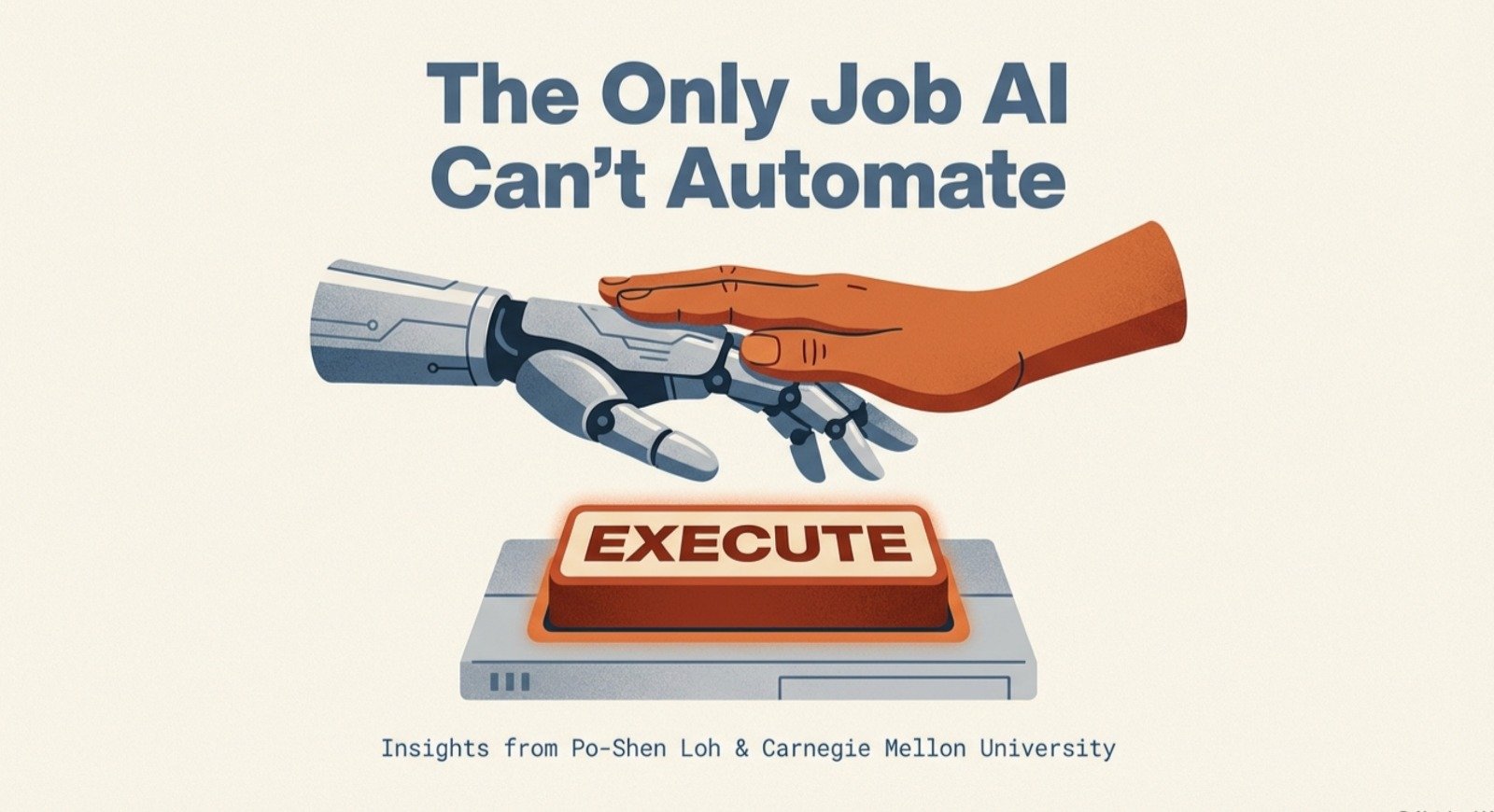
The skills AI is taking aren’t the ones you should have been building anyway.
The Reality
Every few months, a new list circulates online. “The jobs AI will kill.” “The safe careers.” “What to learn before it’s too late.” And for a while, the consensus was: learn a trade. Go into a blue-collar field. Plumbing is safe.
Then Boston Dynamics robots started doing backflips. Hyundai bought them. And Po-Shen Loh, a Carnegie Mellon mathematician who’s spent years thinking about this, made a quiet observation: Hyundai didn’t buy those robots to make them dance.
Hyundai manufactures things at massive scale. And robot workers don’t take sick days, ask for raises, or make errors from fatigue. “That’s going to wreak havoc across the blue collar as well,” Loh said.
So if white-collar work is being taken by AI and blue-collar work is being taken by humanoid robots, what’s the honest answer to the question everyone’s actually afraid to ask: what’s left for people?
The Shift
Loh doesn’t give a comforting non-answer. He gives a surprising one.
The most valuable thing a person can offer in the AI era isn’t a specific skill. It’s trustworthiness. And more specifically, it’s the kind of trust that only comes from knowing someone actually cares about something bigger than themselves.
Here’s the frame he uses: as the world gets more automated and more interconnected, the potential for catastrophic failure goes up. He points to electric vehicles — essentially computers on wheels that receive over-the-air software updates. What happens if someone hacks that update? What if 10,000 cars suddenly accelerate at full speed at 5:30pm?
The more powerful our systems become, the more we need humans in them who can’t be easily compromised. Not just skilled humans. Trustworthy humans.
“You want to know that the people you put into these positions care about things that are bigger than themselves and aren’t easily bought off by someone bribing them for a million dollars.”
And there’s no AI for that. You can look into a robot’s eyes and have no idea if it will protect you. But you can look into a person’s eyes and — if you know what you’re looking for — you can tell.
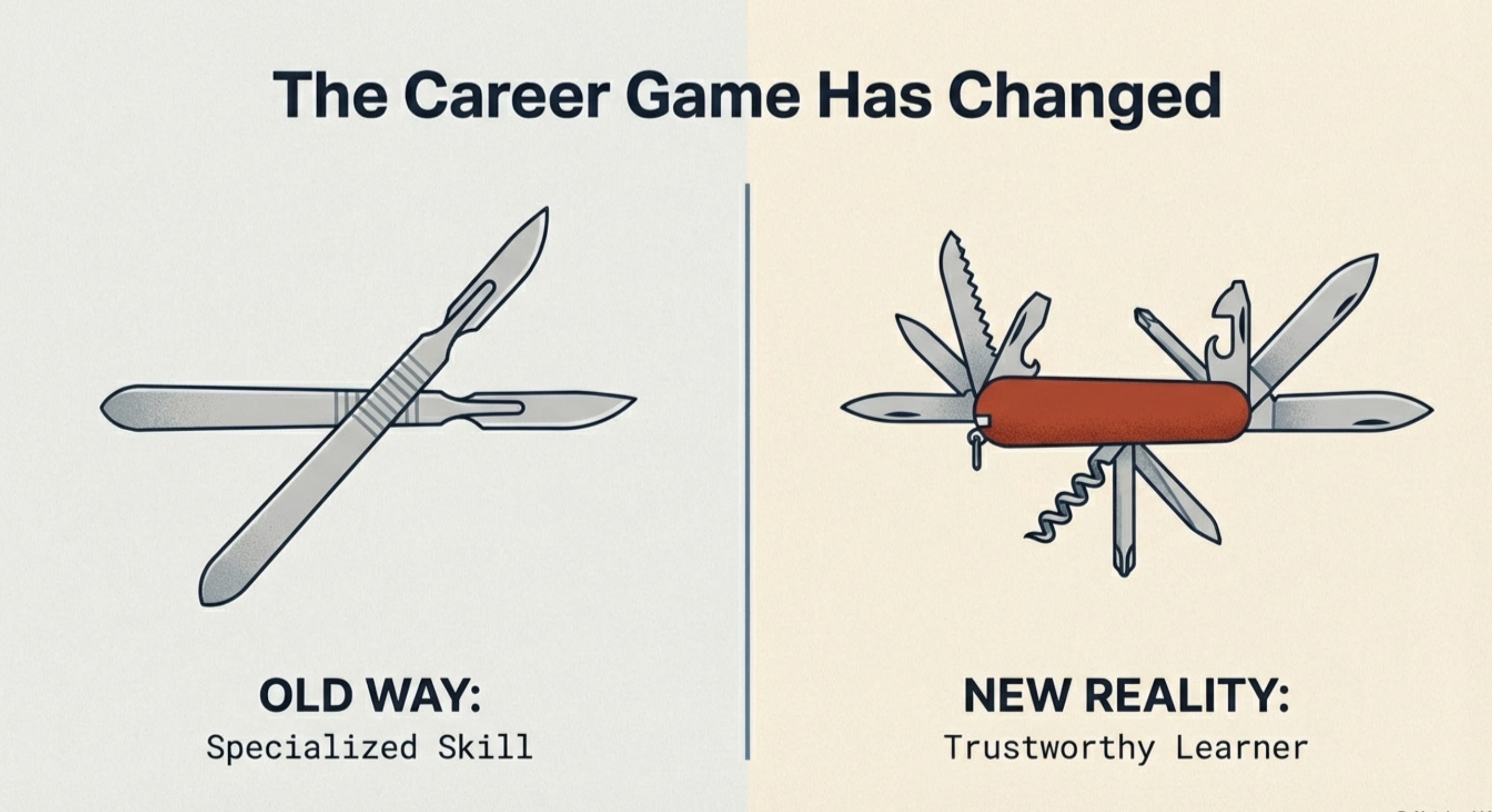
The Old Way: Build a specific, valuable skill. Become the best at one thing.
The New Reality: Specific skills are being automated one by one. The person who gets hired — and rehired and trusted — is the one you can plug into anything because you know they’re going to work hard toward something meaningful.
When Loh hires, this is literally what he looks for: great intention + great learning capacity. “I don’t want to hire someone who has been trained to do one particular task because now I’ve discovered wait one or two more years I can use AI to do that task and it’ll be way cheaper.”
The combination that’s hard to find — and impossible to automate — is someone who genuinely wants to do good work and has the intellectual flexibility to keep learning.
What To Do Next
This reframe is uncomfortable because it’s not a checklist. You can’t take a course in trustworthiness. But you can develop it, and you can signal it, and both matter.
Start with purpose, not just performance. Ask yourself honestly: what are you working toward that’s bigger than your own advancement? The answer doesn’t have to be grand. It just has to be real. People can feel the difference between someone optimizing for themselves and someone who actually cares about the outcome.
Invest in flexibility over specialization. The world is changing too fast for narrow expertise to be a stable foundation. What you want is a track record of learning new things and adapting well. Every time you pick up a new skill, work in a new domain, or solve an unfamiliar problem, you’re building the thing that actually makes you employable long-term.
Let your character compound. Reputation for being trustworthy builds slowly and pays off exponentially. The people who are pulled out of difficult circumstances, who get opportunities others don’t, who build careers that survive technological disruption — they’re not usually the ones with the best credentials. They’re the ones everyone already knows will show up, work hard, and actually care.
The One Thing to Remember
AI is taking tasks. What it can’t take is the character of someone who genuinely wants to do good — and can be trusted with the things that matter.
This insight comes from “AI Will Create New Wealth, But Not Where You Think” featuring Po-Shen Loh, Carnegie Mellon University. The AI Shift curates wisdom from AI leaders for busy professionals navigating the AI era. What do you think — is trustworthiness something you can develop, or is it something you already have or don’t?
Leave a Reply