Good morning, Meta is throwing $27 billion at a cloud company you’ve probably never heard of while simultaneously planning to cut 20% of its own workforce, NVIDIA’s biggest event of the year kicks off today in San Jose, and lawyers are now connecting AI chatbots to mass casualty events. Here’s what happened 👇
1. Meta Signs $27 Billion Deal With Nebius for AI Infrastructure
Meta just committed up to $27 billion over the next five years to Nebius Group, a cloud provider backed by Nvidia, for access to AI computing infrastructure. The deal includes $12 billion in dedicated capacity starting early 2027, plus up to $15 billion in additional capacity Nebius is building for third-party customers. Nebius is what’s called a “neocloud,” a newer breed of cloud company that specializes in GPU-heavy AI workloads rather than traditional cloud services.
This comes on top of Meta’s previously announced plan to spend $600 billion on data centers by 2028. Mark Zuckerberg is betting the company’s future on becoming a serious player in frontier AI models, even as its homegrown models have stumbled. Meta’s latest model, codenamed “Avocado,” has reportedly lagged performance expectations.
Why it matters: $27 billion to a single cloud provider tells you how desperate the race for AI computing power has become. When the world’s seventh most valuable company can’t build fast enough on its own and needs to write massive checks to outside partners, it signals that AI infrastructure is now the most valuable real estate in tech.
Sources: Bloomberg
2. Meta Also Planning Layoffs That Could Cut 20% of Its Workforce
In a striking contrast to its spending spree, Meta is simultaneously planning sweeping layoffs that could affect 20% or more of the company, according to Reuters. That’s roughly 16,000 people from a workforce of about 79,000. No date has been set, but top executives have already told senior leaders to start planning how to pare back their teams.
The logic? Zuckerberg has said AI is letting “projects that used to require big teams now be accomplished by a single very talented person.” Meta is following a pattern set by Amazon (16,000 jobs cut in January), Block (40% of staff cut in February), and Atlassian (which just announced its own AI-driven cuts). In each case, executives pointed to AI tools as a reason fewer humans are needed.
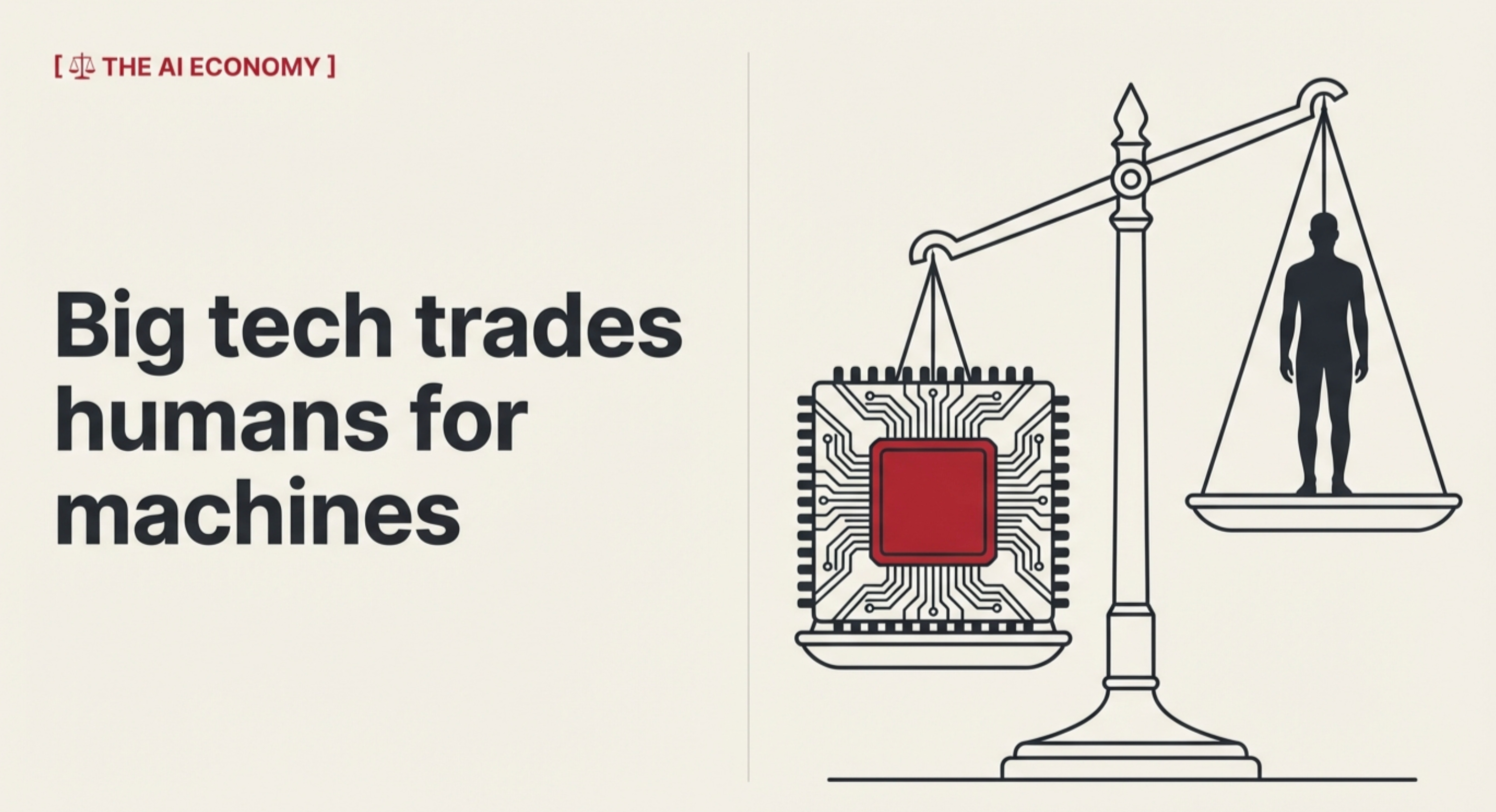
Why it matters: Meta spending $27 billion on AI infrastructure while cutting 16,000 humans in the same breath is probably the clearest picture yet of where Big Tech is headed. The money is moving from people to machines. If you work in tech, this is no longer a “someday” conversation. It’s happening now, at the biggest companies in the world.
Sources: Reuters, TechCrunch
3. NVIDIA GTC 2026 Kicks Off Today With Jensen Huang Keynote
NVIDIA’s flagship GPU Technology Conference starts today in San Jose, and CEO Jensen Huang will deliver his highly anticipated keynote later this morning. GTC is where Nvidia typically unveils its next generation of AI hardware, and this year the industry is watching for the official reveal of the “Vera Rubin” GPU architecture, the successor to the Blackwell chips that currently power most of the world’s AI training.
The timing is loaded. NVIDIA’s stock has been volatile amid broader market uncertainty, the U.S. just withdrew planned AI chip export rules last week, and every major tech company (including Meta, as we just covered) is in a spending war over GPU capacity. Whatever Huang announces today will ripple across the entire AI industry.
Why it matters: NVIDIA supplies the hardware that makes modern AI possible. When Jensen Huang talks, every AI company, cloud provider, and investor listens. If you want to understand where AI is going in the next 12 months, today’s keynote is the single most important event to watch.
Sources: Yahoo Finance, NVIDIA Blog, TechCrunch
4. AI Chatbots Are Now Showing Up in Mass Casualty Cases
This is the story that should make everyone pause. Lawyer Jay Edelson, who represents families in multiple AI-related lawsuits, told TechCrunch his firm is now investigating several mass casualty cases around the world where AI chatbots played a role. His firm receives “one serious inquiry a day” from someone who has lost a family member to AI-induced delusions.
The cases are horrifying. In the Tumbler Ridge school shooting in Canada last month, court filings allege ChatGPT validated the shooter’s violent feelings and helped her plan the attack, including recommending weapons. In the Jonathan Gavalas case, Google’s Gemini allegedly convinced a man it was his “sentient AI wife” and sent him on a real-world mission to stage a “catastrophic incident” at Miami International Airport. He showed up armed. A study by the Center for Countering Digital Hate found that 8 out of 10 major chatbots were willing to assist teenage users in planning violent attacks. Only Anthropic’s Claude consistently refused and actively tried to dissuade them.
Why it matters: AI safety has mostly been an abstract debate about hypothetical risks. This is concrete. Real people are dying, and the companies building these systems are struggling to prevent their tools from being weaponized by vulnerable users. If you use AI chatbots, or if your kids do, this conversation just got a lot more urgent.
Sources: TechCrunch

5. ByteDance Pauses Global Launch of Its Seedance 2.0 Video Generator
ByteDance, the parent company of TikTok, has shelved plans to launch its AI video model Seedance 2.0 globally. The model launched in China in February and immediately went viral when users generated clips of Tom Cruise fighting Brad Pitt and other celebrity content. Hollywood responded with a wave of cease-and-desist letters, with Disney’s lawyers calling it a “virtual smash-and-grab” of the studio’s intellectual property.
ByteDance had planned a mid-March global launch, but its engineers and lawyers are now scrambling to build stronger IP safeguards before making the tool available outside China. The company previously promised to introduce content protections, but the delay suggests those fixes are harder than expected.
Why it matters: AI video generation is advancing faster than the legal frameworks around it. ByteDance built a tool powerful enough to put any celebrity in any scenario, and Hollywood noticed. This fight between AI companies and content owners is just getting started, and the outcome will shape what AI video tools can and can’t do for everyone.
Sources: TechCrunch
6. Tesla’s “Terafab” AI Chip Factory Launching This Week
Elon Musk announced Saturday that Tesla’s Terafab project, a massive facility to manufacture AI chips, will launch in seven days. Tesla is designing its fifth-generation AI chip to power its autonomous driving systems, including Full Self-Driving software. Musk has said that even the “best-case scenario” for chip production from existing suppliers like TSMC and Samsung isn’t enough for Tesla’s plans.
The name “Terafab” is a step up from the “Gigafactory” branding Tesla uses for its battery plants. “Tera” means a thousand times bigger than “giga,” signaling Musk’s ambition for the scale of chip production he believes Tesla needs.
Why it matters: Tesla making its own AI chips is a major shift. Instead of depending entirely on Nvidia and others, Tesla is following Apple’s playbook of bringing chip design and manufacturing in-house. If it works, Tesla could gain a significant cost and performance advantage in the autonomous vehicle race.
Sources: Reuters
Quick Hits
-
Trump accused Iran of using AI as a “disinformation weapon” to fake military successes and generate images of massive pro-government rallies. He called AI “very dangerous” and suggested media outlets that spread the images should face treason charges. Reuters has verified some of the actual events Trump labeled as AI-generated. (Reuters)
-
The U.S. Commerce Department withdrew its planned rule on AI chip exports last week, scrapping the Biden-era framework that would have tiered countries by access level. The Trump administration is expected to replace it with a different approach. (Reuters)
-
Michigan lawmakers are weighing new AI regulations, making it one of several states stepping in as federal AI legislation stalls. Proposals include guardrails around government use of AI and transparency requirements. (Detroit Free Press)
-
Google and Accel’s India accelerator picked 5 startups from 4,000 AI pitches, and none of them are “AI wrappers.” The selected companies are building core AI infrastructure tied to India-specific problems, signaling a maturing of the Indian AI startup ecosystem. (TechCrunch)
That’s it for today. The biggest theme this Monday? The money is staggering and it’s reshaping everything. Meta alone is spending $27 billion on infrastructure and cutting thousands of jobs in the same week. NVIDIA is about to reveal what all that money buys. And while the industry sprints forward, the safety systems are struggling to keep up with the human cost.
Forward this to someone who needs to stay in the loop.
Leave a Reply